







Your toddler accepts plain toast for breakfast, plain pasta for dinner and the same smooth yoghurt every afternoon.
You are relieved they are eating something. But when the same small group of foods appears day after day, it is understandable to wonder whether those meals could contribute more nutritionally.
The answer is not always to replace familiar food with a completely different meal.
A food your toddler already accepts can become the foundation for a small, manageable upgrade.
The 4-Step Toddler Meal Upgrade helps you:
- Start with the accepted meal
- Notice what it already provides
- Choose one useful addition
- Keep the meal familiar
The goal is not to make every meal nutritionally perfect. It is to build on ordinary food without changing so many things that your toddler no longer recognises or accepts it.
For a broader guide to food-first nutrition, fortified foods, supplements, smoothies and professional support, read:
Compare nutrition options for a fussy toddler → Nutrition for Fussy Toddlers: A Practical Guide to Food, Supplements and Support
Why start with a familiar meal?
When a toddler eats only a small range of foods, parents are often told to offer more variety.
Variety matters, but introducing several unfamiliar ingredients at once may make a meal harder to approach.
Australian guidance encourages families to offer foods from the five food groups across the day. It also recognises that toddlers generally eat small meals and snacks rather than adult-sized portions. A broad pattern of three small meals and two to three planned snacks gives families several opportunities to offer different foods without expecting every meal to contain everything.
A familiar meal therefore has value. It:
- Gives your toddler something recognisable
- Provides a practical starting point
- Reduces the need to create an entirely separate menu
- Allows you to test one small change
- Helps you see which flavours, textures or presentation styles matter to your child
An accepted food is not evidence that you have failed to provide enough variety. It is useful information about what your toddler can currently manage.
What does “more nutritious” mean?
In this article, making a meal more nutritious means adding a food that contributes something useful to the child’s overall eating pattern.
That might involve adding:
- Another food group
- A protein-containing food
- Fruit or vegetables
- A suitable source of fat
- A different grain
- Greater variety over time
It does not mean:
- Adding as many ingredients as possible
- Turning every meal into a high-protein meal
- Increasing calories without an identified need
- Hiding vegetables in every accepted food
- Using several powders or supplements together
- Expecting one meal to provide complete nutrition
Australian dietary guidance groups nutritious foods into vegetables and legumes, fruit, grain foods, lean meats and alternatives, and dairy or suitable alternatives. The overall pattern matters more than making each individual plate contain every group.
Step 1: Start with the meal your toddler already accepts
Begin with the exact version your child eats comfortably.
Writing down “pasta” is not always specific enough. Your toddler might accept:
- One particular pasta shape
- Pasta served warm but not hot
- Pasta without sauce
- Foods kept separate
- Pasta in a familiar bowl
Likewise, “yoghurt” might mean:
- Completely smooth yoghurt
- One familiar flavour
- Yoghurt without fruit pieces
- Yoghurt served cold
- Yoghurt eaten with a particular spoon
The details help you identify what makes the meal predictable.
Ask:
- What does the food look like?
- Is it dry, smooth, soft or crisp?
- Are the ingredients separate?
- Does it have a mild flavour?
- Is it always served at the same temperature?
- Does my toddler accept only a certain brand or shape?
This is especially useful for toddlers who reject a food in one form but accept it in another.
Understand how texture and mouthfeel influence food refusal → The Toddler Taste and Texture Explorer
Do not change the accepted base yet
The first step is observation, not improvement.
There is no need to immediately:
- Replace white bread with a completely different bread
- Change the pasta shape
- mix sauce through the whole meal
- Switch yoghurt flavour
- Add several blended ingredients
- Remove the familiar food to create hunger for something else
First establish what the accepted meal is and what makes it manageable.
Step 2: Notice what the meal already provides
The next step is not to diagnose what your toddler is “missing”.
It is simply to recognise what the meal already contributes and whether another food group could sit naturally beside it.
| Familiar meal | What it may already contribute | A question to consider |
|---|---|---|
| Plain toast | Grain food and energy | Could one suitable topping or side be offered? |
| Plain pasta or rice | Grain food and energy | Could a protein-containing food be served beside it? |
| Smooth yoghurt | Protein and calcium, depending on the product | Could fruit or a grain food be offered separately? |
| Porridge | Grain food and some fibre | Could yoghurt, milk or fruit be added without changing it too much? |
| Egg | Protein and other nutrients | Could it be paired with bread, rice, fruit or vegetables? |
| Fruit | Fruit-group contribution and fibre | Could it be paired with yoghurt, cheese or another suitable food? |
| Homemade smoothie | Depends on the ingredients | What is already in it, and would another ingredient add something useful? |
This exercise prevents you from treating every simple meal as nutritionally empty.
For example, plain pasta is not a complete eating pattern by itself, but it still contributes a grain food and energy. The question is not:
“How do I replace the pasta?”
It is:
“What is one manageable food I could offer with it?”
Think across the day—not only one plate
Your toddler does not need to eat every food group at every meal.
Breakfast might contain grain and dairy foods. Lunch might include egg and fruit. Dinner might include pasta and a small amount of vegetable or legume.
The meals and snacks add up across the day. Toddler appetite can also change considerably from one day to the next, so one small dinner does not automatically show that the child’s diet is inadequate.
See how meals, snacks and food groups add up across the day → How Much Should a Toddler Eat in a Day?
Step 3: Choose one useful addition
Now choose one addition that is appropriate for your toddler and family.
One addition might:
- Add another food group
- Introduce a protein-containing food
- Provide fruit or vegetables
- Add a suitable source of fat
- Create a small variation in an accepted meal
- Offer a related flavour or texture
A simple decision guide is:
| When the familiar meal is mainly… | Consider offering one… |
|---|---|
| Grain food such as toast, pasta or rice | Protein-containing food |
| Fruit | Dairy food or another suitable protein food |
| Yoghurt or dairy food | Fruit or grain food |
| Egg, tofu, meat or fish | Grain food, fruit or vegetable |
| Very repetitive meal | Small variation in one ingredient or presentation |
| Homemade smoothie | Ingredient that complements what is already included |
These are options, not rules.
The right addition depends on:
- What your toddler already eats across the day
- Allergies and dietary restrictions
- Texture and chewing ability
- Which foods are available
- What the family is eating
- Whether the change can be made safely
- Whether the child has individual advice from a health professional
Why only one addition?
Imagine your toddler accepts plain spiral pasta.
You decide to improve it by changing the pasta shape, coating it in lentil sauce, adding vegetables, sprinkling cheese over it and serving chicken beside it.
Nutritionally, the plate may contain more variety. But from your toddler’s perspective, their familiar meal has disappeared.
A one-change approach might instead be:
Plain spiral pasta with a small amount of grated cheese beside it.
Another day, you might place cheese on two pieces.
Later, you might introduce a teaspoon of sauce in a separate bowl.
Changing one thing at a time helps you see what your toddler is responding to. It also keeps most of the meal recognisable.
Step 4: Keep the meal familiar
The fourth step is what makes the method practical for fussy toddlers.
Adding a nutritious food is not helpful when it changes the entire meal so much that your toddler refuses both the addition and the accepted base.
Keep the familiar qualities intact by:
- Placing the new food beside the familiar food
- Adding it to only a small part of the meal
- Keeping most of the accepted food unchanged
- Maintaining the usual temperature
- Keeping familiar foods separate where needed
- Starting with a small amount
- Letting your toddler choose whether to combine the foods
- Using an accepted flavour or texture as the bridge
Sydney Children’s Hospitals Network recommends pairing unfamiliar foods with familiar foods and not expecting immediate acceptance. The look, feel and smell of food can all influence whether a child is willing to explore it.
“Beside” can be more manageable than “mixed through”
A toddler may accept two foods separately and refuse them when combined.
For example, your child might eat:
- Plain yoghurt
- Soft banana
but reject banana mixed into the yoghurt.
The ingredients are familiar. The mixed texture is not.
You might therefore serve:
- The yoghurt in its usual bowl
- One small piece of banana beside it
- A little mashed banana in a second bowl
Your toddler can decide whether to leave the foods separate or combine them.
Offer manageable food choices without creating an unlimited menu → Toddler Food Choices: How Structured Options Can Make Mealtimes Easier
The 4-Step Toddler Meal Upgrade in action
Example 1: Plain toast
Step 1: Start with the accepted meal
Your toddler eats dry toast cut into strips.
Step 2: Notice what it provides
The toast contributes a grain food and energy.
Step 3: Choose one addition
You decide to offer egg as the additional food.
Step 4: Keep it familiar
Instead of covering the toast in egg, place a small amount beside the strips.
The toast remains dry, familiar and available. Your toddler can look at, touch or taste the egg without losing the meal they recognise.
On another day, the addition could be avocado, cheese, hummus or smooth nut or seed paste where safe and appropriate. The method remains the same: choose one, not all of them.
Example 2: Plain pasta
Step 1: Start with the accepted meal
Your toddler accepts plain spiral pasta with no sauce.
Step 2: Notice what it provides
The pasta contributes a grain food and energy.
Step 3: Choose one addition
You choose cheese.
Step 4: Keep it familiar
Start by placing a small amount of grated cheese beside the pasta.
A later progression might be:
- Cheese beside the pasta
- Cheese placed on one or two spirals
- A little cheese over one section
- More offered only when wanted
There is no deadline for moving from one step to the next.
Example 3: Smooth yoghurt
Step 1: Start with the accepted meal
Your toddler eats smooth yoghurt but rejects pieces mixed through it.
Step 2: Notice what it provides
The yoghurt may provide protein and calcium, depending on the product.
Step 3: Choose one addition
You choose soft fruit.
Step 4: Keep it familiar
Serve a small amount of fruit beside the yoghurt rather than stirring it through the entire bowl.
The yoghurt remains predictable, while the fruit becomes available for exploration.
Create your own toddler meal upgrade
Use this worksheet with one meal at a time:
| Question | Your answer |
|---|---|
| What exact meal does my toddler accept? | |
| What flavour, texture or presentation makes it familiar? | |
| What does the meal already contribute? | |
| What is one suitable addition? | |
| Can the addition be served beside the familiar food? | |
| How can I keep most of the meal unchanged? | |
| Is the food appropriate for my toddler’s age and chewing ability? | |
| What will I do if the addition is refused? |
The final question matters.
A suitable response to refusal might be:
“You don’t have to eat it. It can stay beside your pasta.”
Avoid immediately removing the familiar meal, demanding a bite or presenting several alternative additions.
Improving nutrition and building food familiarity are different goals
Adding an ingredient to an accepted meal may change what that meal contributes nutritionally.
It does not automatically teach your toddler to recognise or accept that food in another form.
For example:
- Lentils blended into a sauce may contribute to the meal, but do not guarantee acceptance of visible lentils.
- Fruit blended into a smoothie does not necessarily create acceptance of fruit pieces.
- Vegetables grated into a fritter may be useful within the recipe, but the vegetables may still feel unfamiliar when served separately.
Both goals can be supported:
Nutritional goal
Offer the ingredient in a form your toddler currently accepts.
Food-familiarity goal
Allow your toddler to see, touch, smell, prepare or encounter the ingredient in a recognisable form without pressure.
Children can become more familiar with food by seeing, touching and exploring it, but these experiences should not be presented as a guaranteed path to eating it.
Introduce unfamiliar foods through manageable steps → How to Introduce New Foods to a Fussy Toddler: 10 Practical Steps
When adding more does not make the meal better
It is possible to add too much.
Pause when:
- The accepted meal is no longer recognisable
- Several new ingredients have been added at once
- The flavour or texture changes dramatically
- Your toddler becomes distressed
- Every accepted food is being altered
- Several fortified products or supplements are being combined
- You are trying to make one meal provide everything
- The changes are being driven by fear rather than an identified concern
A plain food can still have a place within a broader varied diet.
You do not need to upgrade every meal.
Sometimes the most useful approach is to let the accepted meal remain as it is and offer variety at another meal or snack.
More protein is not automatically better
Protein-containing foods are part of the Australian Dietary Guidelines, but that does not mean every meal needs to be turned into a high-protein meal.
Look at the overall eating pattern before adding protein powders or multiple fortified foods.
Nutrient-dense is not the same as a clinical high-energy diet
Some children need a higher-energy eating plan because of illness, growth concerns or other individual circumstances.
That is different from making ordinary meals a little more nutritious.
Royal Children’s Hospital guidance treats nutrition counselling and energy-increasing strategies as individual interventions for children with poor growth or dietary deficiencies. They should not be automatically applied to every toddler with a small appetite.
Avoid routinely adding large quantities of cream, butter, milk powder or supplements unless this has been recommended for your child.
What about smoothies?
A homemade smoothie can form part of the four-step method, but its contribution depends on the recipe.
Begin by asking what the familiar smoothie already contains.
For example, a fruit-and-water smoothie differs from one made with yoghurt, milk, oats or another protein-containing food.
Then choose only one suitable variation.
You might:
- Add a small amount of yoghurt
- Add oats while maintaining a familiar texture
- Use avocado in a suitable recipe
- Include smooth nut or seed paste where safe and appropriate
Keep in mind that smoothies can be filling. They should not repeatedly displace meals or become the only texture your child accepts.
Explore practical toddler smoothie recipes and variations → Creative Smoothie Recipes for Toddlers
When should you seek individual advice?
The four-step method is intended for everyday food-first meal building. It is not a treatment for poor growth, nutritional deficiency or feeding difficulty.
Speak with your GP, child and family health nurse, accredited practising dietitian or another appropriate professional if your toddler:
- Is losing weight or not growing as expected
- Has unusually low energy
- Eats a very limited or shrinking range of foods
- Avoids entire food groups
- Relies mainly on milk or other drinks
- Has persistent vomiting, diarrhoea, constipation or pain
- Regularly coughs or chokes while eating
- Has difficulty chewing or swallowing
- Requires a vegan diet, multiple exclusions or complex allergy management
- May need a deliberate high-energy or weight-gain plan
Recognise signs that fussy eating may need professional support → When Is Fussy Eating More Than a Phase?
Where Optivance Toddler Smoothie may fit
Food-first meal upgrades keep familiar meals central and can be adapted to the foods your toddler already accepts.
However, their nutritional contribution depends on the ingredients used and how much is eaten.
Some families may also choose an age-specific supplementary option for less predictable days.
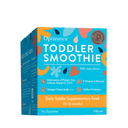
Optivance Toddler Smoothie is made for children aged 1–3 and provides protein, fibre, DHA omega-3, probiotics, and 16 vitamins and minerals plus lutein.
It is intended to supplement a normal diet—not replace meals, food variety, chewing experiences or gradual food exploration.
Its role is different from the four-step method:
- The meal-upgrade method helps families build on ordinary food.
- Optivance offers a measured, consistent supplementary option.
- Neither replaces individual assessment where health, growth or feeding is a concern.
Compare food-first and supplementary nutrition options → Nutrition for Fussy Toddlers: A Practical Guide to Food, Supplements and Support
Compare homemade and formulated toddler smoothies → Homemade Smoothies vs Toddler Nutrition Smoothies
View ingredients and nutrition information → Optivance Toddler Smoothie product page
Contains milk and soy.
Final thoughts
You do not need to replace the meals your toddler already enjoys before you can improve them.
Use the four steps:
- Start with the accepted meal
- Notice what it already provides
- Choose one useful addition
- Keep the meal familiar
The addition may be eaten, touched or completely ignored. That does not mean the approach has failed.
The purpose is to make ordinary meals work a little harder without removing the familiarity that helps your toddler approach them.
One meal does not need to provide everything.
One small, manageable change is enough.
Frequently asked questions
What is the 4-Step Toddler Meal Upgrade?
It is a practical method for building on familiar toddler meals: identify the accepted meal, notice what it already contributes, choose one useful addition and preserve the qualities that make it familiar.
How can I make plain toast more nutritious?
Keep the toast as the accepted base and offer one suitable addition, such as egg, avocado, cheese, hummus or smooth nut or seed paste. Begin beside the toast rather than changing the whole serving.
How can I improve plain pasta?
Offer one additional food, such as cheese, egg, lentils, tofu or a suitable sauce. Keep most of the pasta plain and introduce the addition separately or on a few pieces.
Should every toddler meal include protein?
Protein-rich foods should be offered across the overall eating pattern, but every snack and meal does not need to contain a large protein serving.
Should I mix the new ingredient into the meal?
Not necessarily. Serving it beside the familiar food can help keep the accepted meal predictable, particularly for toddlers who dislike mixed textures.
Should I hide vegetables in my toddler’s food?
Vegetables can be combined into recipes, but concealment should not be the only strategy. Continue allowing your toddler to see and explore foods in recognisable forms.
Is adding more ingredients always better?
No. Several additions can make an accepted meal unrecognisable and might unnecessarily duplicate fortified ingredients or nutrients.
Are smoothies a suitable meal upgrade?
They can be one option, depending on the ingredients. Keep recipe changes small and continue offering ordinary meals and age-appropriate textures.
What should I do when the addition is refused?
Keep the familiar meal available, avoid demanding a bite and try serving the addition separately or offering it again another day.
When should I speak with a dietitian?
Seek individual advice when growth is concerning, several food groups are excluded, the food range is shrinking, allergies complicate the diet or a clinical high-energy plan is being considered.
Disclaimer
This article provides general educational information and is not a substitute for personalised medical, nutritional or feeding advice. Speak with your GP, child and family health nurse, accredited practising dietitian, paediatrician, speech pathologist or another appropriate professional if you are concerned about your child’s growth, nutrition, eating, chewing or swallowing.
References
- Australian Government, Eat for Health. Australian Guide to Healthy Eating. Accessed 25 July 2026.
- Australian Government, Eat for Health. The Five Food Groups. Accessed 25 July 2026.
- Australian Government, Eat for Health. Australian Dietary Guidelines 1–5. Accessed 25 July 2026.
- Sydney Children’s Hospitals Network. Healthy Eating for Toddlers Aged 1–3. Accessed 25 July 2026.
- Sydney Children’s Hospitals Network. Food Exploration. Accessed 25 July 2026.
- Sydney Children’s Hospitals Network. Understanding Feeding and Mealtime Behaviours. Accessed 25 July 2026.
- Royal Children’s Hospital Melbourne. Nutrition—Babies and Toddlers. Accessed 25 July 2026.
- Royal Children’s Hospital Melbourne. Complex Feeding Difficulties. Accessed 25 July 2026.


