









How to Introduce New Foods to a Fussy Toddler: 10 Practical Steps
You place something new on your toddler’s plate.
Before they have tasted it—or perhaps before they have even looked at it properly—the answer is already no.
Introducing unfamiliar food to a fussy toddler can feel discouraging. But refusal does not always mean that the food is permanently disliked. Sometimes it is unfamiliar, presented in a difficult texture or simply too different from what your child already knows.
The aim is not to persuade your toddler to eat an entire serving today.
It is to help the food gradually become less unfamiliar.
These ten steps focus specifically on that process.
For guidance on routines, pressure and handling meal refusal, read:
Feeding your fussy eater without the fight → Feeding Your Fussy Eater Without the Fight
1. Start with what your toddler already accepts
Before choosing a new food, take a quick look at the foods your toddler currently accepts.
Consider:
- Preferred flavours
- Preferred textures
- Favourite shapes
- Accepted temperatures
- Whether foods need to be separated
- Familiar brands or presentations
- Foods that were previously accepted
This gives you a starting point.
For example, a toddler who prefers dry, crunchy foods might find a crisp or lightly toasted food easier to explore than a wet mixed dish.
A child who accepts smooth yoghurt might be more comfortable beginning with a small fruit swirl than with large fruit pieces.
The aim is not to keep their diet permanently within the same narrow boundaries. It is to begin from a place that feels manageable.
2. Choose a related “bridge” food
A food bridge connects something familiar with something new.
The new food might share:
- A similar texture
- A similar flavour
- A similar colour
- A familiar ingredient
- The same shape
- The same method of eating
For example:
| Familiar food | Possible bridge | Later variation |
|---|---|---|
| Plain toast | Toast with a thin spread | Another bread with the same spread |
| Plain yoghurt | Fruit served beside yoghurt | Small amount of fruit mixed through |
| Crackers | Cracker with familiar dip | A different crunchy food with the dip |
| Plain pasta | Cheese served beside pasta | Small amount of mild sauce |
| Banana smoothie | Banana with another familiar fruit | Small amount of a new fruit added |
The steps do not need to happen quickly or in a fixed order. They are simply ways of reducing how many unfamiliar features appear at once.
3. Change one feature at a time
A food can be unfamiliar in several ways:
- Taste
- Texture
- Colour
- Shape
- Smell
- Temperature
- Presentation
Changing everything at once can make a food difficult to approach.
Instead, keep most features familiar while changing one.
For example:
- Serve the same fruit in a different shape
- Offer the same flavour in a slightly different texture
- Add one new ingredient beside an accepted meal
- Keep the food separate rather than mixing it through
- Use a familiar dip with a different food
This helps you see which feature your toddler is responding to and makes each step feel smaller.
Exploring toddler tastes and textures → The Toddler Taster and Texture Explorer
4. Make the first portion very small
A large portion can communicate an expectation to eat.
A tiny portion communicates an invitation to explore.
The first serving might be:
- One pea
- A small piece
- A teaspoon
- A thin strip
- A tiny amount in a separate bowl
Your toddler can ask for more if they want it.
Try not to interpret a tiny portion as nutritionally meaningful on its own. Its purpose at this stage is familiarity.
A toddler does not need to eat a full serving for the interaction to be worthwhile.
5. Put the new food beside something familiar
A familiar food can make the plate feel manageable.
For example:
- Broccoli beside accepted potato
- A new dip beside familiar crackers
- Egg beside familiar toast
- A new fruit beside yoghurt
- A small amount of sauce beside plain pasta
Do not make the familiar food conditional:
“You can have your toast after you eat the egg.”
Both foods can be present without one becoming a reward for the other.
Australian parenting guidance recommends offering a small amount of unfamiliar food alongside a food the child already likes.
6. Let exploration count
Food learning does not begin with swallowing.
Before a toddler is ready to eat a food, they might need to:
- See it
- Watch someone prepare it
- Allow it at the table
- Touch it
- Smell it
- Break it apart
- Lick it
- Take a small taste
You might use neutral questions:
- “Is it hard or soft?”
- “What colour is it?”
- “Does it have a smell?”
- “What happens when we break it?”
Avoid turning exploration into a hidden demand:
“You touched it, so now you have to taste it.”
Repeated, low-pressure exposure can increase acceptance of some foods, but progress varies and is not always linear.
7. Involve your toddler outside the meal
Food can become more familiar before it appears on the plate.
Your toddler might:
- Choose between two vegetables at the shop
- Wash fruit
- Stir yoghurt
- Place ingredients into a bowl
- Sprinkle cheese
- Arrange food on a plate
- Look through a recipe together
- Help add ingredients to a smoothie
- Grow herbs in a pot
These experiences allow your child to see, touch and smell food without the immediate expectation of eating it.
Involvement can increase familiarity, but it should not be followed by:
“You helped make it, so you have to eat it.”
The value is in participation.
8. Offer simple choices
Structured choices can give your toddler some control while keeping the options manageable.
Try:
- “Would you like the carrot grated or softly cooked?”
- “Would you like the fruit beside the yoghurt or in a separate bowl?”
- “Should we put the peas on this side or that side?”
- “Would you like cucumber or avocado with lunch?”
Avoid asking whether your child wants the new food at all if you have already decided it will be offered. The answer will often be no.
Instead, offer a choice about how it appears.
Using structured toddler food choices → Toddler Meal Options: How Giving Options Reduces Picky Eating
9. Use blended or enriched foods thoughtfully
Blending suitable ingredients into a familiar meal or smoothie can provide another way to serve them.
For example:
- Adding avocado to an accepted spread
- Mixing lentils through a familiar sauce
- Grating vegetables into a fritter
- Adding yoghurt or oats to a smoothie
- Using fruit to introduce a mild flavour variation
This can contribute nutritional variety, but concealment should not be the only strategy.
If a vegetable is always hidden, your toddler does not have the opportunity to learn what it looks, smells or feels like.
Where practical, use both approaches:
- Include the ingredient in a familiar recipe
- Allow the child to see it during preparation
- Occasionally offer a very small recognisable portion without pressure
This supports nutrition while preserving opportunities for food learning.
Creative smoothie recipes for toddlers → Creative Smoothie Recipes for Toddlers
10. Repeat without keeping score
It can take many encounters for a food to feel familiar.
Raising Children Network notes that some children might need 10–15 presentations or more, while systematic-review evidence supports repeated exposure for certain foods. But this should not become a countdown or guarantee.
Avoid saying:
“This is the twelfth time. You should like it by now.”
Instead, look for smaller signs of progress:
- Less distress when the food appears
- Allowing it on the plate
- Touching it
- Smelling it
- Trying it and calmly deciding not to eat more
- Accepting it in one form but not another
You can pause and try again later if repeated presentation is making meals more stressful.
The long-term goal is not compulsory tasting. It is helping your toddler build familiarity and confidence around a wider range of foods.
A practical example: introducing avocado
Suppose your toddler accepts toast but refuses avocado.
A gradual pathway might look like:
- Avocado is present while you prepare your own food.
- Your toddler helps place an avocado on the kitchen bench.
- A small piece sits in a separate bowl at the table.
- A tiny amount is spread on one corner of otherwise plain toast.
- Avocado is offered beside familiar toast.
- Your toddler chooses whether it is sliced or mashed.
- It appears again another day without pressure.
Your child might skip steps, move backwards or prefer avocado in one form only.
The sequence is not a prescribed feeding program. It is an example of making a new food less unfamiliar one feature at a time.
When should you pause and seek advice?
Introducing foods at home may not be appropriate as the only strategy when:
- Your toddler’s food range is extremely limited
- Accepted foods continue to disappear
- Eating causes significant fear or distress
- Your toddler regularly coughs, chokes or struggles to swallow
- They cannot manage age-appropriate textures
- Growth or energy is a concern
- Meals are consistently prolonged or disruptive
- Vomiting or digestive symptoms are persistent
- You suspect an allergy
- Drinks provide most of their nutrition
Difficulty chewing and swallowing can reflect physical, oral-motor or developmental concerns and should be assessed rather than treated as ordinary refusal.
A GP or child and family health nurse can help direct you to an accredited practising dietitian, speech pathologist, occupational therapist, paediatrician or feeding service where appropriate.
What if your concern is nutritional intake?
Introducing new foods and providing supplementary nutrition are related but different goals.
A smoothie or supplement cannot teach a toddler to accept a food in its usual form. Food exposure also cannot confirm whether an individual child is receiving enough of every nutrient.
For a balanced overview of food-first strategies, fortified foods, vitamins, homemade smoothies, toddler nutrition products and professional support, read:
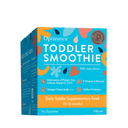
Some families may choose Optivance Toddler Smoothie as an age-specific nutritional top-up while continuing to work on food variety.
It provides protein, 1.9 g fibre, 40 mg DHA omega-3, three billion CFU of probiotics, and 16 vitamins and minerals plus lutein per serve. It is intended to supplement a normal diet—not replace meals, food learning or individual advice.
Explore Optivance Toddler Smoothie
Final thoughts
Introducing healthy foods to a fussy toddler is rarely a straight line.
A food might be touched one week, tasted the next and refused again after that. This does not mean the process has failed.
Begin with what your toddler knows. Make the change small. Keep the portion manageable. Let seeing, touching and smelling count.
Most importantly, avoid turning one bite into a test of success.
The goal is not to make your toddler eat everything today.
It is to help unfamiliar foods gradually feel safer, more recognisable and easier to explore.
Frequently asked questions
Should I hide vegetables in my toddler’s food?
Adding vegetables to familiar recipes can contribute variety, but concealment should not be the only approach. Continue allowing your toddler to see and explore foods in recognisable forms without pressure.
What is a food bridge?
A food bridge connects an accepted food with a related food through a shared flavour, texture, colour, shape or ingredient. It is a practical way to make the change feel smaller.
Should my toddler have to take one bite?
A required bite can create pressure for some children. Offer a small amount, encourage calmly and allow your toddler to decide whether to taste it.
How often should I offer a refused food?
There is no fixed schedule. Continue offering small amounts occasionally without counting attempts or expecting acceptance by a deadline.
Is touching food useful if my toddler does not eat it?
Yes. Seeing, touching, smelling and handling food can help increase familiarity, although these experiences do not guarantee that the child will eventually eat it.
Can I introduce new ingredients through smoothies?
Yes, where the ingredients are age-appropriate and suitable for your child. Smoothies can introduce flavour variations, but continue offering normal foods and textures too.
When is food refusal more than ordinary fussiness?
Seek guidance when refusal is highly restrictive, increasingly severe, affects growth or nutrition, causes significant distress or involves chewing and swallowing difficulties.


