





How Much Should a Toddler Eat in a Day?
One day, your toddler seems to eat from breakfast until dinner.
The next, they take a few bites of toast, ignore lunch and announce that they are finished after one spoonful of pasta.
It is understandable to wonder whether they are eating enough.
There is no single plate or meal plan that every toddler must finish. Australian dietary guidance provides average daily food-group serves, while the amount eaten at each meal can vary considerably.
The quick answer: Offer three small meals and two to three planned snacks across the day, using foods from the five food groups. Let your toddler decide how much to eat from what is provided.
For a broader look at food-first nutrition, supplements, smoothies and professional support, read:
Understand the different nutrition options for fussy toddlers → Nutrition for Fussy Toddlers: A Practical Guide to Food, Supplements and Support
Daily food-group guidance for toddlers
Current Australian guidance provides the following average daily serves:
| Age | Vegetables and legumes | Fruit | Grains | Lean meat and alternatives | Dairy and alternatives |
|---|---|---|---|---|---|
| 1–2 years | 2–3 | ½ | 4 | 1 | 1–1½ |
| 2–3 years | 2½ | 1 | 4 | 1 | 1½ |
The guidance also includes an allowance for suitable unsaturated oils, spreads or nut and seed pastes. Whole nuts and seeds are not recommended for toddlers because of choking risk.
These are average daily serves, not amounts your toddler must eat at every meal.
The pattern is intended to be viewed across the day and, in practical family life, often across several days or a week.
What is the difference between a serve and a portion?
A standard serve is a set reference amount used in dietary guidance.
A portion is the amount placed on your toddler’s plate or eaten at one meal.
They are not necessarily the same.
For example:
- One standard grain serve may be one slice of bread.
- A toddler’s initial portion at one meal might be half a slice.
- They might have another half slice later or receive grain foods through pasta, rice or cereal.
Eat for Health specifically explains that a serve is fixed, while an individual portion depends on hunger and the eating occasion.
Learn how much to put on one plate initially → Toddler Portion Sizes: Why Starting Small Can Make Mealtimes Easier
What does a standard serve look like?
Australian examples include:
Vegetables and legumes
One standard serve can be:
- ½ cup cooked vegetables
- ½ cup cooked or canned beans or lentils
- ½ medium potato, sweet potato or corn
- 1 cup leafy or raw salad vegetables
Fruit
One standard serve can be:
- One medium apple, banana, pear or orange
- Two small fruits such as kiwi fruit or plums
- One cup diced or canned fruit without added sugar
Grains
One standard serve can be:
- One slice of bread
- ½ cup cooked rice, pasta, noodles or porridge
- One small English muffin or crumpet
Lean meats and alternatives
One standard serve can be:
- Two eggs
- One cup cooked lentils, chickpeas or beans
- 170 g cooked tofu
- 65 g cooked lean red meat
- 80 g cooked poultry
- 100 g cooked fish
Dairy and alternatives
One standard serve can be:
- One cup of milk
- ¾ cup yoghurt
- Two slices of cheese
- ½ cup ricotta
These are standard reference amounts. Your toddler’s intake might be distributed across multiple meals and snacks rather than eaten all at once.
A simple daily eating rhythm
Many toddlers do well with:
- Breakfast
- Morning snack
- Lunch
- Afternoon snack
- Dinner
- An additional planned snack where needed
Sydney Children’s Hospitals Network recommends three small meals and two to three snacks from the five food groups at regular times, while avoiding continuous grazing.
The schedule does not need to be exact.
The aim is to give your toddler predictable opportunities to eat rather than expecting large amounts at three adult-style meals.
An illustrative toddler day
The following is an example of how food groups might be distributed.
It is not a prescribed meal plan or an amount every toddler is expected to finish.
Breakfast
- Porridge
- Yoghurt
- Soft fruit
Morning snack
- Toast with avocado or a suitable spread
- Water
Lunch
- Egg, tofu, legumes or another protein food
- Bread, rice or pasta
- Soft vegetable
Afternoon snack
- Fruit with yoghurt or cheese
- Water
Dinner
- Family meal with a grain or starchy food
- Protein-rich food
- Vegetable or legume
A child might eat heavily at breakfast and lightly at dinner. Another may prefer several small snacks and modest meals.
The full pattern matters more than any one plate.
Why toddler appetites vary
A toddler’s appetite can be influenced by:
- Growth rate
- Physical activity
- Tiredness
- Illness or teething
- Food familiarity
- Snacks and drinks
- Time since the last eating occasion
- Their individual hunger
Growth typically slows after the first year, and toddlers may consequently show a smaller or more variable appetite.
Raising Children Network recommends considering intake across a week rather than judging a toddler by one day.
What if your toddler eats less than the guide?
The figures are averages, not a daily examination that your toddler passes or fails.
Try to consider:
- Are foods from several groups offered across the week?
- Is the accepted-food range stable or shrinking?
- Does your toddler usually have energy to play?
- Are they growing along their expected pattern?
- Are drinks frequently replacing food?
- Can they chew and swallow age-appropriate textures?
- Are meals consistently distressing?
One low-intake day does not establish a nutritional deficiency.
Persistent restriction, low energy, growth concerns or feeding difficulty should be assessed individually.
A toddler meal does not need to be large or contain every food group to be worthwhile. Start with a familiar meal, recognise what it already provides and consider one manageable addition. Use the four-step method to improve familiar toddler meals → The 4-Step Toddler Meal Upgrade
Many toddlers manage their intake through several smaller eating opportunities rather than large meals. Planned snacks can contribute useful foods while still leaving enough time for appetite to develop before the next meal. Find practical snack ideas for toddlers with small appetites → Healthy Snacks for Toddlers With Small Appetites
Should you count every serve?
Most families do not need to record every mouthful.
The serve guide can be used to notice broad patterns.
For example:
- Are vegetables or legumes rarely offered?
- Are grain foods dominating every meal?
- Is the protein-rich food group often absent?
- Does most dairy intake come from large volumes of milk?
- Is the child receiving foods from a reasonable range of groups?
Counting can become stressful if it turns every meal into a target.
The guide is most useful as a broad planning tool.
What about milk and drinks?
Water should be offered regularly.
Full-cream dairy is generally recommended for children under two. Reduced-fat milk may be suitable after age two for children with a good appetite and normal growth.
Large amounts of milk or other filling drinks can reduce appetite for solid meals. Heavy reliance on milk alongside poor solid-food intake is worth discussing with a health professional.
Plant-based milk alternatives vary in energy, protein and fortification. Seek individual advice before using them as a major replacement, particularly for younger toddlers.
Vegetarian, vegan and allergy considerations
Toddlers can eat a wide range of family diets, but restrictions can make planning more complex.
Where meat, dairy or several major foods are excluded, it is important to consider:
- Protein
- Iron
- Calcium
- Vitamin B12
- Iodine
- Overall energy intake
- Suitable fortified foods
A GP or accredited practising dietitian can help families plan around allergies, vegan diets or multiple exclusions.
When should you seek advice?
Speak with a health professional if your toddler:
- Is losing weight or not growing as expected
- Has unusually low energy
- Eats a very restricted or shrinking range
- Avoids entire food groups
- Relies on drinks for most nutrition
- Has ongoing vomiting, diarrhoea or pain
- Regularly coughs or chokes while eating
- Has difficulty chewing or swallowing
- Becomes significantly distressed at meals
Small and variable appetites can be normal, but ongoing weight loss, poor growth, very restricted eating or difficulty chewing and swallowing deserves individual advice. Recognise when fussy eating may be more than a typical phase → When Is Fussy Eating More Than a Phase?
Where Optivance Toddler Smoothie may fit
Some families choose an age-specific supplementary product for days when intake is less predictable.
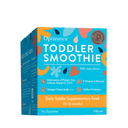
Optivance Toddler Smoothie is intended for children aged 1–3 as a supplement to a normal diet. It should not be used to treat one low-intake day as evidence that a child needs supplementation.
Its role is to provide one optional, consistent supplementary serve while ordinary meals, snacks and food variety remain central.
Understand when a toddler nutrition smoothie may or may not suit → Nutrition for Fussy Toddlers: A Practical Guide to Food, Supplements and Support
For families managing ordinary fussy days or unpredictable appetites, Optivance Toddler Smoothie may provide an additional source of protein, fibre, DHA, probiotics, and 16 vitamins and minerals plus lutein alongside normal meals and snacks. It is made for children aged 1–3 to supplement a normal diet—not replace meals, food variety or professional support where growth or feeding is concerning. View the nutrition panel, ingredients and preparation information → Optivance Toddler Smoothie product page.
Final thoughts
There is no single perfect day of toddler eating.
Offer regular meals and snacks, include foods from the five food groups and allow your toddler to respond to their own appetite.
Look at patterns rather than one unfinished plate.
The goal is not to make every day match the guideline exactly. It is to provide repeated opportunities for a varied eating pattern to develop over time.
Frequently asked questions
How many meals should a toddler eat?
A broad pattern of three small meals and two to three snacks is commonly recommended for children aged 1–3.
How much should a one-year-old eat?
Australian guidance for ages 1–2 suggests average daily food-group serves rather than one fixed meal size. Appetite can vary considerably.
Should I worry if my toddler skips dinner?
Consider what they ate earlier and whether this is an occasional event or part of a broader low-intake pattern.
Does a toddler need every food group at every meal?
No. Food groups can be distributed across meals and snacks over the day.
Should I count serves every day?
Not necessarily. Use the guidance to assess broad patterns rather than monitoring every bite.
What if my toddler only wants milk?
Large volumes of milk can affect appetite for solid food. Seek advice if drinks provide most of your toddler’s intake.
Disclaimer
This article provides general educational information and is not a substitute for individual dietary or medical advice.
References
- Eat for Health, Recommended number of serves for children, adolescents and toddlers.
- Eat for Health, What is a serve?
- Raising Children Network, What to feed toddlers at 1–2 years.
- Sydney Children’s Hospitals Network, Healthy eating for toddlers (1–3 years).


