






The Toddler Taste and Texture Explorer
Your toddler happily drinks a banana smoothie but refuses a slice of banana.
They accept smooth yoghurt but become upset when a small piece of fruit is mixed through it. Crunchy foods disappear quickly, while anything soft, wet or lumpy is pushed away.
It can seem contradictory, but toddlers do not experience food through flavour alone.
The way food looks, smells and feels can be just as important as how it tastes. A child may accept the flavour of banana in one form while finding its texture difficult in another.
The Optivance Toddler Taste and Texture Explorer is a simple educational framework designed to help parents notice these differences and make food changes more manageable.
Its central idea is:
Start with a familiar food or texture and change only one feature at a time.
The Explorer is not a clinical feeding assessment or therapy program. It cannot diagnose a sensory, chewing or swallowing difficulty. Its purpose is to help families think more carefully about how food is experienced and create gradual, low-pressure opportunities for exploration.
For a broader guide to meals, supplements, smoothies and professional support, read our:
Why can a toddler accept a food in one form but refuse it in another?
A food changes when it is prepared differently.
Banana can be:
- Blended and drinkable
- Smoothly mashed
- Soft but slightly lumpy
- Served as individual pieces
- Added to a soft pancake
Although the ingredient remains banana, each form creates a different experience.
The food’s:
- Moisture
- Smoothness
- Firmness
- Temperature
- Shape
- Smell
- Appearance
- Chewing requirement
may all change.
Young children commonly object to particular food tastes, shapes, colours or textures. They may also accept a food on one occasion and reject it on another.
This does not necessarily mean the food is permanently disliked. It may mean that one aspect of the food currently feels unfamiliar or difficult to manage.
What is mouthfeel?
Mouthfeel describes the way food feels inside the mouth.
Parents might notice that their toddler prefers foods that are:
- Smooth
- Creamy
- Soft
- Dry
- Crisp
- Separate rather than mixed
They may reject foods that feel:
- Lumpy
- Slippery
- Sticky
- Stringy
- Grainy
- Chewy
- Wet
- Mixed together
- Inconsistent from one bite to the next
Texture is not only a preference. A child’s ability to manage food also relates to physical development, sensory processing and oral-motor skills.
The Royal Children’s Hospital explains that the range of textures a child can manage develops alongside their physical, sensory and oral-motor abilities. Graded experiences can support confidence as textures progress, but the food offered must still match the child’s current skills.
What is the Toddler Taste and Texture Explorer?
The Explorer helps parents consider two parts of the eating experience:
Taste and flavour
Examples include:
- Mildly sweet
- Savoury
- Tangy
- Earthy
- Bitter
- Umami
- Mild or strongly flavoured
Texture and mouthfeel
Examples include:
- Smooth and blended
- Mashed
- Soft with small lumps
- Soft finger foods
- Foods requiring more chewing
- Mixed textures
- Dry or moist foods
The categories are not a test and do not need to be followed in a fixed order.
Instead, they can help you ask:
- Which textures does my toddler currently accept?
- Do accepted foods share similar qualities?
- Does my toddler prefer foods to be separate?
- Are mixed textures especially difficult?
- Can I change the food’s flavour while keeping its texture familiar?
- Can I keep the flavour familiar while making a small texture change?
- Is the new form appropriate for my child’s current chewing ability?
Begin by identifying accepted textures
It is easy to focus only on the foods your toddler refuses.
A more useful starting point is to look for patterns among the foods they already accept.
Write down five to ten familiar foods and consider their qualities.
For example:
| Accepted food | Possible qualities |
|---|---|
| Smooth yoghurt | Cool, smooth, uniform and mildly flavoured |
| Plain crackers | Dry, firm, predictable and separate |
| Soft pasta | Warm, soft and easy to chew |
| Banana smoothie | Smooth, drinkable and sweet |
| Toast | Dry, firm and predictable |
| Mashed potato | Soft, smooth and savoury |
You may notice that the accepted foods are not nutritionally or visually similar, but they share a texture.
A toddler who accepts yoghurt, smoothies and purees might be comfortable with smooth, consistent foods.
Another child who accepts toast, crackers and dry cereal may prefer dry, predictable textures that do not change much from bite to bite.
These observations do not diagnose the reason for food refusal. They simply provide a more useful starting point than assuming the child is being difficult.
Change one sensory feature at a time
A new food can differ from an accepted food in several ways at once.
It may have a different:
- Flavour
- Texture
- Colour
- Smell
- Shape
- Temperature
- Presentation
Changing all of these features simultaneously can make the food particularly unfamiliar.
Instead, preserve most of the familiar qualities and adjust one.
For example:
- Keep the flavour familiar but make the texture slightly less smooth.
- Keep the texture familiar while adding a mild flavour variation.
- Serve the same food in a different shape.
- Place a new ingredient beside an accepted food rather than mixing them together.
- Use the same familiar dip with another age-appropriate food.
This is not a guaranteed path to acceptance. It is a way to make the sensory change smaller and easier to observe.
For the broader process of introducing unfamiliar foods, read:
One familiar food, several ways to explore
The examples below show how one ingredient might be prepared in different forms.
They are illustrations rather than a prescribed developmental sequence. Every form must be appropriate for your child’s current abilities, and preparation may need to be modified.
Banana
Banana might be offered as:
- A smooth banana blend
- Smoothly mashed banana
- Mashed banana with a little more texture
- Very soft ripe pieces
- Banana added to a soft pancake
A child who accepts banana only when blended may not immediately accept a piece. The first goal may simply be allowing a small piece to sit beside the familiar form.
Apple
Apple might be offered as:
- Smooth cooked apple puree
- Mashed cooked apple
- Small pieces of very soft cooked apple
- Finely grated apple where appropriate for the child’s skills
Hard raw apple pieces can present a choking risk for young children and should not be treated as the automatic next texture. Hard fruits may need to be cooked, grated or otherwise modified.
Carrot
Carrot might be:
- Smoothly pureed
- Mashed
- Added to a soft fritter
- Cooked until soft and prepared in an age-appropriate shape
Raw carrot is a recognised choking risk for young children.
Avocado
Avocado might be:
- Smoothly blended
- Mashed
- Spread thinly on familiar toast
- Offered as a soft piece where developmentally appropriate
Chickpeas
Chickpeas might be:
- Blended into smooth hummus
- Coarsely mashed
- Added to a soft patty
- Thoroughly softened and flattened where appropriate
Hard or roasted chickpeas should not be presented as a routine toddler texture progression because firm, round foods can present a choking risk.
Yoghurt and fruit
A progression might include:
- Plain smooth yoghurt
- Fruit puree served in a separate bowl
- A small swirl of familiar fruit puree
- Very soft fruit served beside the yoghurt
- A small amount of soft fruit mixed through, when the child is ready for a mixed texture
A child may accept both yoghurt and fruit separately but reject them when combined. The mixed texture is a new sensory experience even though neither ingredient is new.
Move to an adjacent texture—not the opposite extreme
A toddler who accepts only smooth foods may find a chewy mixed meal too large a sensory and physical change.
A more manageable shift could be:
Smooth puree → thicker puree → smoothly mashed food → soft food with small, manageable variation.
Similarly, a toddler who strongly prefers dry, separate foods might explore another predictable finger food before being expected to accept a wet mixed dish.
The word adjacent is useful here. Choose a texture that is slightly different rather than the complete opposite of what the child knows.
There is no universal texture ladder that every toddler should follow at the same speed. Foods should match the child’s current physical and oral-motor development rather than being selected only according to age.
Keep the texture familiar while changing the flavour
When flavour appears to be the larger challenge, maintain a familiar texture.
For a toddler who prefers smooth foods, this might mean offering small flavour variations within an accepted smooth format.
Examples might include:
- Plain yoghurt with a small amount of fruit puree beside it
- A familiar smoothie with a minor fruit variation
- An accepted dip with a gently changed ingredient
- A familiar soup with a mild flavour variation
The purpose is not to hide ingredients or prevent your toddler from knowing what they are eating.
Where practical, allow your toddler to see the ingredient during preparation or serve a recognisable amount separately. Blending an ingredient into an accepted food may contribute dietary variety, but it does not automatically teach recognition or acceptance of that food in its usual form.
Keep the flavour familiar while changing the texture
When the flavour is already accepted, make a small change in how the food feels.
For example:
- Smooth banana blend → mashed banana
- Smooth yoghurt → yoghurt with puree swirled through
- Smooth hummus → coarsely mashed chickpeas
- Mashed avocado → thin avocado spread
- Pureed cooked apple → softly mashed cooked apple
The child might accept one form and continue rejecting another. That is still useful information.
It shows that the ingredient itself may not be the only barrier.
Be cautious with mixed textures
Mixed textures can be particularly challenging because each mouthful may feel different.
Examples include:
- Yoghurt containing fruit pieces
- Soup with chunks
- Pasta mixed through sauce
- Cereal becoming progressively softer in milk
- Foods combining smooth, firm and chewy elements
A toddler may accept the components separately but reject them when combined.
Try presenting components beside one another before mixing them. You might let the child decide whether to combine them rather than doing so in advance.
For example:
“The fruit is beside the yoghurt. You can leave it there or mix it.”
This gives the child sensory predictability while still allowing exploration.
Use a very small exploration portion
A new texture does not need to arrive as a full serving.
A small amount might be:
- One soft piece
- A small spoonful
- A thin spread
- A little food in a separate bowl
- One unfamiliar texture beside the accepted version
Keeping the amount small can make the sensory change less visually demanding.
The portion should remain large enough and prepared appropriately enough to be handled safely. Cutting food smaller does not automatically remove a choking risk; firmness, roundness, stickiness and the child’s chewing skills also matter.
For more guidance on what to place on the plate, read:
Let sensory exploration count
Eating is not the only way a toddler can learn about a texture.
They may:
- Look at it
- Touch it with a utensil
- Pick it up
- Squash it
- Break it apart
- Smell it
- Touch it to their lips
- Taste a small amount
- Remove it from their mouth
Not every child will follow these actions in order.
Try not to turn exploration into an agreement to eat:
“You touched it, so now you need to try it.”
Instead, use calm descriptions:
- “That one feels soft.”
- “This version is smoother.”
- “The fruit is beside the yoghurt.”
- “You can leave it there.”
- “You explored a different texture today.”
Messy eating and handling food are common parts of learning during the toddler years.
Keep your reaction measured
It can be exciting when a toddler touches or tastes something they usually refuse.
But very large celebrations can make eating feel like a performance.
Instead of:
“You ate it! That’s amazing! Have another bite!”
try:
“You tried the softer version today.”
or:
“You noticed that one was lumpy.”
This keeps attention on exploration rather than creating a new expectation.
Low-pressure, responsive feeding involves encouraging children patiently without forcing them to eat.
Record patterns rather than scoring success
A simple note can help identify patterns.
You might record:
| Food | Accepted form | Form explored | Response |
|---|---|---|---|
| Banana | Blended | Mashed | Touched, did not taste |
| Yoghurt | Smooth | Fruit puree beside it | Dipped spoon into both |
| Carrot | Pureed | Softly mashed | Allowed on plate |
| Avocado | Mashed | Thin spread | Tasted once |
Avoid rating the child as successful or unsuccessful.
The record is for noticing:
- Which textures feel manageable
- Which changes cause distress
- Whether mixed foods are harder
- Whether temperature or presentation matters
- Whether a particular chewing demand appears difficult
- Whether the accepted range is expanding, stable or shrinking
Texture exploration should remain safe
Texture exploration must be matched to the child’s current chewing and swallowing skills.
Young children are at increased risk from hard, round, sticky or difficult-to-chew foods. Recognised risks include whole grapes, raw carrot, whole nuts, popcorn, hard crackers, corn chips, sausages, fruit stones and some foods with tough skins. Foods may need to be cooked, grated, mashed, peeled, cut or otherwise modified.
Toddlers should sit calmly and be supervised while eating. Healthdirect also advises avoiding hard or round foods such as whole nuts and grapes for children under five.
The examples in this article are not individual feeding-safety instructions. Follow current Australian choking-prevention guidance and seek professional advice when you are uncertain about a food’s suitability.
Gagging, coughing and choking need careful attention
Gagging can occur while children are learning to manage sensations and textures, but it should not be used to dismiss ongoing feeding concerns.
Seek individual advice if your toddler:
- Frequently coughs, gags or chokes during meals
- Has difficulty chewing
- Appears unable to move food around their mouth
- Has trouble swallowing food or drinks
- Regularly takes a very long time to finish eating
- Avoids foods because they seem difficult to swallow
- Cannot move beyond a very narrow texture range
- Becomes highly distressed around particular textures
- Is losing weight or not growing as expected
- Has a food range that continues to shrink
Difficulty swallowing can involve coughing, gagging or choking while eating or drinking and should be discussed with a doctor.
Depending on the concern, support may involve a GP, child and family health nurse, speech pathologist, occupational therapist, accredited practising dietitian, paediatrician or multidisciplinary feeding service.
When texture refusal may be more than ordinary fussiness
A preference for one texture does not automatically indicate a feeding disorder.
Concern becomes greater when the pattern is:
- Very restrictive
- Persistent
- Increasingly severe
- Affecting growth or nutrition
- Preventing progression through manageable textures
- Causing substantial distress
- Disrupting everyday family life
- Associated with chewing or swallowing difficulty
Feeding difficulties can involve physical, sensory, oral-motor, medical, social and emotional factors. They should not automatically be approached as a behaviour that a parent can solve by repeatedly presenting food.
Understand when food refusal may need assessment → When Is Fussy Eating More Than a Phase?
How to use the Toddler Taste and Texture Explorer at home
Step 1: Choose an accepted food
Begin with something your toddler currently manages comfortably.
Consider not only the ingredient but its exact form:
“Banana smoothie” is more useful information than simply writing “banana”.
Step 2: Identify what makes it familiar
Ask whether it is:
- Smooth
- Soft
- Dry
- Cool
- Warm
- Separate
- Predictable
- Mildly flavoured
- Easy to chew
Step 3: Select one small change
Keep most qualities the same.
You might change:
- Smoothness
- Thickness
- Shape
- Temperature
- Whether it is separate or mixed
- Flavour intensity
Step 4: Keep the amount manageable
Offer a small exploration portion beside something familiar.
Do not remove the accepted version to force the new one.
Step 5: Describe rather than persuade
Use calm words such as:
- “This one is thicker.”
- “The apple is softer today.”
- “The sauce is beside the pasta.”
- “You can leave it there.”
Step 6: Observe the response
Notice whether your toddler:
- Tolerates the food nearby
- Touches it
- Smells it
- Tastes it
- Becomes upset
- Appears to have difficulty managing it physically
Step 7: Repeat or adjust without a deadline
You might offer the same form again, return to a more familiar texture or try a smaller change.
There is no guaranteed number of attempts after which a child should accept a texture.
Where Optivance Toddler Smoothie may fit
Some toddlers are comfortable with smooth, drinkable textures, while others are not.
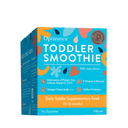
Optivance Toddler Smoothie is made for children aged 1–3 as an age-specific supplementary nutrition option. It is intended to supplement a normal diet—not replace meals, chewing practice, food variety or age-appropriate texture experiences.
Its role is nutritional rather than therapeutic. It cannot treat a sensory difficulty, teach a toddler to chew or resolve an underlying feeding concern.
Families using it should continue offering appropriate meals, snacks and food textures, unless a health professional has provided different individual guidance.
Explore suitable toddler smoothie recipes and variations → Creative Smoothie Recipes for Toddlers
View ingredients and nutritional information → Optivance Toddler Smoothie product page
Contains milk and soy.
A simple taste-and-texture checklist
Before offering a different form of food, ask:
- What exact version does my toddler already accept?
- Which sensory qualities make it familiar?
- Am I changing only one feature?
- Is the new texture appropriate for my child’s current skills?
- Is the serving small and manageable?
- Is something familiar still available?
- Am I allowing exploration without requiring a bite?
- Is this food prepared safely?
- Does my toddler appear physically able to manage it?
- Is there frequent gagging, coughing, choking or distress that needs assessment?
Final thoughts
A toddler can accept a flavour and still reject the way that food feels.
Looking beyond “likes” and “dislikes” can help you see more clearly what may be happening at the table.
Begin with the exact form your toddler knows. Identify the texture that feels familiar. Change one feature at a time, keep the amount manageable and let exploration count.
The goal is not to move through a texture chart as quickly as possible.
It is to create age-appropriate opportunities for your toddler to experience food while recognising when a difficulty needs more individual support.
Frequently asked questions
Why does my toddler eat a food in a smoothie but refuse it whole?
The blended and whole forms can have different textures, appearances, smells and chewing requirements. Your toddler may accept the flavour while finding the other form unfamiliar or difficult to manage.
What is mouthfeel?
Mouthfeel is the way food feels inside the mouth. Foods can feel smooth, lumpy, sticky, slippery, grainy, dry, chewy or mixed, and toddlers may respond differently to each quality.
Should I keep offering different textures?
You can offer small, low-pressure opportunities where the texture is safe and appropriate for your child’s current skills. Seek professional advice if your child regularly coughs, chokes, struggles to chew or cannot progress through textures.
Should I hide foods in smoothies?
Blending appropriate ingredients into a smoothie can provide another way to serve them, but it should not be the only strategy. It does not automatically help a toddler recognise or accept the ingredient in another form.
What should I do if my toddler dislikes mixed foods?
Serve components separately and allow your child to decide whether to combine them. You might gradually introduce a very small amount of mixing while keeping the familiar components available.
Does touching food count as progress?
Touching, smelling and handling can help a food become more familiar. These experiences do not guarantee that the food will be eaten, but they can still be meaningful parts of exploration.
Should I praise my toddler for trying a texture?
A calm acknowledgement is usually enough. Large celebrations can make eating feel like a performance or create pressure to repeat the behaviour.
Is gagging the same as choking?
No, but both deserve careful attention. Gagging can occur while children learn to manage food sensations, whereas choking involves airway obstruction. Frequent gagging, coughing or choking should be discussed with a health professional.
When should I get help with texture refusal?
Seek support when the texture range is extremely narrow or shrinking, the child cannot progress through manageable textures, eating causes significant distress, growth is concerning or there are chewing and swallowing difficulties.
Can a toddler smoothie resolve texture sensitivity?
No. A smoothie may be an accepted texture and may provide supplementary nutrition, but it cannot treat a sensory or oral-motor difficulty or replace opportunities to manage other appropriate textures.
Disclaimer
This article provides general educational information and is not a substitute for personalised medical, nutritional, swallowing or feeding advice. Speak with your GP, child and family health nurse, accredited practising dietitian, paediatrician, speech pathologist or occupational therapist if you are concerned about your child’s growth, eating, chewing or swallowing.
References
- Raising Children Network. Fussy eating: what to do. Updated 30 September 2025. Accessed 25 July 2026.
- Raising Children Network. Choking hazards and prevention. Updated 13 November 2025. Accessed 25 July 2026.
- Raising Children Network. Messy eating and how to manage it. Updated 30 September 2025. Accessed 25 July 2026.
- World Health Organization. Infant and young child feeding. Accessed 25 July 2026.
- World Health Organization. Complementary feeding. Accessed 25 July 2026.
- Royal Children’s Hospital Melbourne. Physical, Sensory and Oral Motor Development. Accessed 25 July 2026.
- Royal Children’s Hospital Melbourne. Feeding Development and Difficulties. Accessed 25 July 2026.
- Healthdirect Australia. Dysphagia. Accessed 25 July 2026.
- Healthdirect Australia. Choking. Accessed 25 July 2026.
-
Optivance: Toddler Smoothie product information


