








You ask your toddler what they want for lunch.
They request toast, so you prepare toast. By the time it reaches the table, they no longer want it. You offer yoghurt instead, but that is refused too. After several more suggestions, you are both frustrated and lunch has become a negotiation.
Giving toddlers choices can help them feel involved, but too many choices can have the opposite effect.
The answer is not to remove every choice or allow your toddler to design an entirely different menu at every meal. It is to offer structured options: a small number of choices selected by the parent, with each option being acceptable and available.
The practical approach: The parent decides the meal framework. The toddler is given one or two simple choices within that framework.
For a broader look at food-first strategies, smoothies, supplements and professional support, read our:
Complete guide to nutrition for fussy toddlers → Nutrition for Fussy Toddlers: A Practical Guide to Food, Supplements and Support
What are structured food choices?
A structured food choice gives a toddler some age-appropriate control without handing over responsibility for the entire meal.
Instead of asking:
“What do you want for lunch?”
you might ask:
“Would you like cucumber or avocado with your sandwich?”
Instead of asking:
“How do you want your dinner?”
you might ask:
“Would you like the sauce beside your pasta or in a separate bowl?”
In both examples, the parent has already decided what meal is being offered. The toddler is choosing between two manageable options within that meal.
Australian parenting guidance recommends allowing fussy children to choose from a limited range of suitable foods and suggests keeping the options to two or three so the choice does not become confusing or overwhelming.
Structured choices are not a guaranteed way to make a toddler eat. Their purpose is to reduce unnecessary conflict, support appropriate independence and make the meal feel more predictable.
Why do toddlers want control at mealtimes?
Toddlers are developing independence, preferences and a clearer understanding that their decisions can influence what happens around them.
Food is one of the few areas where a young child can reliably exercise control. An adult can choose what is bought, prepared and served, but they cannot force a child to swallow it.
This is one reason a simple question can quickly become a strong refusal.
A toddler might reject food because:
- They genuinely do not want it
- The choice feels too broad
- They are tired or not hungry
- They prefer a different texture or presentation
- They are testing a familiar limit
- Saying no feels more appealing than either option
- They have learned that refusal leads to another offer
Changing preferences and developing independence are common during the toddler years. NSW Government guidance describes toddlers as developing their own personality, likes, dislikes and independence during this stage.
The goal is not to remove this developing autonomy. It is to give it an appropriate place.
Which decisions belong to the parent?
The parent or caregiver remains responsible for the overall structure of eating.
This includes deciding:
- Which foods are available in the household
- What meal or snack is being offered
- When meals and snacks happen
- Where the child eats
- Whether the options are safe and age-appropriate
- How many options are offered
- When the eating occasion is finished
Australian toddler-feeding guidance similarly describes the adult as deciding what food is offered, while the toddler decides whether to eat and how much.
This does not mean every meal must be rigid or identical for the whole family. It means the adult retains responsibility for providing an appropriate eating opportunity.
Which decisions can the toddler make?
Depending on the meal and the child’s age, a toddler might choose:
- Between two suitable foods
- Whether a food is placed beside or separately from another food
- Between two age-appropriate ways of preparing a food
- Which of two plates or cups to use
- Whether to begin with one part of the meal or another
- How much to eat from what has been offered
- Whether they want another helping
- Whether they are finished
These choices give the toddler meaningful participation without requiring the parent to repeatedly produce new meals.
Structured choices versus an unlimited menu
The difference is the boundary around the choice.
| Open-ended or difficult choice | More structured alternative |
|---|---|
| “What do you want for dinner?” | “Would you like peas or carrots with dinner?” |
| “Do you want vegetables?” | “Would you like cucumber or avocado?” |
| “What fruit do you want?” | “Would you like banana or pear?” |
| “Will you eat the pasta?” | “Would you like the sauce beside it or in a small bowl?” |
| “What can I make that you’ll eat?” | “We’re having toast. Would you like yoghurt or fruit with it?” |
| “Do you want lunch now?” | “Would you like to sit in this chair or that chair for lunch?” |
| “Will you please try one bite?” | “You can decide whether you want to taste it.” |
A structured choice should not be used to disguise a demand.
For example:
“Would you like to eat the broccoli now or in five minutes?”
is not a genuine food choice if the toddler is not permitted to decline it.
Offer choices only when either answer is acceptable.
How to use structured choices at toddler mealtimes
1. Decide the meal before offering the choice
Before involving your toddler, decide what you are reasonably prepared to serve.
For example, you might decide that lunch will include:
- Toast
- Egg
- A fruit or vegetable
- Water
The choice might then be:
“Would you like banana or cucumber with lunch?”
This keeps you from listing options while trying to work out the meal in real time.
The toddler participates, but the adult still provides the structure.
2. Offer two options rather than the whole kitchen
Two options are usually enough for a toddler.
For example:
- Banana or pear
- Carrot or cucumber
- Yoghurt or cheese
- Toast strips or toast squares
- The dip beside the crackers or in a separate bowl
Raising Children Network recommends limiting healthy options to two or three so children are not overwhelmed.
More choice is not always more empowering. A long list can make the decision harder and create the expectation that another option will keep appearing until the child approves.
3. Make sure both choices are genuinely available
Do not offer an option that you do not have, do not want to prepare or would prefer your toddler not to select.
Avoid:
“Would you like yoghurt or fruit?”
when the yoghurt is being saved for another meal and you are hoping the answer will be fruit.
Instead, offer two outcomes you can accept equally.
The question should not contain a hidden correct answer.
4. Keep the choice specific
Toddlers often respond more easily to a concrete choice than to a broad question.
Compare:
“What do you want?”
with:
“Would you like the apple sliced or grated?”
The second question gives the child something immediate and understandable to decide.
Useful categories include:
Food choice
“Would you like peas or soft carrot?”
Presentation choice
“Would you like the fruit beside the yoghurt or in a separate bowl?”
Shape choice
“Would you like your toast in strips or squares?”
Participation choice
“Would you like to stir or sprinkle?”
Seating choice
“Would you like to sit in this chair or that chair?”
Not every choice needs to be about which food is eaten.
5. Use choices before the meal becomes tense
A structured choice tends to work best when it is offered calmly, before the meal has turned into a negotiation.
For example:
“We’re having pasta tonight. Would you like the sauce beside it or a little mixed through?”
This is different from repeatedly presenting new choices after the child has already become upset.
Once emotions are high, further questions can feel like pressure and create more decisions for a child who is already overwhelmed.
6. Give your toddler time to answer
Young children may need a few moments to process a question.
Ask once, then pause.
Try not to immediately repeat it:
“Carrot or cucumber? Which one? Do you want carrot? What about cucumber?”
This can make a simple choice feel urgent.
You might show the two options or point to them while asking. If your toddler does not choose, calmly make the decision yourself:
“It looks like choosing is hard today, so I’ll put cucumber on the plate.”
This keeps the meal moving without criticism.
7. Avoid reopening the choice once it has been made
A toddler may choose banana and then ask for pear once the banana appears.
Some flexibility is reasonable. But if every selection leads to a replacement, the process can quickly become an extended negotiation.
You might say:
“You chose banana today. We can have pear at another snack.”
or:
“The banana is here if you want it. You don’t have to eat it.”
The aim is not to punish the child for changing their mind. It is to show that a choice does not always produce another round of options.
8. Do not make eating the condition of having a choice
A toddler should not need to earn autonomy by taking a bite.
Avoid:
“You can choose your fruit after you eat the chicken.”
Instead, choices can be built naturally into the meal:
“Would you like banana or pear with your lunch?”
Using one food as the reward for eating another can make the first food appear like an unpleasant task and the second seem more desirable.
Responsive-feeding guidance emphasises encouraging young children to eat without forcing them.
9. Keep familiar food available where practical
Structured choices are easier when the child knows there will be something recognisable at the meal.
For example:
- Familiar toast with a choice of banana or pear
- Accepted pasta with sauce beside it or in a small bowl
- Familiar crackers with a choice of two suitable dips
- Yoghurt with a choice of fruit beside it or mixed through
The familiar food is not a prize. It is simply part of making the meal approachable.
For more on using familiar foods without pressure, read:
Create calmer meals with a familiar food → Feeding Your Fussy Eater Without the Fight
10. Let “neither” remain possible
Offering carrot or cucumber does not guarantee that your toddler will eat either one.
The toddler may select carrot and then leave it untouched. They may refuse both options. They may eat only another part of the meal.
A choice controls what is served or how it is presented. It does not create an obligation to eat.
That distinction is important.
You can provide the options while still allowing the child to decide whether and how much to eat from the meal.
What should you do when both choices are refused?
Your toddler might respond:
“No carrot. No cucumber.”
You do not need to continue naming every fruit and vegetable in the house.
Try a calm response:
“You don’t want either one today. I’ll put a little cucumber on the plate.”
or:
“Those are the choices for this meal. You don’t have to eat them.”
Then continue with the eating occasion.
If there is something familiar in the meal, the toddler can choose whether to eat that part.
The next planned meal or snack provides another opportunity.
Repeatedly preparing separate meals after refusal can contribute to a difficult mealtime pattern, particularly when the focus shifts entirely to finding something the child will accept. The Royal Children’s Hospital identifies preparing separate meals following refusal and focusing heavily on the amount or type eaten as possible features of an unhelpful mealtime environment.
This does not mean families can never be flexible. Illness, travel, sensory needs and individual circumstances all matter. The goal is to avoid making routine refusal the beginning of an unlimited search for another meal.
What if your toddler asks for a food that was not offered?
You might hear:
“I want biscuits.”
You can acknowledge the request without changing the meal:
“You’d like biscuits. They aren’t part of lunch today. We have toast and yoghurt.”
Avoid lengthy explanations or arguments.
A boundary can be calm and brief.
Where the requested food fits your family routine, you can clarify when it might next be available:
“Biscuits aren’t for lunch. We can have one with afternoon tea.”
Do not make the requested food a reward for eating the meal:
“You can have the biscuit if you finish everything.”
The issue is not that a toddler requested something else. It is how the adult responds to the request.
What if your toddler changes their mind constantly?
Changing decisions is common at this age.
A toddler might request:
- The blue plate, then reject it
- Sliced banana, then ask for it whole
- Yoghurt, then say they wanted cheese
- Sauce beside pasta, then want it mixed in
Try to avoid rebuilding the meal repeatedly.
A useful response is:
“You chose the blue plate, so we’ll use that one today.”
or:
“The sauce is beside the pasta today. You can decide whether you want to use it.”
This helps show that choices are meaningful but not endlessly reversible.
When making a choice is clearly causing distress, temporarily reduce the decision-making:
“Choosing feels hard today, so I’ll choose for us.”
Not every meal needs to contain several choices.
Choices about presentation can be easier than choices about food
A toddler who frequently refuses food choices may respond better to choices about presentation.
Examples include:
- Beside or separate
- Sliced or grated
- One piece now or the rest kept in the serving bowl
- Blue cup or green cup
- Spoon or fork
- Sit beside Mum or beside Dad
- Wash the fruit or place it on the plate
- Dip in this bowl or that bowl
Presentation choices allow the toddler to participate without requiring them to decide which food the family prepares.
They can be particularly useful when introducing something unfamiliar.
Help unfamiliar foods feel more manageable → How to Introduce New Foods to a Fussy Toddler: 10 Practical Steps
Choices can happen outside mealtimes too
Toddlers can be involved before the food reaches the table.
At the shop:
“Should we buy pears or mandarins?”
During preparation:
“Would you like to wash the cucumber or place it in the bowl?”
While setting the table:
“Would you like the small plate or the divided plate?”
During serving:
“Would you like one piece to start or two?”
Helping with family meal preparation is also recommended as a way of increasing children’s involvement and familiarity with food.
Participation does not guarantee that your toddler will eat what they helped prepare. Avoid following involvement with:
“You made it, so now you have to taste it.”
The benefit is the experience, not a compulsory bite.
How structured choices fit with toddler portion sizes
Food choices and portion sizes are connected, but they answer different questions.
Structured choices answer:
“What appropriate control can my toddler have?”
Portion guidance answers:
“How much should I place on the plate initially?”
You can combine both approaches:
“Would you like carrot or cucumber?”
followed by:
“Would you like one piece to start or two?”
The child is offered manageable control while the parent keeps the amount and options appropriate.
Start with manageable toddler portions → Toddler Portion Sizes: Why Starting Small Can Make Mealtimes Easier
Common mistakes when offering toddler food choices
Offering too many options
A long list can overwhelm a toddler and encourage them to keep waiting for a more preferred suggestion.
Keep it to two options where possible.
Asking an open-ended question when there is a limit
Avoid:
“What do you want for dinner?”
when dinner has already been planned.
Offer a smaller choice within the meal instead.
Presenting a false choice
Do not ask:
“Do you want to sit at the table?”
if sitting at the table is the expected routine.
Try:
“Would you like to sit in this chair or that chair?”
Using choices as pressure
Avoid:
“Which vegetable are you going to eat?”
The child can choose what is served without being required to eat it.
Offering another choice after every refusal
A structured choice stops being structured when alternatives continue indefinitely.
Allowing the toddler to control the whole household menu
Supporting independence does not require every family member to eat a meal selected by the toddler.
Expecting immediate results
Structured choices can make participation easier, but they do not guarantee acceptance or eliminate all refusal.
What structured choices cannot do
Structured choices can support a calmer mealtime framework, but they cannot:
- Make a toddler hungry
- Guarantee that either option will be eaten
- Resolve a swallowing or chewing difficulty
- Diagnose a nutritional deficiency
- Replace age-appropriate food exposure
- Treat significant sensory distress
- Correct an underlying medical problem
- Replace individual feeding support
A child with significant feeding difficulty needs more than increasingly creative choices.
RCH distinguishes common variable toddler eating from more persistent and severe patterns involving restricted variety, distress, disruption or prolonged difficulty.
When might extra support be helpful?
Speak with your GP, child and family health nurse, accredited practising dietitian or another appropriate health professional if your toddler:
- Eats an extremely limited or shrinking range of foods
- Avoids entire food groups
- Is losing weight or not growing as expected
- Has unusually low energy
- Becomes highly distressed at most meals
- Regularly coughs, chokes or struggles to swallow
- Cannot manage age-appropriate textures
- Has persistent vomiting, diarrhoea, pain or other concerning symptoms
- Relies on drinks for most of their nutrition
- Has feeding difficulties that are significantly affecting family life
The appropriate strategy depends on the child’s individual needs, the severity and duration of the difficulty, growth and feeding skills.
You do not need to identify the cause yourself before asking for help.
What if your concern is your toddler’s overall nutrition?
Structured choices may make meals more manageable, but they cannot tell you whether your toddler’s diet is meeting their overall nutritional needs.
For a balanced overview of normal food, nutrient-enriched meals, homemade smoothies, fortified foods, supplements and professional support, read:
Compare nutrition options for a fussy toddler → Nutrition for Fussy Toddlers: A Practical Guide to Food, Supplements and Support
You may also find these useful:
- Immediate ideas for difficult meals → Top Ten Quick Tips for Fussy Toddlers
- Understand food groups and intake patterns → Is Your Toddler Meeting Their Nutritional Requirements?
- Learn how much food to offer initially → Toddler Portion Sizes: Why Starting Small Can Make Mealtimes Easier
Where Optivance Toddler Smoothie may fit
Some families choose an age-specific supplementary nutrition option for days when appetite or accepted foods are less predictable.
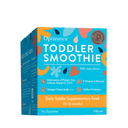
Optivance Toddler Smoothie is made for children aged 1–3 and provides protein, fibre, DHA omega-3, probiotics, and 16 vitamins and minerals plus lutein.
It is intended to supplement a normal diet—not replace meals, food variety, appetite cues or professional feeding support.
Its role is nutritional rather than behavioural. A toddler smoothie cannot remove the need for boundaries, teach structured decision-making or guarantee that a child will accept unfamiliar food.
View ingredients and nutritional information → Optivance Toddler Smoothie product page
Contains milk and soy.
A simple structured-choice checklist
Before offering your toddler a choice, ask:
- Have I already decided the meal framework?
- Are both options suitable and genuinely available?
- Have I limited the choice to two options?
- Is the question clear and specific?
- Am I willing to accept either answer?
- Does the choice allow the toddler to decline eating?
- Can I avoid presenting more alternatives after refusal?
- Could a presentation choice work better than a food choice?
- Am I keeping the boundary calm rather than turning it into an argument?
- Is there a feeding, growth or nutritional concern that needs individual support?
Final thoughts
Giving toddlers choices does not mean giving them complete control over the menu.
A structured option allows the parent to provide an appropriate meal while giving the child a small, meaningful decision within it.
Choose the meal first. Offer two suitable options. Keep the question simple. Accept that your toddler may still decide not to eat.
The success of the strategy is not measured by whether the carrot or cucumber disappears from the plate.
It is measured by whether the choice supports participation without turning the meal into an endless negotiation.
Frequently asked questions
Should toddlers be allowed to choose what they eat?
Toddlers can make small, age-appropriate choices within a meal selected by the parent. The adult remains responsible for what foods are offered, while the toddler decides whether and how much to eat.
How many food choices should I give my toddler?
Two choices are usually enough. Australian parenting guidance recommends limiting choices to two or three appropriate options to avoid confusion or overwhelm.
What are examples of structured food choices?
Examples include carrot or cucumber, sliced or grated fruit, sauce beside pasta or in a separate bowl, and a blue or green cup.
What should I do when my toddler refuses both choices?
Avoid continuing through a long list of alternatives. Calmly select one option to place with the meal and allow your toddler to decide whether to eat it.
Should I ask my toddler what they want for dinner?
An open-ended question can create unrealistic expectations and extended negotiation. Decide the main meal first, then offer a smaller choice within it.
What if my toddler changes their mind after choosing?
Acknowledge the change without automatically replacing the choice. You might explain that the selected option is being served today and the other can be offered another time.
Can choices make a toddler less fussy?
Choices can give a toddler appropriate control and may reduce some mealtime conflict, but they do not guarantee that foods will be accepted or resolve every cause of fussy eating.
Should I offer a preferred food when both choices are refused?
Where practical, include something familiar as part of the original meal. Avoid automatically preparing a sequence of replacement meals after each refusal.
Can I give choices about how food is presented?
Yes. Presentation choices—such as sliced or grated, beside or separate, or which plate to use—can provide control without changing the whole meal.
When are structured choices not enough?
Seek individual advice if your toddler’s diet is extremely restricted or shrinking, growth is concerning, eating causes significant distress, or there are chewing or swallowing difficulties.
Disclaimer
This article provides general educational information and is not a substitute for personalised medical, nutritional or feeding advice. Speak with your GP, child and family health nurse, accredited practising dietitian, paediatrician, speech pathologist or occupational therapist if you are concerned about your child’s growth, nutrition, eating or swallowing.
References
- Raising Children Network. Fussy eating: what to do. Updated 30 September 2025. Accessed 25 July 2026.
- Raising Children Network. What to feed toddlers at 1–2 years. Accessed 25 July 2026.
- World Health Organization. Infant and young child feeding. Accessed 25 July 2026.
- World Health Organization. Recommended food for the very early years. Accessed 25 July 2026.
- Royal Children’s Hospital Melbourne. Mealtime Environments. Accessed 25 July 2026.
- Royal Children’s Hospital Melbourne. Typical and Problematic Feeding and Mealtime Behaviours. Accessed 25 July 2026.
- Royal Children’s Hospital Melbourne. Choosing management strategies. Accessed 25 July 2026.


