




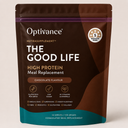

A homemade smoothie might contain banana, yoghurt and oats.
A formulated toddler smoothie might provide measured protein, fibre, DHA, probiotics, vitamins and minerals.
Both arrive in a cup, but they are not necessarily designed to do the same job.
The practical distinction: A homemade smoothie is a flexible recipe made from selected foods. A toddler nutrition smoothie is a standardised product whose nutritional profile is designed and measured in advance.
Neither approach is automatically best for every family.
Homemade and formulated toddler smoothies can both have a place, but neither should be considered in isolation from your child’s broader eating pattern. For a complete look at food-first strategies, nutritional support and when supplementary options may be useful, read our Practical guide to nutrition for fussy toddlers → Nutrition for Fussy Toddlers: A Practical Guide to Food, Supplements and Support.
Start with the reason you are making it
Before comparing ingredients, ask what you want the smoothie to do.
Are you trying to:
- Use fruit or yoghurt your toddler already accepts?
- Create a planned snack?
- Provide another texture or flavour experience?
- Make a busy morning easier?
- Include a consistent set of selected nutrients?
- Support a very restricted diet that needs professional review?
The answer affects which option is more appropriate.
What is a homemade toddler smoothie?
A homemade smoothie is a recipe created from foods chosen by the family.
It might include:
- Milk or a suitable alternative
- Yoghurt
- Fruit
- Oats
- Avocado
- Smooth nut or seed paste where suitable
- Other age-appropriate ingredients
Its strengths are flexibility and food familiarity.
Its nutritional profile changes every time the recipe, ingredient quantity or portion changes.
What is a toddler nutrition smoothie?
A toddler nutrition smoothie is a packaged product designed for a specific age or purpose.
Depending on the product, it may provide measured amounts of:
- Protein
- Fibre
- Fat or omega-3
- Vitamins and minerals
- Probiotics
- Energy
The exact category still matters. Some products are fortified drinks, while others are regulated formulated supplementary foods. Optivance is a Formulated Supplementary Food for Young Children under Standard 2.9.3.
Side-by-side comparison
| Consideration | Homemade smoothie | Toddler nutrition smoothie |
|---|---|---|
| Ingredients | Chosen by the family | Fixed by the manufacturer |
| Nutrition | Varies with recipe and portion | Standardised per directed serve |
| Flexibility | Highly customisable | Can often be personalised, but base formula remains fixed |
| Food familiarity | Uses recognisable household foods | Introduces a formulated product |
| Protein and fibre | Depend on ingredients | Usually listed per serve |
| Vitamins and minerals | Depend on recipe | May be deliberately fortified |
| DHA and probiotics | Present only if included | May be part of the formulation |
| Allergens | Depend on recipe | Declared on the label |
| Cost | Varies by ingredients and waste | Can be calculated per sachet or serve |
| Preparation | Requires measuring and ingredients | Usually portioned and directed |
| Food learning | Can expose child to familiar ingredients | Does not replace visible food exposure |
| Medical role | Ordinary food recipe | Usually consumer food unless specifically classified as medical |
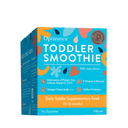
For families who value a consistent, age-specific option, Optivance Toddler Smoothie provides measured amounts of protein, fibre, DHA, probiotics, and 16 vitamins and minerals plus lutein in each standard serve. It is made for children aged 1–3 to supplement a normal diet—not replace meals or food variety. Explore the ingredients, nutrition and preparation information → Optivance Toddler Smoothie product page.
Homemade smoothie strength: flexibility
A homemade smoothie can be adjusted around:
- Accepted flavours
- Food already in the fridge
- Allergies
- Cultural preferences
- Desired thickness
- Family budget
For example, a toddler who accepts banana and yoghurt might begin with those familiar foods.
You can also keep ingredients visible during preparation so your toddler knows what is being used.
Explore age-appropriate recipe combinations → Creative Smoothie Recipes for Toddlers
Homemade smoothie limitation: nutrition varies
A smoothie made with fruit and water has a different profile from one containing yoghurt, oats and avocado.
The nutrition can also change according to:
- Fruit type
- Milk or yoghurt used
- Portion size
- Added spreads
- Whether the child finishes it
Homemade does not mean inadequate. It means the recipe needs to be judged according to what it actually contains.
A fruit-heavy smoothie may provide fruit and fluid but relatively little protein, iron, DHA or calcium, depending on the recipe. Whole fruit also generally retains more fibre and eating experience than juice. Healthdirect recommends fruit juice only occasionally and notes that juice without pulp lacks the fibre of whole fruit.
Formulated smoothie strength: consistency
A formulated product provides the same declared amounts when it is prepared correctly.
That consistency may appeal to families who want:
- A measured serve
- Individually portioned sachets
- A predictable taste and texture
- A fixed combination of nutrients
- A product developed for a particular age
The benefit is predictability—not nutritional perfection.
Formulated smoothie limitation: it remains one product
A formulated smoothie cannot provide:
- The complete variety of normal food
- Chewing practice
- Exposure to visible vegetables, fruit, grains and proteins
- Family meal experience
- Individual diagnosis or treatment
A toddler who accepts only smooth drinks still needs appropriate opportunities to manage other textures, unless a health professional has advised otherwise.
What about sugar?
Homemade and packaged smoothies can both contain sugars.
In homemade recipes, sugars may come from:
- Fruit
- Milk
- Yoghurt
- Juice
- Sweetened ingredients
In a packaged product, review both the total-sugars line and ingredient list. Australian nutrition panels show total sugars, so the figure alone does not identify how much came from milk, fruit or added ingredients.
What about protein?
Homemade protein depends on the recipe.
A smoothie containing yoghurt, milk or smooth nut paste may provide more protein than fruit and water alone.
A formulated smoothie should declare its protein per standard prepared serve.
Do not add adult protein powder to a toddler smoothie simply because it seems nutritious. Adult sports products are not designed as general toddler foods.
Learn how to find protein opportunities across the day → Protein for Toddlers: The Protein Opportunity Method
What about vitamins and minerals?
Whole foods naturally provide combinations of nutrients.
A formulated product may also include added vitamins and minerals in measured quantities.
The important question is not:
“Which option has the longest list?”
It is:
“What does this option contribute to what my toddler already eats?”
A toddler who already receives several fortified products may not benefit from automatically adding another one.
Can families use both?
Yes. The two approaches do not need to compete.
A family might:
- Use ordinary homemade smoothies most of the time
- Use a portioned toddler nutrition smoothie on selected days
- Blend the formulated base with an accepted ingredient where directions allow
- Continue serving fruit, yoghurt and other ingredients separately
The important points are to:
- Follow the product directions
- Consider the total diet
- Avoid routinely displacing meals
- Review overlapping fortified products
- Maintain normal food and texture experiences
A five-question decision guide
1. Do you mainly want flexibility?
A homemade smoothie may be the better starting point.
2. Do you want measured nutritional consistency?
A formulated product may be worth considering.
3. Does your toddler need a medical nutrition plan?
Neither a general homemade recipe nor a consumer toddler smoothie should replace professional assessment.
4. Is your toddler already using fortified foods or supplements?
Compare total intake before adding another product.
5. Will the smoothie displace a meal?
Consider timing, portion and appetite.
How Optivance compares
Optivance Toddler Smoothie has a fixed 25 g serve prepared with 180 mL water. The formula provides 10.6 g protein, 1.9 g fibre, 40 mg DHA, three billion CFU of probiotics, and 16 vitamins and minerals plus lutein. It contains milk and soy.
A homemade smoothie may offer greater flexibility.
Optivance offers greater consistency.
Neither removes the need for normal meals, snacks and food exploration.
[INTERNAL LINK: compare toddler nutrition products using ten checks → What to Look for in a Toddler Nutrition Smoothie for Fussy Eaters]
When to seek professional advice
Speak with a GP, child and family health nurse or accredited practising dietitian when:
- Growth is concerning
- The diet is extremely restricted
- Several food groups are excluded
- Drinks provide most nutrition
- The child has multiple allergies
- Chewing or swallowing is difficult
- A medically prescribed product may be required
Final thoughts
Homemade smoothies and toddler nutrition smoothies offer different strengths.
Choose homemade when flexibility and familiar foods are the priority. Consider a formulated option when a measured, age-specific serve fits your needs.
Many families may use neither. Others may use both at different times.
The best choice is the one that fits safely alongside your toddler’s normal eating pattern rather than replacing it.
Frequently asked questions
Are homemade smoothies healthier?
Not automatically. Their nutritional profile depends on the ingredients and portion.
Are toddler nutrition smoothies more complete?
They may contain a wider measured nutrient range, but they are not automatically complete diets or meal replacements.
Can I blend Optivance with fruit?
Recipe variations can include age-appropriate ingredients where current directions allow. The standard preparation remains 25 g powder with 180 mL water.
Can a smoothie replace fruit?
No. Continue offering fruit in age-appropriate, recognisable forms.
Can a smoothie be a snack?
Yes, but consider its energy and timing so it does not continually displace meals.
Disclaimer
This article provides general educational information and is not a substitute for personalised nutrition or medical advice.
References
- Australian Government, Eat for Health. Recommended number of serves for children, adolescents and toddlers.
- Healthdirect Australia. Balanced diet.
- Food Standards Australia New Zealand. Nutrition information panels.
- Optivance Toddler Smoothie product data sheet.


Leave a comment