









Feeding Your Fussy Eater Without the Fight
One day, banana is the favourite food. The next day, banana is unacceptable.
Yoghurt might be happily eaten for a week and then refused without warning. The foods your toddler accepts can seem to change overnight, while anything unfamiliar is met with suspicion before it even reaches their mouth.
It can be tiring and frustrating—especially when you have planned, shopped and cooked, only to watch the meal end after two bites.
But fussy eating is not evidence that you have failed.
Food refusal, changing preferences and caution around unfamiliar foods are common during the toddler years. The aim is not to win a battle over one plate. It is to create a calm, predictable environment where your child can gradually learn about food without feeling forced to eat it.
The quick approach: Provide the structure, lower the pressure, include something familiar and keep creating small opportunities to explore food over time.
For a broader look at food-first nutrition, fortified foods, supplements and toddler nutrition products, read our [complete guide to nutrition for fussy toddlers].
Why can toddlers become fussy with food?
Toddler eating can feel inconsistent because several things are happening at once.
Your child is becoming more independent. They are developing clear preferences and discovering that they can say no. Appetite can vary, and the way a food looks, smells or feels can matter as much as its flavour.
Some children are cautious with unfamiliar foods. Others strongly prefer certain textures or want foods separated rather than mixed together. It is also common for toddlers to reject something they previously accepted.
These behaviours do not all have the same significance.
Occasional refusal and changing preferences can be part of ordinary development. A very narrow or shrinking food range, persistent distress, difficulty chewing or swallowing, or concerns about growth deserve closer attention.
The strategies below are intended for common fussy-eating situations. They are not a substitute for individual feeding or medical assessment.
Start by lowering the pressure
When your toddler refuses food, it is natural to want to persuade them:
- “Just try one bite.”
- “You liked this yesterday.”
- “You can have dessert when you finish.”
- “Mummy made this especially for you.”
These responses usually come from concern, not criticism. But repeated prompting, bargaining or forcing can make the table feel like a place of conflict.
Responsive feeding guidance encourages parents to offer food patiently and support the child without forcing them to eat.
A helpful division of responsibility is:
Your role
You decide:
- What food is offered
- When meals and snacks happen
- Where eating takes place
Your toddler’s role
Your toddler decides:
- Whether to eat
- How much to eat from what has been offered
This does not mean giving up all structure or allowing an unlimited menu on demand. It means providing appropriate food and regular eating opportunities without making every mouthful a negotiation.
A calm phrase can help:
“You don’t have to eat it. It can stay on your plate.”
That keeps the food present while removing the demand to taste it immediately.
Keep meals and snacks predictable
Toddlers often respond well to routines they can understand.
Broadly predictable meals and snacks can reduce constant grazing and give your child regular opportunities to arrive at the table with some appetite.
A routine might include:
- Breakfast
- Morning snack
- Lunch
- Afternoon snack
- Dinner
The exact timing will depend on your household. The point is not to run meals by the minute. It is to create a rhythm where eating opportunities are dependable and food is not continually offered throughout the day.
Raising Children Network recommends regular, social mealtimes and involving toddlers in ordinary family food preparation where possible.
If a meal is refused, try to remain calm. You can end the meal without punishment and provide the next planned meal or snack at its usual time.
Automatically replacing every refused meal with a highly preferred alternative can unintentionally teach a toddler that refusal is the route to a different menu. But this does not mean sending a hungry or distressed child away without support. Including something familiar in the original meal makes this approach more manageable.
Include one familiar food
A familiar food gives your toddler something they recognise while another food is present.
This might look like:
- Familiar toast with egg offered beside it
- Plain pasta with a small amount of sauce on the side
- Yoghurt with fruit served separately
- Crackers beside a new dip
- A usually accepted vegetable beside a less familiar one
The familiar food is not a reward for eating the other food. It simply helps the meal feel less unfamiliar.
Current Australian parenting guidance similarly recommends placing a small amount of new food alongside a familiar food the child already likes.
Try not to remove all preferred foods in an effort to force variety. Sudden restriction can increase stress without teaching the child how to accept something new.
Begin with very small portions
A large serving can feel overwhelming before the child has even touched it.
For less familiar foods, a small amount is enough:
- One piece
- A small spoonful
- A thin spread
- A separate portion beside the familiar food
You can always provide more if your toddler wants it.
A small portion also allows the goal of the meal to change. Success does not always mean eating. It might mean allowing the food on the plate, touching it or smelling it without distress.
Think in terms of exposure, not bites
Food learning can happen in stages.
A toddler might:
- Tolerate the food nearby
- Allow it on the plate
- Touch it
- Smell it
- Lick it
- Take a small taste
- Eventually eat more of it
Not every child follows these exact steps, and progress is rarely linear.
Systematic reviews have found that repeated taste exposure can improve acceptance of some foods, particularly vegetables, but the number and type of exposures vary across children and studies.
Avoid counting every presentation and announcing that the child “should” accept the food by a particular attempt. The practical message is simpler:
Keep offering small, pressure-free opportunities without treating refusal as failure.
Use familiar foods as a bridge
A new food does not have to be completely different from everything your toddler already accepts.
Start from a familiar feature:
- A similar texture
- A similar flavour
- A familiar shape
- A known ingredient
- The same food prepared a slightly different way
Examples include:
- Familiar toast with a second spread offered beside the usual one
- Plain pasta with grated cheese or sauce served separately
- A preferred crunchy food beside another crunchy food
- Accepted yoghurt with fruit available on the side
- A familiar vegetable prepared in a different way
This is sometimes called using a food bridge. It reduces the number of unfamiliar features being introduced at once.
Small changes are often easier to explore than a completely new mixed meal.
Consider texture and mouthfeel
A toddler can reject a food because of how it feels, even when the flavour is familiar.
Foods might feel:
- Slippery
- Gritty
- Lumpy
- Sticky
- Wet
- Dry
- Mixed together
- Difficult to chew
Some toddlers prefer smooth foods, while others strongly favour crunchy or dry textures.
Rather than assuming a food is permanently disliked, you might offer it in another age-appropriate form.
For example, carrot might be served:
- Grated
- Softly steamed
- Roasted
- Mixed into a fritter
- Blended into a familiar sauce
Banana might be:
- Sliced
- Mashed
- Served with yoghurt
- Added to pancakes
- Blended into a smoothie
Texture changes should remain appropriate for the child’s age and chewing ability.
For a deeper guide to this process, read [The Toddler Taster and Texture Explorer].
If your toddler regularly coughs, chokes, struggles to chew or cannot progress through age-appropriate textures, seek professional advice rather than relying on experimentation alone. RCH identifies physical, sensory and oral-motor development as important contributors to feeding ability.
Let your toddler explore food
Toddlers do not learn about food only by swallowing it.
They might poke, smell, squash, lick or pull food apart. It can look messy, but sensory exploration can help a food become more familiar.
You might ask:
- “Is it soft or crunchy?”
- “What does it smell like?”
- “What colour can you see?”
- “Should we break it into two pieces?”
Keep the questions curious rather than persuasive. The goal is not to use play as a hidden route to force a bite.
Toddlers can also participate in simple preparation:
- Washing fruit
- Stirring yoghurt
- Placing food into a bowl
- Sprinkling an ingredient
- Arranging pieces on a plate
- Choosing between two parent-approved options
Raising Children Network recommends involving toddlers in preparing and cooking family food as one way to build familiarity.
For more on offering controlled choices, read Toddler Meal Options: How Giving Options Reduces Picky Eating.
Keep your language neutral
Food can quickly become emotionally loaded.
Large celebrations when a child tastes something and strong disappointment when they refuse can both increase the sense that eating is a performance.
Try calm, descriptive language:
- “This one is crunchy.”
- “The sauce is beside your pasta.”
- “You can leave it there.”
- “You don’t have to decide yet.”
- “Dinner is finished now. We’ll eat again at snack time.”
Avoid using one food as payment for another:
“Eat your vegetables and then you can have dessert.”
This can make the vegetable appear like the unpleasant task and dessert appear like the real prize.
You can offer dessert or other foods according to your family routine without using them as leverage for another bite.
Eat together where possible
Toddlers learn from watching familiar adults.
You do not need to perform enthusiasm or repeatedly tell the child how delicious the food is. Simply eating together and allowing them to see other people interact normally with different foods can help.
Shared meals also shift attention away from monitoring every bite.
RCH describes feeding as a reciprocal relationship in which child cues, parent responses and the overall mealtime environment all matter.
Family meals will not always be calm or perfectly organised. The aim is regular, ordinary exposure—not an idealised dinner-table performance.
What should you do when your toddler refuses the meal?
Try to keep the response brief.
You might say:
“That’s okay. You don’t have to eat it.”
Avoid repeatedly asking whether they are sure, negotiating the number of bites or immediately offering a sequence of alternative meals.
If something familiar was included, your toddler can decide whether to eat that part. The next planned meal or snack provides another opportunity.
There may be situations where flexibility is appropriate—for example, illness, unusual tiredness, travel or a disrupted routine. The aim is not rigid refusal to adapt. It is to avoid turning everyday food rejection into a lengthy negotiation.
What if your main concern is nutrition?
This article focuses on mealtime behaviour and food learning.
If you are concerned about food groups, protein, iron, vitamins, fortified products, smoothies or supplements, read:
Nutrition for Fussy Toddlers: A Practical Guide to Food, Supplements and Support
That guide explains the different nutrition options available to families and the strengths and limitations of each.
You can also read:
- Is Your Toddler Meeting Their Nutritional Requirements?
- Understanding Vitamins & Nutrition for Toddlers
- The Essential Guide to Omega-3 for Toddlers
A product cannot teach a toddler to accept different foods or replace feeding support. Nutritional support and food-learning strategies serve different purposes.
When might fussy eating need extra support?
Fussy eating exists on a spectrum.
RCH distinguishes ordinary variable preferences from feeding patterns that are persistent, highly restrictive, distressing or disruptive to nutrition and family life.
Speak with an appropriate health professional if your toddler:
- Is losing weight or not growing as expected
- Has unusually low energy
- Eats a very limited or shrinking range of foods
- Avoids entire food groups
- Has significant distress around meals
- Coughs, chokes or struggles while eating or drinking
- Has difficulty chewing or swallowing
- Has persistent vomiting, diarrhoea or other concerning symptoms
- Relies on drinks for most of their nutrition
- Has sensory responses that make eating very difficult
- Has feeding difficulties that are affecting everyday family life
A GP or child and family health nurse can help identify the right next step. Depending on the concern, this might include an accredited practising dietitian, speech pathologist, occupational therapist, paediatrician or feeding service.
You do not need to diagnose the problem yourself before asking for help.
A simple low-pressure mealtime checklist
Before the next meal, ask:
- Have I offered food at a broadly predictable time?
- Is the portion realistic for a toddler?
- Is there something familiar available?
- Am I allowing the new food to be present without demanding a bite?
- Have I considered the food’s texture, smell and appearance?
- Am I using neutral language?
- Can I let my toddler decide whether and how much to eat?
- Am I prepared to end the meal calmly if they are finished?
- Is there anything about growth, swallowing, distress or restriction that needs professional advice?
Progress can be gradual. A calmer meal, a new food tolerated on the plate or a curious touch can all be meaningful steps.
Where an Optivance Toddler Smoothie may fit
Some families also choose an age-specific supplementary nutrition product for less predictable days.
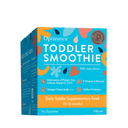
Optivance Toddler Smoothie is made for children aged 1–3 and is intended to supplement a normal diet—not replace meals, food exposure or professional feeding support.
Its role is nutritional rather than behavioural. It will not teach a child to accept a new texture or remove the need for calm, repeated food exposure.
For a balanced explanation of when a toddler nutrition smoothie may or may not be useful, read the practical nutrition guide for fussy toddlers.
Explore Optivance Toddler Smoothie
Final thoughts
Feeding a fussy toddler can feel deeply personal.
You have planned the meal, bought the ingredients, prepared the food and hoped that this time they might take a bite. When they refuse it, it can feel like all that effort has been rejected too.
But your job is not to produce a perfect plate or force a particular outcome at every meal.
Your role is to provide structure, appropriate food and repeated opportunities. Your toddler’s role is to respond to their appetite and gradually learn about the foods around them.
Keep the portions manageable. Include something familiar. Reduce the pressure. Let exploration count.
The goal is not to win dinner.
It is to build a calmer, safer and more sustainable relationship with food over time.
Frequently asked questions
Is fussy eating normal in toddlers?
Changing preferences, food refusal and caution around unfamiliar tastes or textures are common in toddlers. Seek advice when the range is very restricted, continues to shrink, affects growth or causes significant distress.
Should I force my toddler to try a new food?
No. Offer the food in an age-appropriate form and encourage gently, but avoid forcing the child to eat. Responsive-feeding guidance emphasises patience and encouragement without force.
How many times should I offer a new food?
There is no guaranteed number. Research suggests repeated exposure can improve acceptance of some foods, but children and foods vary. Keep portions small and pressure low.
What should I do if my toddler wants the same food every day?
Continue offering familiar foods while placing small amounts of other foods alongside them. Avoid suddenly removing all preferred foods, but keep creating opportunities for variety.
Should I make another meal when my toddler refuses dinner?
You do not need to prepare a completely different meal after every refusal. Include something familiar in the meal where practical, end the meal calmly and offer the next planned snack or meal at its usual time.
Can texture make a toddler refuse food?
Yes. Texture, smell, appearance and oral-motor ability can all influence food acceptance. Seek professional advice if your child has trouble chewing, swallowing, coughing or choking.
Is playing with food helpful?
Touching, smelling and exploring can help a toddler become familiar with food. Keep exploration calm and avoid turning it into pressure to take a bite.
When should I worry about fussy eating?
Seek support when the accepted-food range is very limited or shrinking, whole food groups are excluded, growth is a concern, eating causes significant distress or your child has chewing or swallowing difficulty.
Can a toddler smoothie stop fussy eating?
No. A toddler smoothie cannot teach food acceptance or resolve an underlying feeding difficulty. It may provide supplementary nutrition for some families, but it should sit alongside ordinary food exposure and appropriate professi
About the Author
Kristy Petersen is a passionate nutritionist specialising in gut health and children’s nutrition. With years of experience, she is dedicated to helping families achieve optimal health through balanced dietary practices.
Learn more about Kristy here


