






5 Simple Ways to Make Meals More Inviting for Fussy Toddlers
You prepare a meal that seems colourful, balanced and toddler-friendly.
Your child looks at it for a moment, pushes the plate away and asks for toast.
When food is regularly refused, it is tempting to believe you need a more exciting recipe, a perfectly arranged plate or an elaborate way to disguise vegetables.
But making a meal inviting does not mean turning every eating occasion into entertainment.
Often, it means making food feel:
- Manageable
- Recognisable
- Easy to explore
- Appropriate for your toddler’s current skills
- Free from pressure to eat
The practical approach: Keep the plate simple, include something familiar and create opportunities for curiosity without making a bite compulsory.
For a broader look at food-first strategies, smoothies, supplements and professional support, read our:
Explore the complete nutrition options for fussy toddlers → Nutrition for Fussy Toddlers: A Practical Guide to Food, Supplements and Support
What makes a toddler meal feel inviting?
Adults often think of an appealing meal in terms of flavour, presentation and variety.
Toddlers may notice other details first:
- Whether foods are touching
- How much is on the plate
- Whether the texture is familiar
- Whether the food looks predictable
- Whether they are expected to eat it
- Whether they helped prepare it
- Whether other family members are eating too
Australian guidance recommends offering small amounts of new food alongside familiar foods, involving children in preparation and keeping mealtimes regular and positive. These approaches can increase familiarity, but none guarantees that a toddler will eat what is offered.
The aim is not to make refusal impossible. It is to make the meal easier to approach.
1. Keep the plate simple and manageable
More food does not always make a meal more appealing.
A plate covered with several colours, textures, sauces and unfamiliar ingredients can feel like a lot to process.
Try beginning with:
- A modest initial portion
- Two or three simple foods
- At least one usually accepted food
- Space between foods where helpful
- More available if your child remains hungry
For example:
- Toast, egg and a few pieces of soft fruit
- Pasta with sauce beside it and an accepted vegetable
- Yoghurt, fruit and a small piece of toast
- Rice, tofu or chicken, and a soft cooked vegetable
You do not need to represent every food group perfectly at each sitting. Foods can be distributed across meals and snacks throughout the day. Sydney Children’s Hospitals Network recommends balance across the day rather than attempting to place every food group into every meal.
A small starting portion can also reduce the sense that your toddler is expected to finish a large amount.
Learn how much to place on the plate initially → Toddler Portion Sizes: Why Starting Small Can Make Mealtimes Easier
2. Use colour and shape without creating a performance
Simple presentation changes can make food easier to notice and handle.
You might:
- Cut toast into strips or squares
- Serve fruit in two different colours
- Keep sauce in a small bowl beside pasta
- Arrange a few ingredients separately
- Offer a soft dip with suitable foods
- Use a divided plate if touching foods are difficult
- Create a simple build-your-own meal
These ideas can support curiosity, but you do not need to use cookie cutters or create animal-shaped meals every day.
An ordinary plate is enough.
Try not to attach an expectation to the effort:
“I made it into a star, so you have to taste it.”
Instead, describe the food neutrally:
“Your toast is in strips today.”
“The red fruit and yellow fruit are beside each other.”
The presentation is an invitation, not a bargain.
3. Let your toddler help prepare or serve food
Participation can make ingredients more familiar before the meal begins.
Toddler-friendly jobs might include:
- Washing fruit or vegetables
- Stirring yoghurt
- Mashing banana
- Sprinkling grated cheese
- Placing food onto a plate
- Adding ingredients to a bowl
- Choosing between two suitable foods
- Carrying an unbreakable cup to the table
Current Australian guidance encourages involving toddlers in growing, preparing and learning about food. These experiences can help children explore food and build familiarity, but helping prepare a meal does not guarantee that they will eat it.
Avoid saying:
“You helped make it, so now you have to eat it.”
The value is in the participation itself.
A toddler might wash a vegetable, touch it and then decline it at the table. That interaction can still make the ingredient less unfamiliar.
4. Allow sensory exploration without demanding a bite
Toddlers learn about food through more than eating.
They might:
- Look at it
- Smell it
- Touch it
- Squash it
- Pull it apart
- Dip another food into it
- Move it around the plate
- Touch it to their lips
- Taste a small amount
Messy food exploration can be a normal part of toddler development.
You might ask:
- “Is it soft or firm?”
- “What colour can you see?”
- “Does it have a smell?”
- “What happens when we break it?”
- “Would you like it beside your toast?”
Keep the conversation curious rather than persuasive.
Avoid turning exploration into a sequence of demands:
“You touched it, so now lick it.”
“You licked it, so now take a bite.”
Let the child stop at the stage they can manage.
Understand how taste, texture and mouthfeel affect food refusal → The Toddler Taste and Texture Explorer
5. Offer simple interactive meals
Some meals can give toddlers a small, appropriate role in how food is assembled.
Examples include:
Build-your-own toast
Offer toast with two suitable toppings and allow your toddler to choose one.
Deconstructed wraps
Serve suitable fillings separately rather than rolling everything together.
Yoghurt and fruit
Place fruit beside the yoghurt so your toddler can decide whether to combine them.
Pasta with sauce on the side
This can make the meal more predictable for a toddler who dislikes mixed textures.
Smoothie bowl
Use an age-appropriate smoothie base with one or two suitable soft toppings, remembering that hard seeds, nuts and difficult-to-chew toppings may not be appropriate for toddlers.
Dips and familiar foods
Offer a small amount of hummus, yoghurt-based dip or another suitable dip beside an accepted food.
The parent still decides which foods are available. The toddler is given a limited choice about how to interact with them.
Offer simple choices without creating an unlimited menu → Toddler Food Choices: How Structured Options Can Make Mealtimes Easier
What not to turn mealtimes into
Making meals inviting should not mean:
- Preparing elaborate food art every day
- Replacing every refused meal
- Hiding all unfamiliar foods
- Offering endless alternatives
- Requiring one bite as payment for a preferred food
- Praising every mouthful dramatically
- Treating a clean plate as success
- Assuming a colourful plate will solve an underlying feeding problem
An enjoyable meal can still be simple.
It might be a small plate, familiar ingredients and a calm parent who is not watching every bite.
What if your toddler still refuses the food?
An inviting presentation cannot control appetite or guarantee acceptance.
You might respond:
“You don’t have to eat it. It can stay there.”
If the meal includes something familiar, your toddler can decide whether to eat that part.
Avoid immediately preparing a succession of replacement meals. Offer the next planned meal or snack at the usual time.
For more detailed support with refusal, pressure and mealtime roles, read:
Reduce conflict when your toddler refuses food → Feeding Your Fussy Eater Without the Fight
Keep food preparation safe
Food should always be prepared for your child’s age and chewing ability.
Hard, round or difficult-to-chew foods can present a choking risk. Healthdirect advises avoiding foods such as whole grapes, whole nuts, popcorn, raw apple and raw carrot until children can manage them safely.
Depending on the food and child, preparation might include:
- Cooking until soft
- Grating
- Mashing
- Removing stones or hard skins
- Cutting round foods appropriately
- Using smooth nut or seed paste instead of whole nuts
Toddlers should sit and be supervised while eating.
When presentation ideas are not enough
Speak with a health professional if your toddler:
- Has a very limited or shrinking food range
- Becomes highly distressed around food
- Regularly coughs, chokes or struggles to swallow
- Has difficulty chewing
- Cannot manage age-appropriate textures
- Relies heavily on drinks
- Is losing weight or not growing as expected
- Has feeding difficulties that significantly affect family life
Presentation strategies cannot treat a physical, sensory, oral-motor or medical feeding difficulty.
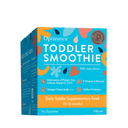
Where Optivance Toddler Smoothie may fit
Some families use smoothies as one familiar format within a broader food routine.
Optivance Toddler Smoothie is made for children aged 1–3 as a supplementary nutrition option. It is intended to complement a normal diet—not replace meals, chewing practice, texture experiences or professional support.
It can be prepared according to the pack directions or used in suitable recipe variations.
Explore toddler smoothie serving and recipe ideas → Creative Smoothie Recipes for Toddlers
View product ingredients and nutrition information → Optivance Toddler Smoothie product page
Contains milk and soy.
Final thoughts
Making food more inviting does not require perfection.
Begin with a manageable amount. Keep the plate simple. Let your toddler participate. Allow touching, smelling and exploring to count.
Some meals will still be refused.
The goal is not to create a plate your toddler cannot resist. It is to create calm, realistic opportunities for food to feel more familiar over time.
Frequently asked questions
Does making food look fun help fussy toddlers eat?
Presentation may encourage curiosity, but it does not guarantee that a toddler will eat. Keep the approach simple and avoid pressuring the child because extra effort went into the plate.
Should I use cookie cutters for toddler food?
You can, but they are not necessary. Simple strips, squares or separated ingredients can be just as useful.
Are build-your-own meals suitable for toddlers?
They can be, provided the ingredients are safe, age-appropriate and limited to a manageable number of choices.
Will my toddler eat food they help prepare?
They might be more curious about it, but participation does not guarantee eating. Avoid requiring them to taste the result.
Should I hide vegetables in meals?
Blending or combining vegetables can be practical, but concealment should not be the only strategy. Continue allowing your toddler to see and explore ingredients in recognisable forms.
When should I get help?
Seek advice when eating is very restrictive, growth is concerning, meals cause significant distress, or there are chewing, coughing, choking or swallowing difficulties.
Disclaimer
This article provides general educational information and is not a substitute for personalised medical, nutritional or feeding advice.
References
- Raising Children Network, Fussy eating: what to do.
- Sydney Children’s Hospitals Network, Healthy eating for toddlers (1–3 years).
- Raising Children Network, Why it’s good to eat family meals with toddlers.
- Healthdirect Australia, Choking.


