
















Starting Solids: How to Know When Your Baby Is Ready for First Foods
Starting first foods is an exciting milestone for you and your baby.
It is a time filled with new tastes, textures, smells and messy little moments. It is also an important stage in your baby’s development as they begin learning how to move food around their mouth, swallow different textures, practise early chewing skills and join in with family mealtimes.
But it can also feel confusing.
You may hear different advice from friends, family, social media and even other parents. Some people talk about purees. Others talk about baby-led weaning. Some suggest rice cereal, while others suggest avocado, meat, vegetables or egg.
So where do you start?
This guide answers common questions about first foods, including when babies are usually ready, what signs to look for, which foods to try first, which foods to avoid, and how to make the process feel calmer and more manageable.
First foods do not need to be perfect.
They need to be safe, age-appropriate and responsive to your baby’s readiness.
What are first foods really for?
First foods are sometimes called complementary foods because they sit alongside breastmilk or infant formula.
In the beginning, your baby may only eat tiny amounts. A few tastes may be enough. Much of the food may end up on the bib, tray, floor or hands.
That is normal.
At this stage, first foods are about helping your baby learn how to:
-
sit for meals
-
explore new tastes
-
experience new textures
-
move food around their mouth
-
practise swallowing
-
develop early chewing skills
-
use their hands around food
-
join family mealtimes
-
gradually receive nutrients that become more important around this age
First foods are not about replacing milk feeds overnight.
They are the beginning of food learning.
When should babies start solids?
In Australia, the National Health and Medical Research Council recommends exclusive breastfeeding until around 6 months where possible, followed by continued breastfeeding with appropriate complementary foods until 12 months and beyond, for as long as mother and child desire.
Where breastfeeding is not possible, infant formula is the safest alternative for babies under 12 months.
From around 6 months, babies should be offered a range of foods with textures and consistencies suitable for their developmental stage.
This does not mean every baby is ready on the exact day they turn 6 months.
It means that around this age, many babies begin showing signs that their body is ready to begin first foods.
Solids should not be introduced before 4 months.
If your baby was born premature, has feeding difficulties, allergies, growth concerns, reflux, swallowing concerns or a medical condition, speak with your child health nurse, GP, paediatrician or accredited practising dietitian before starting.
Is my baby ready for first foods?
Instead of only looking at the calendar, look for readiness signs.
Your baby may be ready to start solids when they can:
-
sit upright with support
-
hold their head and neck steady
-
show interest in food
-
open their mouth when food is offered
-
bring hands or objects toward their mouth
-
move food from the front of the mouth toward the back
-
swallow food rather than push most of it out with their tongue
Readiness is about development, not just age.
A baby who is around 6 months and showing these signs may be ready to begin.
Signs your baby may not be ready yet
Your baby may not be ready if they:
-
cannot sit with support
-
have poor head or neck control
-
push most food out with their tongue
-
turn away every time food is offered
-
seem distressed when food is offered
-
are much younger than 6 months
-
have feeding, growth or medical concerns
If you are unsure, it is always worth asking a child health nurse, GP, paediatrician or accredited practising dietitian.
What about tongue thrust?
Young babies have a tongue thrust reflex, where the tongue pushes things out of the mouth. This reflex helps protect babies in the early months and is one reason very young babies are not ready for solids.
As your baby approaches readiness, this reflex usually reduces.
Some pushing food out is still normal when babies are learning. They are practising a new skill. But if most food is being pushed out every time, your baby may need more time.
Do babies need teeth before starting solids?
No.
Babies do not need teeth to start solids.
They can manage soft, age-appropriate textures using their gums, tongue and jaw. Early chewing practice helps them learn how to handle food safely as textures gradually progress.
The key is that food should be soft enough for your baby’s stage.
A helpful test is whether the food can be easily squashed between your thumb and forefinger.
How to introduce first foods
When your baby is ready, start slowly.
Choose a time when your baby is alert, calm and not too tired. Some babies do better after a small milk feed so they are not too hungry. Others may be more interested in food before a milk feed.
There is no single perfect order.
Try offering a small amount of food once a day to begin with. Sit your baby upright, stay close and let them explore.
Your baby may touch, smell, lick, spit out, swallow or refuse the food. All of this can be part of learning.
Helpful first steps include:
-
start with small amounts
-
offer food when your baby is calm and alert
-
keep milk feeds going
-
sit your baby upright
-
use a soft baby spoon or safe finger food approach
-
let your baby touch and explore food
-
avoid forcing spoonfuls
-
watch your baby’s cues
-
expect mess
At this stage, first foods are a learning experience, not a performance.
Should I offer milk first or food first?
Milk feeds remain important during the first year. Pregnancy, Birth and Baby advises offering milk before solids until around nine months. Ask your child health nurse how to balance feeds for your baby.
How much food should I give my baby?
At first, only a small amount.
You might start with 1–2 teaspoons once a day. Your baby may swallow very little in the beginning, and that is normal.
Over time, as your baby becomes more confident, you can gradually increase the amount and frequency.
By around 12 months, many babies are eating a variety of family foods in appropriate textures while continuing breastmilk or formula as needed. But appetite varies from baby to baby.
Try to follow your baby’s cues.
Your role is to offer safe, nutritious food.
Your baby’s role is to decide whether to eat and how much.
Why iron-rich first foods matter
Iron is one of the key nutrients to think about when starting solids.
Babies are born with iron stores, and they also receive iron from breastmilk or infant formula. But as babies grow, their iron needs increase, and iron-rich foods become important from around 6 months.
Iron-rich first foods include:
-
iron-fortified infant cereal
-
pureed or finely minced meat
-
chicken
-
fish
-
egg
-
lentils
-
beans
-
chickpeas
-
tofu
-
smooth nut pastes, introduced safely and age-appropriately
-
iron-rich foods offered with fruit or vegetables containing vitamin C
The texture should always suit your baby’s stage and ability.
Iron-rich foods remain important as babies move into toddlerhood, although food preferences may become less predictable. Find practical ways to offer iron-rich foods to a fussy toddler → Iron-Rich Foods for Fussy Toddlers
First food ideas
There is no single perfect first food.
A helpful approach is to offer a variety of iron-rich foods, vegetables, fruits, grains and family foods modified for safety.
Iron-rich foods
-
iron-fortified infant cereal mixed with breastmilk or formula
-
pureed meat
-
finely minced meat
-
soft chicken
-
flaked fish with bones removed
-
mashed egg
-
mashed lentils
-
mashed beans
-
mashed chickpeas
-
tofu
Vegetables
-
cooked and mashed sweet potato
-
pumpkin
-
potato
-
carrot
-
peas
-
broccoli
-
spinach
-
zucchini
-
cauliflower
Fruit
-
mashed banana
-
soft cooked apple
-
soft cooked pear
-
avocado
-
peach
-
melon
-
berries mashed or prepared safely
Grains and starches
-
oats
-
rice
-
pasta
-
soft bread
-
noodles
-
soft cooked grains
Dairy foods
Plain full-fat yoghurt and cheese can be offered in age-appropriate ways if tolerated. Cow’s milk should not be used as the main drink before 12 months, but small amounts can be used in foods.
First food texture

Texture matters.
Babies often begin with smooth, pureed or finely mashed foods, then gradually move toward thicker mashed foods, soft lumps, minced foods, chopped foods and soft finger foods.
The aim is not to stay on smooth puree forever.
Texture progression helps babies learn how to move food around their mouth and build feeding skills.
A gentle progression may look like:
-
smooth puree
-
finely mashed foods
-
thicker mashed foods
-
soft lumps
-
minced foods
-
soft finger foods
-
family foods modified for safety
Always match the texture to your baby’s developmental stage and supervise closely.
Learning to manage thicker, lumpier and more varied foods continues beyond the first-food stage. As your baby becomes a toddler, gradual texture exploration can help build familiarity without turning meals into a battle. Explore toddler tastes and textures step by step → The Toddler Taste and Texture Explorer
What about baby-led weaning?
Baby-led weaning is an approach where babies feed themselves soft, safely prepared pieces of food. Some families use purees. Some use baby-led weaning. Many use a combination of both.
There is no single correct method.
What matters most is that:
-
your baby is developmentally ready
-
your baby is seated upright
-
foods are soft and safe
-
choking hazards are avoided
-
your baby is supervised closely
-
iron-rich foods are included
-
feeding is responsive, not forced
The method should suit your baby and your family.
Introducing common allergy foods
Parents are often unsure about foods such as egg, peanut, dairy, wheat, soy, sesame, fish, shellfish and tree nuts.
Current ASCIA guidance recommends introducing common allergenic foods in the first year of life, in safe, age-appropriate forms, starting with foods usually eaten by the family. When introducing common food allergens, only one new allergen should be introduced at the same meal so a trigger is easier to identify if a reaction occurs. Choose a time when your baby is well, and start with a very small amount.
For example, if you are introducing egg, offer a small amount of well-cooked egg at that meal and avoid introducing another new common allergy food, such as peanut or dairy, at the same time.
Avoid whole nuts as they are a choking risk and should not be given to babies. But smooth nut paste can be mixed thinly into suitable foods, if appropriate for your baby.
Helpful tips include:
-
introduce allergenic foods when your baby is well
-
start with a small amount
-
offer the food in a safe texture
-
keep the food in the diet regularly if tolerated
-
seek advice if your baby has severe eczema, existing food allergy or previous reactions
-
stop the food and seek medical advice if a reaction occurs
If you are worried about allergies, speak with your GP, child health nurse, paediatrician, allergy specialist or accredited practising dietitian.
Foods to avoid or be careful with
Some foods are not suitable for babies under 12 months, while others need to be prepared carefully.
Avoid or be careful with:
-
honey before 12 months
-
cow’s milk as the main drink before 12 months
-
whole nuts
-
hard raw apple
-
raw carrot sticks
-
whole grapes
-
popcorn
-
hard lollies
-
chunks of firm food
-
round foods that are not cut safely
-
thick globs of nut butter
-
foods high in added salt
-
foods high in added sugar
-
tea, coffee, soft drink and juice as regular drinks
Always supervise your baby while eating and have them seated upright.
Some caution around food can be typical, but a shrinking food range, repeated coughing or choking, strong distress or poor growth deserves individual assessment. Recognise when fussy eating may be more than a typical phase → When Is Fussy Eating More Than a Phase?
Can babies have water?
From around 6 months, you can offer small amounts of cooled boiled water in an open cup.
This is not usually for major hydration, because breastmilk or formula remains the main drink. It is more about helping your baby practise cup drinking and become familiar with water.
Keeping mealtimes calm
 Starting solids can be messy and unpredictable.
That is normal.
To keep mealtimes calm:
-
choose a time when your baby is relaxed
-
start with small amounts
-
sit your baby upright
-
stay close and supervise
-
let your baby touch and explore food
-
avoid forcing spoonfuls
-
keep your reaction calm if food is refused
-
offer foods repeatedly over time
-
include your baby in family mealtimes where possible
Food learning is sensory, social and developmental.
It is not just about how much your baby eats.
From first foods to toddler eating
Starting solids is the beginning of your child’s food journey.
Early variety, texture progression and calm repeated exposure can help babies become more familiar with family foods as they move into toddlerhood.
That does not mean fussy eating will never happen. Many toddlers go through phases of refusing foods or preferring familiar options. This can be a normal part of development.
But a gentle foundation can help.
As your child grows, you can continue offering a variety of tastes and textures, keeping mealtimes low-pressure and letting your toddler practise with family foods.
As babies become toddlers, appetite, food preferences and feeding behaviour can change considerably. For a broader look at food-first strategies, fussy eating, supplementary nutrition and when professional support may help, read our Practical guide to nutrition for fussy toddlers → Nutrition for Fussy Toddlers: A Practical Guide to Food, Supplements and Support.
Where Optivance fits later
First foods are for babies starting solids around 6 months. During this stage, breastmilk or infant formula remains the main milk drink, and solids are introduced gradually.
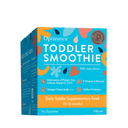
As your baby grows into a toddler, nutritional needs change. The Optivance Toddler Smoothie is designed to support toddlers aged 1–3 with vitamins and minerals they need — especially on the days when eating feels like a battle. Explore Optivance Toddler Smoothie for toddlers aged 1–3 years.
As your baby grows into toddlerhood, nutrition needs and feeding challenges can change. Some toddlers become fussy, inconsistent or cautious with textures.
At that stage, Optivance Toddler Smoothie may be used as a toddler nutrition support option alongside meals, snacks and continued exposure to whole foods.
It should not replace professional advice if you are concerned about growth, swallowing, allergies, feeding difficulties or nutrition.
Embrace the first food journey
The first food journey is filled with ups, downs and plenty of mess.
Some days your baby may be curious and excited. Other days they may turn away from everything you offer. That is part of learning.
With time, patience and repeated exposure, food becomes more familiar.
Try to focus less on how much your baby eats at each meal and more on creating a calm, safe and supportive feeding environment.
The goal is not perfect eating.
The goal is helping your baby learn.
FAQs
When should I start solids?
Most babies are ready to start solids around 6 months, when they show signs of developmental readiness such as sitting with support, good head control and interest in food. Solids should not be introduced before 4 months.
What are the best first foods for babies?
Iron-rich foods are important from around 6 months. Examples include iron-fortified infant cereal, meat, chicken, fish, egg, lentils, beans, chickpeas and tofu, prepared in a texture suitable for your baby.
Should I start with puree or baby-led weaning?
Both approaches can be appropriate. Some families use purees, some use baby-led weaning, and many use both. The key is safe texture, close supervision, developmental readiness and including iron-rich foods.
How much should my baby eat at first?
Start with a very small amount, such as 1–2 teaspoons once a day. Your baby may swallow very little at first. Gradually increase amounts and frequency as your baby becomes more confident.
When should I introduce allergy foods?
Common allergenic foods can be introduced in the first year of life in safe, age-appropriate forms. Seek medical advice if your baby has severe eczema, existing food allergy or previous reactions.
Can babies have cow’s milk?
Cow’s milk should not be the main drink before 12 months. Small amounts can be used in cooking or foods, but breastmilk or infant formula remains the main milk drink under 12 months unless advised otherwise.
Is Optivance Toddler Smoothie suitable for babies starting solids?
No. Optivance Toddler Smoothie is designed for toddlers aged 1–3 years. It is not intended for babies starting solids.
References
This article is general information only and is not a substitute for personalised medical, feeding or allergy advice. Speak with your child health nurse, GP, paediatrician, accredited practising dietitian or allergy specialist if you have concerns about feeding, growth, swallowing, allergies, eczema, reactions or your baby’s readiness for solids.
Sources reviewed:
-
National Health and Medical Research Council. Infant Feeding Guidelines.
https://www.nhmrc.gov.au/health-advice/public-health/nutrition/infant-feeding-guidelines -
Raising Children Network. Introducing solids: why, when, what and how.
https://raisingchildren.net.au/babies/breastfeeding-bottle-feeding-solids/solids-drinks/introducing-solids -
ASCIA. Infant Feeding and Allergy Prevention.
https://www.allergy.org.au/hp/papers/infant-feeding-and-allergy-prevention -
ASCIA. How to introduce solid foods to babies for allergy prevention.
https://www.allergy.org.au/patients/allergy-prevention/ascia-how-to-introduce-solid-foods-to-babies -
World Health Organization. Guideline for complementary feeding of infants and young children 6–23 months of age.
https://www.who.int/publications/i/item/9789240081864
You may also like
Sources and further reading
- NHMRC: infant feeding guidelines
- Pregnancy, Birth and Baby: introducing solid food
- ASCIA: infant feeding and allergy prevention
General information only. Seek personalised advice from your qualified healthcare professional about symptoms, medical conditions, medicines or supplements. These sources provide general guidance and do not endorse Optivance products.


