




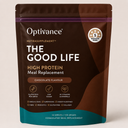

A package might say:
- High protein
- No added sugar
- Contains omega-3
- With probiotics
- Made for growing toddlers
These statements may be useful, but they do not tell you how the product fits into your toddler’s overall diet.
Australian packaged-food labels contain safety and nutrition information that allows families to look beyond the front of the pack.
Reading a label can tell you what a product contains, but it does not tell you by itself whether your toddler needs it. The information needs to be considered alongside your child’s accepted foods, food-group variety and broader feeding pattern. For a complete overview, read our Pactical guide to nutrition for fussy toddlers → Nutrition for Fussy Toddlers: A Practical Guide to Food, Supplements and Support.
The eight-step toddler label check
- Identify the product and purpose
- Check the intended age
- Read serving and preparation directions
- Review the ingredient list
- Check allergens
- Read the nutrition information panel
- Interpret sugar and other claims
- Review storage, date marking and cost
Step 1: Identify what the product is
Find the product name or prescribed description.
Do not rely solely on words such as:
- Shake
- Smoothie
- Kids’ drink
- Nutrition support
- Growing-up drink
A similarly named product could be an ordinary food, fortified food, a supplementary food or a medical product.
The Food Standards Code requires food names and descriptions to represent the food’s true nature.
When a toddler already receives fortified cereal, a multivitamin or another nutrition product, labels should be reviewed together rather than one at a time. Compare toddler smoothies, multivitamins and fortified foods → Toddler Smoothies, Multivitamins and Fortified Foods: What Is the Difference?
Step 2: Check the age and intended purpose
Look for:
- Intended age
- Recommended number of serves
- Statements about supplementing or replacing food
- Warnings or professional-use instructions
- Whether the product is intended for healthy children or medical management
A product made for young children should make its age and role clear.
Optivance is described as a Formulated Supplementary Food for Young Children aged 1–3 and a supplement to a normal diet.
Step 3: Read the serving directions before the numbers
The panel might show nutrients per:
- Dry powder serve
- Prepared serve
- 100 g powder
- 100 mL prepared drink
Make sure you know which one you are reading.
Ask:
- How much powder is one serve?
- How much liquid is added?
- Is the liquid water or milk?
- Does adding milk change the final values?
- Must the product be consumed immediately?
- Are leftovers suitable for storage?
For Optivance, the standard direction is 25 g powder with 180 mL water.
Serving size is only one part of comparing toddler nutrition products. Age suitability, purpose, protein, fibre, DHA, probiotics, allergens and cost per prepared serve also matter. Compare toddler nutrition smoothies using ten practical checks → What to Look for in a Toddler Nutrition Smoothie for Fussy Eaters
Step 4: Read the ingredient list
Ingredients are generally shown in descending order by ingoing weight. The first few ingredients therefore usually tell you the most about the product’s base.
Look for:
- Main milk, grain, fruit or protein ingredients
- Fibre sources
- Sweeteners
- Oils and fats
- Vitamin and mineral premixes
- Flavours and additives
- Probiotic organisms
- Ingredients that matter for allergies or dietary restrictions
Formulated products often include several nutrient ingredients because that is their intended purpose. What matters is whether the role and amounts are clearly explained.
A long list of added nutrients is not automatically better. Start by considering which food groups your toddler already eats and whether any major group is consistently missing. Understand how food groups provide toddler vitamins and minerals → Vitamins and Minerals for Toddlers: Start With Food Groups
Step 5: Find the allergen declaration
Do not assume that a product is suitable because the front label looks plant-based, natural or toddler-friendly.
Check for:
- Milk
- Soy
- Egg
- Wheat or gluten-containing cereals
- Peanuts
- Tree nuts
- Sesame
- Fish
- Other allergens relevant to your child
Australia’s plain-English allergen rules require prescribed allergen names to be clearly declared.
Check the label every time, even when you have bought the product before, because formulations can change.
Step 6: Read the nutrition information panel
Most Australian panels include average quantities for:
- Energy
- Protein
- Fat
- Saturated fat
- Carbohydrate
- Sugars
- Sodium
Other nutrients may be included where required or claimed.
Use per serve to understand actual intake
The per-serve column shows what the child receives from the manufacturer’s stated portion.
Use per 100 g or 100 mL to compare similar products
This column helps compare concentration across products—but only when the products are genuinely similar.
Comparing a concentrated powder with a ready-to-drink beverage per 100 g can be misleading unless their prepared forms are also considered.
Step 7: Interpret sugar claims carefully
The standard “sugars” line is total sugars.
It may include:
- Lactose naturally present in milk
- Sugars from fruit
- Added sugars
- A combination of sources
Use the ingredient list to understand where sweetness may come from.
A “no added sugar” claim does not mean zero total sugars. Conversely, a product with total sugars is not necessarily made with added table sugar.
Also review:
- Portion size
- How often it is offered
- Whether it is sipped throughout the day
- Whether sweet drinks are replacing water or meals
Healthdirect advises that nutrition claims do not automatically make a food healthy and recommends checking the complete panel.
Step 8: Review claims, storage and cost
Claims
Common claims include:
- Source of protein
- High fibre
- Reduced sugar
- Gluten free
- Contains probiotics
- Supports a particular function
Nutrition and health claims must meet requirements under the Food Standards Code.
Still ask:
- What is the actual amount?
- Per what serving?
- Does the claim relate to the whole product?
- Is it relevant to my child?
Storage and dates
Check:
- Best-before or use-by date
- Storage before and after opening
- Instructions for prepared leftovers
- Whether refrigeration is required
- Whether the powder must remain dry
Best-before and use-by dates serve different purposes and should be followed together with storage instructions.
Cost
Calculate:
Pack price ÷ stated servings = cost per serve
Then assess how often it will realistically be used.
A worked Optivance label example
Using the current confirmed product information:
| Label section | What it tells you |
|---|---|
| Product type | Formulated Supplementary Food for Young Children |
| Age | 1–3 years |
| Serve | 25 g powder |
| Preparation | Add to 180 mL water |
| Protein | 10.6 g per serve |
| Fibre | 1.9 g per serve |
| Total sugars | 5.3 g per serve |
| DHA | 40 mg per serve |
| Probiotics | 3 billion CFU per serve |
| Allergens | Milk and soy |
| Pack | 14 × 25 g sachets |
The table does not tell you whether your toddler needs the product. It tells you what the standard serve contains so you can consider it alongside the rest of the diet.
The nutrition panel shows the amounts provided, while the ingredient list explains where those nutrients come from. For a closer look at the milk proteins, fibre, DHA, probiotics, vitamins, minerals and supporting ingredients used in Optivance, read Understand what each Optivance ingredient contributes → Optivance Toddler Smoothie Ingredients Explained.
Front-label claim versus useful question
| Front claim | Better question |
|---|---|
| “High protein” | How much per toddler serve and from what source? |
| “Contains omega-3” | Is it ALA, DHA or EPA, and how much? |
| “With probiotics” | Which organisms and what CFU? |
| “No added sugar” | What are total sugars and the main ingredients? |
| “17 nutrients” | Which nutrients, in what amounts and alongside what other products? |
| “For fussy eaters” | What role does it play, and what can it not do? |
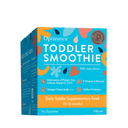
Optivance Toddler Smoothie is made for children aged 1–3 and provides protein, fibre, DHA, probiotics, and 16 vitamins and minerals plus lutein in each standard serve. The current product page includes the full nutrition panel, ingredient list, preparation directions and milk and soy allergen information. View the complete Optivance Toddler Smoothie label and product details → Optivance Toddler Smoothie product page.
Final thoughts
The front of the pack attracts attention. The back of the pack helps you make a decision.
Read the product purpose, serving directions, ingredients, allergens and panel together. Compare similar products in their prepared form and consider all fortified foods and supplements your toddler already receives.
Frequently asked questions
Are ingredients listed from highest to lowest?
They are generally listed in descending order by ingoing weight.
Does the sugar line mean added sugar?
No. It represents total sugars.
Should I compare per serve or per 100 g?
Use per serve to understand likely intake and per 100 g to compare genuinely similar products.
Does “natural” mean allergen-free?
No. Always check the allergen declaration.
Is a long ingredient list unhealthy?
Not automatically. Formulated foods may require several nutrient ingredients. Review their role, quantity and suitability.
Can a nutrition claim be misleading?
A claim can meet its legal criteria but still give an incomplete picture of the product. Read the complete label.
Disclaimer
This article provides general information and does not replace personalised allergy, dietary or medical advice.
References
- Healthdirect Australia. How to read food labels.
- Food Standards Australia New Zealand. Nutrition information panels.
- Food Standards Australia New Zealand. Ingredient lists and percentage labelling.
- Food Standards Australia New Zealand. Allergen labelling for consumers.
- Food Standards Australia New Zealand. Use-by and best-before dates.
- Optivance Toddler Smoothie product data sheet.


