





How to Choose Packaged Foods for Toddlers: 8 Simple Checks
You are standing in the supermarket with two yoghurt pouches in one hand and a toddler snack bar in the other.
One package says “no added sugar”. Another highlights calcium. A third has cartoon fruit on the front but a surprisingly long ingredient list on the back.
Which one should you choose?
The quick answer
Packaged toddler foods are not automatically good or bad. Start by deciding what role the food needs to play, then check:
- What the food is meant to provide
- Which food group it contributes
- Its main ingredients
- The per-serve and per-100 g nutrition information
- Where its sugars come from
- How its sodium compares with similar products
- Its allergens, texture and age suitability
- Whether its front-of-pack claims tell the full story
The goal is not to find a nutritionally perfect packet. It is to choose something that is suitable for your child, useful in your routine and supported by the rest of their eating pattern.
Packaged foods are only one part of toddler nutrition. Meals, snacks, drinks, food-group variety, feeding skills and growth also matter. For a complete overview, read our Practical guide to nutrition for fussy toddlers → Nutrition for Fussy Toddlers: A Practical Guide to Food, Supplements and Support.
Packaged foods can have a practical place
A yoghurt pouch in the childcare bag, crackers during a long drive or a ready-made meal after a difficult day can make family life easier.
Using packaged foods does not mean you have failed to provide a food-first diet.
The Australian Dietary Guidelines encourage a broader eating pattern built around the five food groups, while limiting foods high in added sugars, added salt and saturated fat. A packaged food can contribute to that pattern, but it does not need to provide everything by itself.
A useful question is not:
Is this packaged food healthy or unhealthy?
A better question is:
What role will this food play, and what else will my toddler eat around it?
The eight-step Packaged Food Check
1. Decide what job the food needs to do
Before comparing the numbers, decide why you are buying the food.
Is it intended to be:
- A complete small snack?
- One part of a snack?
- A convenient source of a particular food group?
- A travel or childcare backup?
- An occasional treat?
- A supplementary food for a specific nutritional purpose?
A fruit pouch, packet of crackers and tub of yoghurt do not perform the same job.
For example:
- Crackers may contribute a grain food but could be paired with cheese, hummus or egg.
- Plain yoghurt may contribute dairy, protein and calcium.
- A fruit pouch may contribute fruit but little protein or chewing experience.
- A snack bar may contain grains and fruit but still need to be compared for added sweetening ingredients and texture.
- A supplementary toddler food may provide several nutrients but should be considered alongside the child’s normal diet.
Judging every product by the same standard can make shopping more confusing. First decide what you need the food to contribute.
2. Identify the main food or food group
Look past the pictures and product name.
Ask:
- What is this product mainly made from?
- Which food group does it represent?
- Is the food pictured on the front one of its main ingredients?
- Does it contribute something useful to this eating occasion?
| Packaged food | What it may contribute | What to consider |
|---|---|---|
| Plain yoghurt | Dairy and protein | Fruit or grain food could be added |
| Wholegrain crackers | Grain food | Pair with a protein or dairy food |
| Hummus snack pot | Legumes and some protein | Check sodium and suitable dipping foods |
| Fruit pouch | Fruit | Consider texture and what else is offered |
| Cheese portion | Dairy and protein | Compare sodium within similar products |
| Breakfast cereal | Grain food and possibly added nutrients | Check ingredients, sugars and serving size |
| Ready-made toddler meal | Several foods may be present | Check proportions, texture and main ingredients |
A narrow food range can still cover several food groups. Likewise, a package decorated with vegetables does not necessarily provide a meaningful vegetable portion.
The percentage labelling on many packaged foods can help. For example, a strawberry yoghurt may state the percentage of strawberries it contains.
3. Read the first few ingredients—but do not stop there
Ingredients must generally be listed in descending order by the amount added during manufacturing. The first ingredient therefore contributed the greatest amount at that stage, while the final ingredient contributed the least.
The first few ingredients give you a useful snapshot.
Ask:
- Is milk the main ingredient in the yoghurt?
- Is wholegrain flour or refined flour listed first in the crackers?
- Is the fruit pouch mainly fruit, or are water and starch major ingredients?
- Does the product contain added sugar, syrup, honey or another sweetening ingredient?
- Does the ingredient list support the impression created by the package?
However, avoid judging a food only by the length of its ingredient list.
A longer list is not automatically a problem. A fortified cereal or supplementary food may list several vitamins and minerals individually. A short ingredient list also does not guarantee that a product is suitable for everyday use.
Consider the ingredients together with:
- The product’s purpose
- The nutrition panel
- Serving size
- Allergens
- Texture
- What your toddler already eats
4. Use the per-100 g column to compare similar products
Most Nutrition Information Panels show:
- Energy
- Protein
- Total fat
- Saturated fat
- Carbohydrate
- Sugars
- Sodium
They normally provide values both per serving and per 100 g, or per 100 mL for a liquid.
Use “per 100 g” to compare products
The per-100 g column lets you make a consistent comparison between similar foods, such as:
- Yoghurt with yoghurt
- Crackers with crackers
- Cereal with cereal
- Snack bar with snack bar
- Fruit pouch with fruit pouch
Use “per serving” to understand what your child may receive
Serving sizes are determined by the food business and can vary between products. One brand might call 90 g a serving while another uses 120 g.
Check whether the stated serving resembles the amount your toddler will realistically eat.
A large pouch may be presented as one serving, but your child might eat half. A small snack packet might contain two stated servings even though it is easy to treat the whole packet as one.
For a more detailed explanation of every part of the panel, read Learn how to compare serving sizes, ingredients and nutrient amounts → How to Read a Toddler Nutrition Label.
5. Interpret the sugar number carefully
The “sugars” line on an Australian Nutrition Information Panel includes both:
- Sugar naturally present in foods such as milk and fruit
- Sugar added as an ingredient
This means that plain yoghurt, milk and fruit products can show sugars even when table sugar has not been added.
Read the sugars number together with the ingredients.
Example: yoghurt
A plain yoghurt might list:
Milk, milk solids, cultures
Its nutrition panel will still show sugar because milk naturally contains lactose.
A flavoured yoghurt might list:
Milk, fruit puree, sugar, milk solids, cultures
Its total sugars may include both naturally occurring milk and fruit sugars and added sugar.
What about “no added sugar”?
“No added sugar” is a regulated claim, but it does not mean the food contains no sugar. A product may still contain naturally occurring sugars from fruit or milk.
Do not use one fixed sugar limit for every type of toddler food. Compare similar products and consider what the sugar number represents.
A fruit pouch, yoghurt and savoury cracker naturally have very different profiles.
6. Compare sodium within the same food category
Sodium is the component of salt displayed in the Nutrition Information Panel.
It can be particularly useful to compare sodium when choosing between similar:
- Crackers
- Savoury snacks
- Cheese products
- Sauces
- Processed meats
- Ready-made meals
Use the per-100 g column and compare products from the same category.
A cheese should not be judged against a fruit pouch, and a cracker should not be compared with yoghurt. Instead, compare one cheese with another or one cracker with another.
You do not have to find the lowest-sodium product in the supermarket. Look for a suitable everyday option while considering taste, acceptance, allergens, price and the rest of your toddler’s diet.
7. Check allergens, texture and age suitability
Allergens
Always check the package, including products you have purchased before.
Australian labels require specified allergens to be declared clearly in the ingredient list, and a separate nearby statement beginning with “Contains” identifies allergens present in the food.
Depending on the product, these may include:
- Milk
- Egg
- Wheat or other gluten-containing cereals
- Soy
- Peanuts
- Individual tree nuts
- Sesame
- Fish
- Crustaceans
A voluntary “may contain” statement can also warn about possible unintended allergen presence during manufacturing.
Seek individual advice when food allergy means an entire food group must be removed or several foods are excluded.
Texture and choking risk
A food being marketed to toddlers does not automatically mean its physical form is appropriate for every child.
Consider:
- Your toddler’s chewing ability
- Whether the food is hard, round, sticky or difficult to break down
- Whether pieces need to be cut or softened
- Whether your toddler will sit while eating
- Whether an adult will be closely supervising
Young children should sit while eating and be supervised. Whole nuts, hard foods and round foods such as whole grapes require particular attention and age-appropriate preparation.
Do not rely only on an age printed on the front. Follow preparation instructions and use your child’s individual feeding skills as part of the decision.
8. Look beyond front-of-pack claims
Packaging may highlight statements such as:
- No added sugar
- Source of calcium
- High in fibre
- Made with wholegrains
- Contains fruit
- No artificial colours
- Suitable for toddlers
Nutrition and health claims must meet relevant criteria, but each claim usually describes one feature of the food—not its complete nutritional role.
A cereal may be a source of iron but also contain added sugar. A snack may contain wholegrains but provide little protein. A fruit bar may say “made with real fruit” while still offering a very different texture from fresh fruit.
Using the Health Star Rating
The Health Star Rating can help compare the overall nutritional profiles of similar packaged foods.
Compare:
- Yoghurt with yoghurt
- Cereal with cereal
- Crackers with crackers
Do not compare yoghurt with chips or breakfast cereal with a snack bar from an unrelated category. A high rating also does not mean a product provides a balanced diet, should replace another food group or should be eaten in unlimited amounts.
Use the rating as one comparison tool—not the whole decision.
Two worked supermarket comparisons
The examples below are fictional and demonstrate the comparison process. They are not recommended nutrient cut-offs.
Example 1: Two strawberry yoghurts
| Check | Yoghurt A | Yoghurt B |
|---|---|---|
| First ingredient | Milk | Milk |
| Fruit content | Strawberry puree | Strawberry puree |
| Added sweetening ingredient | None listed | Sugar listed |
| Protein per 100 g | Higher | Lower |
| Total sugars per 100 g | Lower | Higher |
| Allergen statement | Contains milk | Contains milk |
| Format | Tub | Pouch |
How a parent might decide
Yoghurt A may be the stronger everyday base because it has no added sweetening ingredient and provides more protein.
Yoghurt B is not automatically unsuitable. It may be easier to pack, may be better accepted by the child or may help during travel. The parent could use it less often or alternate it with plain yoghurt.
The decision considers nutrition and real-life usefulness.
Example 2: Two toddler crackers
| Check | Cracker A | Cracker B |
|---|---|---|
| Main ingredient | Refined wheat flour | Wholegrain wheat flour |
| Fibre per 100 g | Lower | Higher |
| Sodium per 100 g | Higher | Lower |
| Added sweetener | Listed | Not listed |
| Allergen statement | Contains wheat and milk | Contains wheat |
| Cost | Lower | Slightly higher |
How a parent might decide
Cracker B may be the stronger everyday choice because it offers more wholegrain content, more fibre and less sodium.
Cracker A may still have a place when it is the only accepted option, better suited to the family budget or needed for a particular situation.
Either cracker could be made into a more useful snack by adding an appropriate topping or side, such as cheese, hummus, avocado or egg.
Find simple snack combinations for toddlers with small appetites → Healthy Snacks for Toddlers: Easy Ideas for Small Appetites
What about toddler pouches?
Pouches can be convenient, portable and less messy. One pouch on a busy day is not the issue.
The broader pattern matters.
An Australian Government review of commercial foods for infants and young children raised concerns about sweet flavour profiles, processed fruit ingredients, large serving sizes, labels that did not always reflect the main ingredients and reduced exposure to varied textures when smooth pouch products were heavily relied upon.
That does not mean every pouch is harmful or should be avoided.
Consider:
- What the pouch is mainly made from
- Whether it contains added sweetening ingredients
- Its serving size
- Whether it is replacing a more complete snack
- How often your child receives smooth foods
- Whether your toddler also eats foods requiring biting, chewing and self-feeding
You might occasionally serve the contents in a bowl with a spoon, pair the pouch with an age-appropriate finger food or rotate it with foods offering different flavours and textures.
The aim is variety over time—not guilt over one convenient choice.
The 30-second supermarket checklist
Before placing the product in your trolley, ask:
- What job will this food do?
- What is the main food or food group?
- Do the first ingredients match the front of the package?
- How does it compare per 100 g with similar products?
- Are the sugars naturally present, added or both?
- How does its sodium compare within the same category?
- Are the allergens and texture suitable for my toddler?
- Does the front-of-pack claim tell the whole story?
You do not need to complete a detailed nutritional analysis every time. Once you find several suitable regular options, shopping usually becomes faster.
Added vitamins do not automatically make a better food
Some cereals, snacks, drinks and supplementary products contain added vitamins and minerals.
Fortification can be useful, but a longer nutrient list does not automatically make one product the better choice.
Consider:
- What food groups your toddler already eats
- Whether a genuine gap exists
- Which fortified foods are already being used
- Whether another multivitamin or supplement provides the same nutrients
- What the product contributes beyond vitamins and minerals
When several fortified products are used together, compare their labels rather than looking at each one in isolation.
Where Optivance Toddler Smoothie may fit
The same eight checks apply when considering a supplementary toddler food.
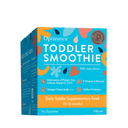
Optivance Toddler Smoothie is made for children aged 1–3 and provides:
- Protein
- Dietary fibre
- DHA omega-3
- Probiotics
- 16 vitamins and minerals plus lutein
Parents can review its intended age, serving size, full ingredient list, Nutrition Information Panel, preparation directions and milk and soy allergen information before deciding whether it suits their child’s broader eating pattern.
It is intended to supplement a normal diet—not replace meals, food variety, chewing and texture experiences or professional support where feeding or growth is concerning.
View the complete Optivance Toddler Smoothie nutrition and product information → Optivance Toddler Smoothie product page
For a product-specific comparison method, read Compare toddler nutrition smoothies using ten practical checks → What to Look for in a Toddler Nutrition Smoothie for Fussy Eaters.
When to seek individual advice
Speak with a GP, child and family health nurse, accredited practising dietitian or appropriate feeding professional when your toddler:
- Has several food allergies
- Excludes an entire food group without a suitable alternative
- Coughs, chokes or regularly struggles to swallow
- Has a very restricted or shrinking food range
- Relies heavily on smooth foods or drinks
- Is losing weight or not growing as expected
- Becomes highly distressed during eating
Difficulty swallowing can lead to problems such as dehydration, weight loss and inadequate nutrition, so repeated coughing, choking or swallowing difficulty should be assessed rather than managed by changing supermarket products alone.
Read the guide - When Is Fussy Eating More Than a Phase?
Final thoughts
You do not need to avoid every packaged toddler food or spend twenty minutes analysing each snack.
Begin with the role the food needs to play.
Then check its main ingredients, food-group contribution, nutrition panel, sugars, sodium, allergens and texture. Compare it with similar products and look beyond the claims on the front.
The most useful choice is often not a “perfect” product. It is one that contributes something worthwhile, suits your toddler’s abilities and fits sensibly alongside ordinary meals, snacks and varied food experiences.
Frequently asked questions
Are packaged toddler foods unhealthy?
Not automatically. Some contribute useful food groups or provide practical support on busy days. Their value depends on the ingredients, nutritional profile, texture, serving size, frequency and what else the toddler eats.
Is “no added sugar” always the best choice?
No. It can be useful information, but the food may still contain naturally occurring sugars. You also need to consider its main ingredients, food-group value, protein, fibre, sodium, texture and serving size.
Should I compare labels per serve or per 100 g?
Use the per-100 g column to compare similar products consistently. Use the per-serving column to estimate what your toddler may receive from the amount they actually eat.
Is a higher Health Star Rating always better?
A higher rating can help identify a stronger option among similar products. It should not be used to compare unrelated foods or as proof that a food provides a balanced diet.
Are toddler pouches bad?
An occasional pouch can be a convenient part of the diet. The concern is greater when smooth pouches repeatedly replace varied flavours, self-feeding and opportunities to practise managing different textures.
Does a long ingredient list mean a product is unhealthy?
No. Some fortified or supplementary foods have longer lists because vitamins, minerals or other components are declared individually. Review what the ingredients are and what role they serve rather than counting them.
Should I avoid every food containing added sugar or salt?
The broader pattern and frequency matter. Compare similar foods, choose suitable everyday options and keep foods from the five food groups at the centre of the diet.
Disclaimer
This article provides general educational information for parents and caregivers of children aged 1–3. It does not replace personalised medical, dietetic, allergy or feeding advice. Always follow age and preparation directions and seek professional support for allergies, poor growth, swallowing difficulties or severe food restriction.
References
- Food Standards Australia New Zealand. Nutrition Information Panels. Accessed 26 July 2026.
- Food Standards Australia New Zealand. Ingredient Lists and Percentage Labelling. Accessed 26 July 2026.
- Food Standards Australia New Zealand. Sugar Labelling. Accessed 26 July 2026.
- Food Standards Australia New Zealand. Allergen Labelling for Consumers. Accessed 26 July 2026.
- Food Standards Australia New Zealand. Nutrition Content Claims and Health Claims. Accessed 26 July 2026.
- Australian Government, Eat for Health. Recommended Number of Serves for Children, Adolescents and Toddlers. Accessed 26 July 2026.
- Australian Government. Health Star Rating System: Information for Shoppers. Accessed 26 July 2026.
- Australian Government Food Regulation. Commercial Foods for Early Childhood—Australia and New Zealand. Accessed 26 July 2026.
- Raising Children Network. Choking Hazards and Prevention. Accessed 26 July 2026.
- Healthdirect Australia. Choking. Accessed 26 July 2026.


