






Some toddlers drink their first smoothie immediately.
Others prefer it blended with a familiar fruit such as banana or berries. Some need several calm introductions before they decide whether the flavour and texture are right for them.
All of these responses can happen.
The available Optivance customer reviews reflect that range. Some parents described their toddlers drinking every last drop, while another said it took several introductions. Other families found that adding familiar fruit or involving their toddler in preparation helped the smoothie become part of their routine.
A toddler nutrition smoothie is still a new food experience. Its colour, smell, temperature, cup, thickness and flavour can all affect how it is received.
The seven-step introduction method
- Decide where it fits in your routine
- Choose a calm first opportunity
- Prepare it according to the directions
- Begin with a familiar experience
- Let your toddler participate
- Allow different acceptance patterns
- Keep meals and food learning central
The goal is not to convince your toddler to finish the cup on their first attempt.
It is to introduce one additional option in a way that feels ordinary, manageable and free from unnecessary pressure.
Step 1: Decide where the smoothie fits in your routine
Before preparing it, decide what purpose it will serve.
It might be:
- Part of breakfast
- A planned morning or afternoon snack
- An additional nutrition option on less predictable days
- A convenient option when the normal routine is disrupted
- A base for a permitted recipe using familiar ingredients
In Optivance customer reviews, families commonly described using the Toddler Smoothie as part of a morning routine, a quick breakfast component or a planned snack.
It should not gradually become:
- The automatic replacement for every refused meal
- A reward for eating another food
- A drink carried around throughout the day
- The only texture your toddler encounters
- A substitute for investigating growth or feeding concerns
- Something your toddler is required to finish
A clear role makes it easier to choose the right timing and maintain appropriate boundaries.
Step 2: Choose a calm first opportunity
Choose a planned eating occasion when:
- Your toddler is relatively calm
- You have time to respond neutrally
- They are neither completely full nor extremely hungry
- The smoothie can be offered alongside something familiar
- Refusal will not create a practical crisis
Raising Children Network recommends keeping toddler mealtimes regular, happy and social. Royal Children’s Hospital guidance also notes that unpleasant or highly distracting mealtime environments can reduce interest in eating.
The first introduction does not need an announcement.
You might simply say:
“This is a smoothie we’re having with morning tea.”
Then place it down and continue with the eating occasion.
Step 3: Prepare it according to the directions
Follow the product’s standard preparation directions before adjusting the recipe.
For Optivance Toddler Smoothie, the standard preparation is:
Add one 25 g sachet to 180 mL water, then shake or blend until completely dissolved.
The prepared smoothie should be consumed immediately according to the current directions.
The powder-to-liquid ratio affects:
- Taste
- Thickness
- Texture
- Nutrient concentration
- How well the powder dissolves
Avoid making the drink unusually concentrated, heavily diluted or estimating a partial powder-to-liquid ratio.
Preparing the complete serve correctly does not mean your toddler must drink all of it. You can pour a manageable amount into their cup and keep the remainder available during the same eating occasion.
Follow the current pack instructions for any leftover prepared smoothie. Do not store or reuse it for later unless the label specifically permits this.
Standard preparation and recipe variations are different
Water is the standard Optivance preparation.
Fruit, yoghurt, milk or other additions are recipe variations. They alter the drink’s flavour, thickness, energy, sugars, protein and allergens.
Optivance’s family guidance describes banana as a useful starting addition and also mentions berries, other fruit and yoghurt as possible flavour variations.
Use only ingredients and liquid variations permitted by the current product directions and suitable for your toddler’s age, allergies and eating abilities.
Step 4: Begin with a familiar experience
You do not necessarily need to introduce every feature as new at the same time.
Keep one or more parts familiar:
- Their usual cup or suitable food bottle
- A familiar cool temperature
- A flavour they already accept
- A normal snack location
- A known eating routine
- An accepted fruit addition
For some toddlers, the simple water-prepared smoothie will be accepted.
Others may find it easier to begin with a familiar flavour. Customer reviews mention combinations involving banana, berries, mango, avocado and nut butter. One family described using half a banana and water, while another honestly reported that their toddler accepted the drink only when plenty of fruit was blended through it.
These are individual customer experiences, not instructions or guaranteed outcomes.
A simple starting variation might be:
- The measured sachet
- The permitted liquid amount or preparation base
- One familiar fruit
- No other new ingredients
Changing several flavours and textures at once makes it difficult to tell what your toddler is responding to.
Explore age-appropriate flavour ideas → Creative Smoothie Recipes for Toddlers
Step 5: Let your toddler participate
Preparation can help the smoothie become part of a recognisable routine.
Depending on your toddler’s age and abilities, they might:
- Carry the sachet to the kitchen
- Choose between two permitted fruit additions
- Place soft fruit into the blender
- Select their cup
- Help hold the shaker
- Press the blender button with close adult supervision
- Watch the powder and liquid combine
Customer experiences suggest that participation can become part of the enjoyment. One parent described a toddler who enjoyed making her “special milk”, while other families said their children recognised the sachets and the sound of the blender as smoothie time.
Step 6: Allow different acceptance patterns
Your toddler might:
- Drink it immediately
- Take one sip and stop
- Accept it only with a familiar fruit
- Drink it from one cup but not another
- Need several separate introductions
- Accept it one day and refuse it the next
- Decide that they do not like smoothie textures
One customer wrote:
“Took my toddler a couple times to get him to drink it…”
Another reported immediate acceptance, while another said the base flavour needed plenty of fruit before their toddler would drink it.
No individual experience predicts what another toddler will do.
Keep your language neutral
Try:
- “The smoothie is here if you would like some.”
- “This one has banana in it.”
- “It feels cool and smooth.”
- “You can have it with your snack.”
- “You don’t have to drink it.”
- “You had a taste today.”
Avoid:
- “You’ll definitely love this.”
- “Just one sip for Mum.”
- “You need this because you didn’t eat.”
- “It has all the nutrition you missed.”
- “If you finish it, you can have a treat.”
- “I spent money on this, so please drink it.”
Large promises, rewards and visible anxiety can make the smoothie feel emotionally important.
Keep it ordinary.
Respond calmly to refusal
A useful response might be:
“You don’t want it today. That’s okay.”
Then continue with the eating occasion.
Avoid immediately:
- Holding the cup to your toddler’s mouth
- Following them around with it
- Offering rewards
- Removing all other food
- Changing the recipe several times
- Showing disappointment
- Treating one refusal as a permanent verdict
Pressure and difficult mealtime interactions can become part of a continuing feeding problem, particularly when physical, sensory or medical factors are also present.
Step 7: Keep meals, appetite and food learning central
A toddler smoothie can be filling.
Consider:
- How close it is to the next meal
- Whether it replaces a planned snack
- How much milk or other drink your toddler already consumes
- Whether it is being sipped over a long period
- Whether normal food remains available
- Whether your toddler continues encountering age-appropriate textures
Australian guidance describes toddler nutrition through an overall pattern across the five food groups. A smoothie is one eating opportunity—not a substitute for the complete pattern.
Try to avoid automatically offering it immediately after every refused meal.
When a smoothie appears every time dinner is rejected, a toddler may learn that refusal reliably produces a different option. Royal Children’s Hospital identifies repeatedly preparing alternatives after refusal as one practice that may reinforce difficult mealtime patterns.
There will still be occasions when flexibility is reasonable, including illness, travel or disrupted routines. The aim is not rigid enforcement. It is to keep the smoothie’s normal role clear.
What real Optivance families found helpful
The available customer reviews reveal several recurring themes.
1. Keeping the recipe simple
One family described using water and half a banana. The twins came to recognise the packets and blender sound as part of smoothie time.
2. Using a familiar flavour
Reviews mention banana, blueberries, mango, raspberries and other familiar fruit. One parent said:
“I added it to her banana and milk shake and she loved it.”
These are customer preparations rather than universal directions. Check the current recipe guidance before reproducing them.
3. Trying again calmly
Some toddlers accepted the product immediately, while another needed several introductions. This supports a patient approach without creating a guaranteed number of attempts.
4. Making it together
Families described toddlers helping prepare the smoothie or becoming excited when they recognised the preparation routine.
5. Finding a regular time
Breakfast and morning snack were common routines described in reviews. The product does not need to be restricted to one time, but predictable timing may help make it familiar.
6. Accepting that taste is individual
Not every review described effortless acceptance. One parent wrote:
“Toddler doesn’t love the flavour but can drink it provided there is plenty of fruit blended with it.”
This is useful because it reflects a realistic experience: some toddlers may prefer a variation, and some may ultimately not accept the product.
Customer reviews are personal experiences. They do not establish nutritional outcomes or guarantee another child’s response.
A gentle first-week approach
There is no required introduction schedule, but the following sequence can make the experience manageable.
First opportunity
Prepare the smoothie correctly.
Offer a small amount in a familiar cup during a calm planned snack or as part of breakfast.
Another day
Offer it again without discussing the previous refusal.
Use the same cup, temperature and preparation so the experience is predictable.
When a familiar flavour may help
Use one permitted addition your toddler already accepts, such as banana, rather than changing several ingredients simultaneously.
Add participation
Let your toddler choose the cup or help with one safe preparation step.
Build a routine only after acceptance
Once the smoothie is accepted, decide where it sensibly fits without allowing it to displace ordinary meals and snacks.
There is no deadline for completing these steps.
What if your toddler repeatedly refuses it?
Look at the complete experience.
| Possible issue | What you could review |
|---|---|
| Flavour | Try one permitted familiar addition |
| Thickness | Confirm the correct powder-to-liquid ratio |
| Temperature | Use a safe temperature similar to accepted drinks |
| Cup or bottle | Try a familiar, suitable serving vessel |
| Timing | Offer it farther from a large meal or drink |
| Too much pressure | Pause and reintroduce it more neutrally |
| Smooth texture disliked | The product may not suit this preference |
| Mixed textures disliked | Avoid fruit pieces or inconsistent lumps |
| Several recipe changes | Return to one simple, repeatable preparation |
Pause when repeated attempts are creating conflict.
Not every toddler will accept a nutrition smoothie, and acceptance does not need to become a battle.
What about cost and first-serve waste?
Concern about waste is understandable, particularly when a toddler often takes one sip and stops. One customer specifically described hesitating over the cost because her toddler had recently wasted other smoothies, although that child ultimately drank the complete serve.
To keep the first introduction manageable:
- Prepare it according to the directions
- Pour only a small amount into your toddler’s cup
- Keep the remainder available during that same eating occasion
- Follow the current instructions for any unused prepared product
- Do not guess a partial sachet ratio
- Use a trial quantity before committing to a larger supply where a current trial option is available
Optivance should confirm the final storage and disposal instructions on the current product page so parents know exactly what to do with an unfinished prepared serve.
What if your toddler accepts fruit only when it is blended?
Continue offering fruit and other foods in age-appropriate forms.
A toddler can accept banana blended into a smoothie while still finding banana pieces unfamiliar. Smoothie acceptance does not automatically transfer to the fruit’s appearance, mouthfeel or chewing requirements.
The blended form can contribute to the recipe while the visible food continues to be explored separately.
Understand why a food may be accepted in one form but refused in another → The Toddler Taste and Texture Explorer
Use genuine structured choices
Choices can help your toddler participate without taking control of the entire eating occasion.
Try:
- “Would you like the blue cup or the green cup?”
- “Would you like banana or berries today?”
- “Would you like it with morning tea or afternoon tea?”
- “Would you like to help shake it or choose the cup?”
Only offer a choice when either answer is acceptable.
Avoid:
- “Do you want your smoothie?” when refusal will not be respected
- “Will you drink three sips or five?”
- “Would you like a smoothie or no snack at all?”
Offer limited choices without creating an unlimited menu → Toddler Food Choices: How Structured Options Can Make Mealtimes Easier
When to seek individual support
Speak with your GP, child and family health nurse, accredited practising dietitian or another appropriate professional if your toddler:
- Is losing weight or not growing as expected
- Relies on drinks for most nutrition
- Has a very narrow or shrinking range of foods
- Avoids entire food groups
- Regularly coughs, chokes or struggles to swallow
- Has difficulty chewing
- Cannot manage developmentally appropriate textures
- Has persistent vomiting, diarrhoea, constipation or pain
- Has a suspected allergy or intolerance
- Becomes highly distressed around eating and drinking
Persistent, severe or physically difficult feeding behaviours need more than a new recipe or cup. Royal Children’s Hospital advises considering the duration, extent and impact of feeding difficulties, including chewing and swallowing concerns.
Recognise when fussy eating may need professional support → When Is Fussy Eating More Than a Phase?
Where Optivance Toddler Smoothie fits
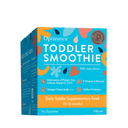
Optivance Toddler Smoothie is designed for children aged 1–3 as an additional source of nutrition alongside normal food.
Its confirmed product information lists:
- Protein
- Dietary fibre
- DHA omega-3
- Probiotics
- 16 vitamins and minerals plus lutein
It contains milk and soy.
Its mild flavour was developed so families can prepare it with water or use permitted ingredients to create a familiar flavour variation. Banana is identified in Optivance’s family guidance as a useful starting point.
It should not be introduced as:
- A cure for fussy eating
- Complete nutrition
- A routine meal replacement
- A product your toddler must finish
- A substitute for individual feeding or medical advice
View current preparation, ingredients and allergens → Optivance Toddler Smoothie product page
Final thoughts
Real families do not all introduce a toddler smoothie in the same way.
Some toddlers accept it straight away. Some prefer banana, berries or another familiar addition. Some enjoy helping make it. Others need several calm opportunities—and some may decide that the flavour or texture is not for them.
Start with the correct preparation and one familiar element. Choose a calm time. Let your toddler participate where practical, keep your language neutral and respect refusal.
The goal is not to win the first tasting.
It is to offer one additional nutrition option without creating another source of pressure at the table.
Frequently asked questions
Should I make only half a sachet the first time?
Follow the standard preparation directions rather than estimating a partial powder-to-liquid ratio. Prepare the full sachet correctly and offer a manageable amount of the finished drink.
What should I do with the remainder?
Keep it available during the same eating occasion and follow the current product instructions for unused prepared smoothie. Do not save it for later unless the directions specifically permit this.
Can I begin with banana added?
Optivance’s family guidance identifies banana as a useful starting addition. Use only permitted recipe variations and keep the preparation simple.
Can I mix it with milk?
Water is the standard preparation. Milk is a recipe variation and should be used only in line with the current product guidance and your toddler’s dietary suitability.
What temperature should it be?
Use a safe, familiar temperature. Many families serve smoothies cool, but there is no single temperature every toddler will prefer.
What should I do if my toddler spits it out?
Respond calmly. They may be exploring the taste or texture. Avoid forcing another sip.
How many times should I offer it?
There is no guaranteed number. Some customer reviews describe immediate acceptance, while another reported needing several introductions.
Should I replace dinner with it?
It is not intended as a routine meal replacement. Give it a clear place within the broader meal-and-snack pattern.
Can my toddler help make it?
Yes, with close supervision and an age-appropriate task. Participation should never create an obligation to drink it.
Can it go in a Subo bottle?
A suitable reusable food bottle may be used where the preparation, texture and bottle instructions are compatible.
Serve Optivance safely in a reusable food bottle → How to Serve Optivance Toddler Smoothie in a Subo Bottle
What if my toddler never accepts it?
Pause rather than creating a battle. Optivance will not suit every child, and there are other food-first and supplementary approaches to consider.
Disclaimer
This article provides general educational information and is not a substitute for personalised feeding, medical or dietetic advice. Customer reviews describe individual experiences and do not guarantee taste acceptance or health outcomes.
References
- Raising Children Network. Fussy eating in children: what to do. Updated 30 September 2025.
- Royal Children’s Hospital Melbourne. Mealtime Environments. Accessed 25 July 2026.
- Royal Children’s Hospital Melbourne. Typical and Problematic Feeding and Mealtime Behaviours. Accessed 25 July 2026.
- Royal Children’s Hospital Melbourne. What Is a Feeding Difficulty? Accessed 25 July 2026.
- Australian Government, Eat for Health. Recommended Number of Serves for Children, Adolescents and Toddlers. Accessed 25 July 2026.
- Optivance Toddler Smoothie article and product information.
- Optivance customer review compilation.


