


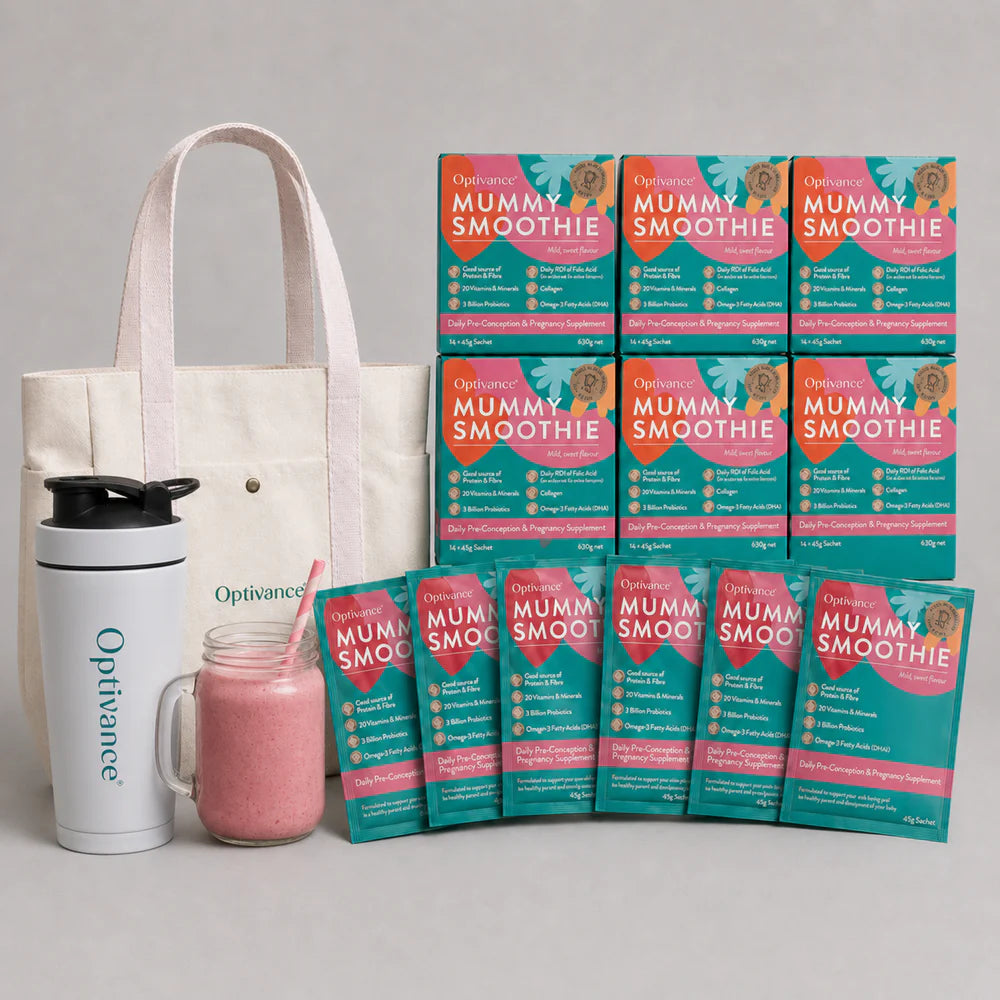


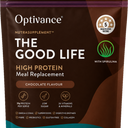









Food has become easier to buy, store and prepare. Getting the right nutrition still takes thought.
There is plenty to choose from. But the food that is available, affordable or convenient does not always provide the balance of nutrients a person needs.
NutraSupplement® starts with that gap.
At Optivance Nutrition, we created the NutraSupplement® category to bring food nutrition and selected supplementation together around a specific nutritional need or life stage.
What NutraSupplement means
A NutraSupplement® is a food-based product deliberately formulated to provide nourishment together with targeted nutritional supplementation for a defined nutritional need or life stage.
There are three parts to that definition.
Food provides the foundation. The product supplies nourishment, such as protein, energy and other food nutrients, appropriate to its intended role in the diet.
The additions have a purpose. Selected nutrients and supplement ingredients are included for a stated nutritional reason, with quantities that support the contribution being claimed.
The intended person guides the formulation. The nutritional need comes first. Ingredients, quantities, serving size and format follow from it.
In everyday language: food and supplements, designed together around the person who needs them.
The nutritional gap is real
Australian nutrition data helps explain why this matters.
In the Australian Bureau of Statistics 2023 nutrition survey, discretionary foods contributed 31.3% of average dietary energy. These include foods such as confectionery, pastries and salty snack foods. That proportion had improved from 35.4% in 2011–12, but still represented almost one-third of dietary energy. 1
A separate ABS analysis of usual nutrient intakes, released in March 2026, found that 63.7% of people aged two years and over had inadequate calcium intake from food and beverages. Inadequate iron intake was more common among females than males. These are estimates of dietary intake, rather than diagnoses of deficiency. 2
These findings show why food intake and nutritional adequacy need to be considered separately.
Our starting question is practical: what nutrition is needed, and how can we bring a useful amount of it into a food people can readily prepare and enjoy?
Convenience deserves better nutritional design
Modern food production makes food available at scale. Price, shelf life, distribution and ease of preparation all influence the choices that reach our shelves.
We believe nutritional purpose deserves the same attention as convenience, shelf life and price.
The World Health Organization describes adequacy, balance, moderation and diversity as the foundations of a healthy diet. It also recognises that changing food systems and lifestyles influence what people eat. 3
Our response is to put nutritional purpose at the centre of product design.
That means considering the whole formulation: its protein, carbohydrate, fats, fibre, vitamins and minerals, alongside any additional ingredients. It also means asking whether the product is practical to prepare and enjoyable enough to become part of a routine.
Every part of the formulation needs to earn its place.
How food and supplementation come together
A NutraSupplement® brings two familiar ideas into one formulation.
The food foundation contributes nourishment. The supplement component adds selected nutrients or other permitted ingredients for a defined purpose. Both need to make sense together, in the portion someone will actually consume.
The selected additions might include vitamins and minerals, DHA omega-3 or a specified probiotic strain. Which ingredients belong, and in what amounts, depends on the intended user and the contribution the product is designed to make.
The approach can produce different kinds of food. A meal replacement has a different job from a supplementary food, so their serving sizes and nutritional profiles must reflect those roles.
For a closer comparison, read how meal replacements, protein shakes and diet shakes differ.
The category describes the approach to formulation. Each product must also retain its correct food classification, directions and labelling.
Why Optivance created a category
Words such as shake, powder, bar or smoothie describe a format. They do not fully explain the thinking behind a formulation.
We wanted a name that brings that thinking into view.
NutraSupplement® expresses the connection between nourishment and supplementation, with the intended person at the centre. It gives consumers something useful to ask about: who is this designed for, what does it provide, and why are those ingredients included?
Adding nutrients to food has a long scientific history. 4 Our contribution is the NutraSupplement® name and the category framework set out in our Code of Practice.
As the category's founder, Optivance has a responsibility to give the name a clear meaning and a standard behind it. Our Code of Practice sets out that standard.
A category with a standard behind it
To be useful, NutraSupplement® must stand for more than an appealing name.
Under the Code, a qualifying product must have a genuine food foundation, a defined nutritional purpose, appropriate supplement additions and evidence supporting the contribution it claims to make.
Supplement quantities must support the stated nutritional contribution at the serving people actually consume. The overall composition must suit the product's intended dietary role, and the label must explain how it fits into a varied diet.
The same technical qualification criteria apply to Optivance products and third-party foods.
The Code of Practice sets out the qualification requirements and authorisation process for Optivance and third-party products. Article three explains which foods and producers can seek qualification; article four sets out the Code.
A clearer expectation of convenient food
NutraSupplement® gives a name to a straightforward expectation: convenience and deliberate nutritional design should work together.
It starts with a person and a nutritional need, then brings the food and supplement components together to serve that purpose.
That is the category Optivance is building.
Next in the series, Why people choose a NutraSupplement® explores the everyday reasons people turn to this category, from busy days and weight goals to changing nutritional needs at different stages of life. It explains how those needs shape the formulation and the role each product plays in a person’s diet.


