








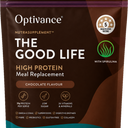









Version 1.0. Effective 7 November 2026. Issued and administered by Optivance Nutrition Pty Ltd.
NutraSupplement® is a registered trademark of Optivance Nutrition Pty Ltd. This Code establishes the requirements for a product to qualify under Optivance's NutraSupplement® framework and the conditions for continuing authorisation.
The same technical requirements apply to Optivance and third-party products. Every mandatory criterion must be met. Commercial appeal, a marketing score or payment of a fee cannot replace the required evidence. Adoption of this Code does not itself approve any product.
Definition
A NutraSupplement® is a food-based product deliberately formulated to provide nourishment together with targeted nutritional supplementation for a defined nutritional need or life stage.
Qualification requires all three elements:
- A food foundation that makes a documented nutritional contribution.
- Deliberately selected supplement components that make a substantiated contribution at the intended serving.
- A defined nutritional need or life stage that explains the formulation.
Each product must also meet the applicable food law and labelling requirements in every market for which authorisation is sought.
Defined terms
| Term | Performance criteria in this code |
|---|---|
| Food foundation | Must provide a documented contribution of energy and macronutrients appropriate to the product's dietary role. Required mixing ingredients must be recorded separately and cannot be the sole basis for qualification. |
| Supplement component | Must be deliberately added for a documented nutritional purpose, with its identity, form and quantity recorded. Mandatory fortification alone does not qualify. |
| Defined user | Must specify the intended population or life stage and the relevant age, nutritional and safety considerations. |
| Nutritional purpose | Must identify the specific nutritional contribution and connect it to the formulation and evidence. A demographic label or general wellness promise is insufficient. |
| Intended serving | Must state the realistic amount prepared and consumed as directed, including required additions and the preparation covered by approval. |
| Qualifying component | Must meet the Code's evidence and quantity requirements at the intended serving. |
| Product specification | Must record the approved numerical requirements, relevant nutrient quantities or ingredient activity, tolerances and shelf-life requirements. |
| Authorised product | Must have a completed technical assessment, applicable internal approval or third-party agreement, and a current register entry covering its formulation, serving, labelling and markets. |
| Participant | Must accept responsibility for the authorised product and maintain continuing compliance with this Code. |
Mandatory qualification criteria
NS01 Defined nutritional purpose
The applicant must identify the intended user, nutritional purpose and dietary role in writing.
The submission must connect the formulation to that purpose using appropriate nutritional evidence. It must specify whether the product replaces a meal, complements the diet or has another lawful food role.
Required evidence: a product brief stating the user, purpose, intended serving and role, with references supporting the nutritional rationale.
NS02 Genuine food nourishment
The product as sold must provide a documented food contribution in addition to its qualifying supplement components. Food or drink added during preparation must be shown separately and cannot be the sole basis for qualifying the product's food foundation.
The applicant must supply the finished product's energy, protein, carbohydrate, sugars, fat, saturated fat, fibre where relevant, sodium and applicable micronutrient information per intended serving.
Required evidence: complete composition and nutrition information, plus justification of its suitability for the declared role.
A tablet or capsule cannot qualify under this food-based definition.
NS03 Deliberate supplementation
At least one qualifying supplement component must be deliberately included to address the declared nutritional purpose.
The rationale must explain what that component adds to the food foundation. Compliance with mandatory food fortification requirements alone is insufficient.
Required evidence: the identity, form, quantity and purpose of every qualifying component. Other ingredients may be included without being relied upon for qualification.
NS04 Substantiated quantities
Every qualifying component must have a numerical target and a substantiation basis recorded in the product specification.
The basis must be one or more of the following, as relevant:
- The current legal condition for the nutrition or health claim being made.
- An established nutritional reference value, with a documented contribution appropriate to the intended user.
- Scientific evidence supporting the claimed function at the quantity, form and pattern of use specified.
For a nutrition content claim with a defined statutory threshold, the product must meet that threshold. A functional claim requires the evidence and conditions applicable to that claim; evidence about an ingredient at a materially different dose does not automatically support the product.
Required evidence: a per-serving quantity table, the benchmark or evidence used, the required amount and the amount supplied.
No product can pass this criterion while its qualifying quantities or acceptance limits remain unspecified. Ingredient presence by itself does not establish a meaningful functional contribution.
NS05 Appropriate whole-product composition
The complete product must suit its intended dietary role and population.
Assessment must use a published technical schedule for that role and population. The schedule must specify the minimum food contribution, quantitative supplement-qualification requirements, relevant composition limits and permitted tolerances. It must identify applicable regulatory requirements and explain any additional Optivance category requirements.
The schedule must be adopted before an application is decided and applied consistently to comparable products. A novel product role requires an appropriate schedule before authorisation.
A meal replacement and a supplementary food require separate assessment. An adult specification cannot be applied automatically to a young-child or prenatal product.
Required evidence: the applicable technical schedule, a completed comparison of the product against its numerical requirements, and the supporting verification records.
NS06 Safety and market compliance
The ingredients, forms, quantities, food classification and directions must be lawful for the intended users and markets.
The assessment must address relevant allergens, age restrictions, applicable upper intake levels, foreseeable combined intake from other sources and any population-specific precautions.
Required evidence: a compliance assessment by a suitably qualified person, current label artwork and the relevant safety documentation.
NS07 Accurate labelling and claims
The label must identify the product's intended role, serving, preparation method, ingredients, allergens and required warnings.
Every nutrition or health claim must have a recorded substantiation basis and satisfy the applicable conditions. In Australia, this includes the relevant requirements of Standard 1.2.7 and other applicable Food Standards Code provisions. 1
Broad language about the category cannot be used as evidence that every authorised product delivers the same benefit.
Required evidence: a claims register matching each claim to its evidence, conditions and approved wording.
NS08 Quality and shelf-life evidence
The participant must maintain product specifications, supplier records, manufacturing controls, batch traceability and a system for handling complaints and recalls.
Evidence must support the declared composition and any claimed activity through the stated shelf life. Testing plans must be appropriate to the product and its risks.
Where relied upon, probiotic evidence must identify the relevant organism and strain information and support the claimed viable quantity. Enzyme evidence must use appropriate activity measures rather than powder weight alone.
Required evidence: a documented quality and testing plan, relevant analytical results or validated calculations, and suitable stability evidence.
NS09 Realistic preparation and use
The serving used for qualification must match the serving communicated to the consumer.
Assess the product in its prepared form as directed, recording the product's contribution separately from any required additions. Where more than one preparation is recommended, identify the preparation or preparations covered by authorisation and provide the corresponding nutrition information. Directions must clearly explain the dietary role and reasonable pattern of use.
Required evidence: preparation instructions and a reconciliation of the assessed serving, nutrition information and consumer directions.
NS10 Product approval and authorisation
Technical eligibility under NS01–NS09 must be confirmed before product authorisation is completed.
Optivance products require documented internal approval by an authorised decision-maker and an entry in the product register.
Third-party products require an executed written trademark licence or authorisation from Optivance Nutrition Pty Ltd, incorporating this Code, and an entry in the product register.
Both forms of approval must identify the accountable business, product, formula version, intended serving, markets, approved name use and review date. Actual quality controls and continuing oversight must support the authorisation. 2
A product qualifies under this Code only when its technical assessment and applicable authorisation requirements are complete. Use of the name under the framework must remain within the recorded scope.
Required evidence: the completed technical decision, the applicable internal approval or third-party agreement, and the product register entry.
Per-serving assessment record
The assessment must contain a completed table for every qualifying component.
| Required field | What must be recorded |
|---|---|
| Component | Exact nutrient or ingredient identity, including form or strain where relevant. |
| Nutritional purpose | The contribution relied upon for category qualification. |
| Intended serving | Quantity of prepared food and any required mixing ingredients. |
| Amount supplied | Numerical quantity or activity per serving and relevant shelf-life point. |
| Required amount | The numerical threshold or target the product must meet. |
| Basis | Applicable claim condition, nutritional reference or scientific evidence. |
| Acceptance limits | Permitted tolerance and any relevant maximum or safety constraint. |
| Verification | Test result, validated calculation or other appropriate supporting record. |
| Decision | Pass, pending evidence or fail, with reviewer and date. |
There is no universal protein quantity or vitamin count for every NutraSupplement®. The numerical requirements must fit the stated food role, user and nutritional purpose.
Application evidence
An application must include:
- The accountable business, manufacturer, product identity, formula version and markets.
- The defined user, nutritional purpose, food classification and intended dietary role.
- The full formulation and finished-product composition.
- The completed per-serving assessment record.
- The safety and compliance assessment.
- The claims register and complete label artwork.
- The manufacturing, testing, traceability and shelf-life evidence.
- The preparation instructions and requested use of the NutraSupplement® name.
Applications may cover an explicitly defined product family where the evidence supports every included variant. Differences affecting qualification require separate assessment.
Assessment decisions
Technical pass: the product meets NS01–NS09. The applicable product approval and authorisation requirements under NS10 must be completed before the product is authorised under this Code.
Authorised: NS01–NS09 are met, the applicable internal approval or third-party agreement under NS10 is complete, and the product is entered in the register. All ten criteria are met.
Pending evidence: one or more requirements remain unresolved. The product has no approval under this Code.
Fail: the product does not meet a mandatory requirement. The decision must identify the reason and whether a revised application could address it.
Assessment must include relevant nutrition, food science and compliance expertise. At least one suitably qualified reviewer who did not formulate or commercially sponsor the product must take part in the technical decision. Reviewers must declare and manage conflicts of interest. These requirements apply equally to Optivance and third-party products. The commercial team cannot waive a failed mandatory criterion.
Appeals must be considered by a suitably qualified reviewer who did not make the original decision.
Continuing responsibilities
Every product authorisation must be reviewed at least once every 12 months.
Participants must notify the scheme administrator before making a material change to the formulation, intended serving, user group, manufacture, claims or authorised markets. The affected approval must be reviewed before continued use on the changed product.
Safety concerns, serious non-compliance or misuse of the name may lead to suspension or withdrawal. The product register must show the current status, approved scope and review date of every authorisation.
The scheme administrator must retain assessment records, monitor compliance and provide a clear process for complaints, corrective actions and appeals.
Administration and enforcement
Optivance Nutrition Pty Ltd administers this Code and is responsible for maintaining its technical schedules, assessment records, product register and authorisation arrangements.
No product may be authorised until the applicable technical schedule is adopted and published, the required evidence is assessed, and the relevant approval and register records are complete.
Third-party authorisations must incorporate this Code and record the participant's written acceptance of its requirements, including review, corrective action, suspension and withdrawal provisions.
Existing use of the NutraSupplement® name does not establish approval under this Code. Approval must be supported by the required product-specific records.
Optivance must publish amendments with a version number, effective date and any transition requirements. Material safety or compliance issues must be addressed promptly, regardless of the scheduled review date.
This is Optivance's private company qualification code. Participants must also meet the applicable food law and labelling requirements in each authorised market.
The purpose of this code is to make the category assessable: a clear definition, recorded quantities, relevant evidence and the same mandatory criteria for every applicant.


