





Pea + Collagen + Whey: Why NutraSupplement Uses a Smarter Protein Blend

Not all protein sources do the same job.
Some protein powders are built around one ingredient, such as whey, pea, soy or collagen. That can be useful if your only goal is to add more of that specific protein to your day.
But a formulated meal replacement has a different job.
It is not just trying to be a scoop of protein. It is designed to replace a meal, which means the formula needs to think more broadly about protein quality, amino acid profile, texture, taste, meal satisfaction, vitamins, minerals, fibre and everyday use.
That is why Optivance NutraSupplement uses a protein blend of:
-
pea protein
-
hydrolysed collagen peptides
-
whey protein concentrate
The idea is simple:
A smarter protein blend works because each protein brings something different.
Pea protein adds a high-quality plant protein source. Hydrolysed collagen peptides contribute a different amino acid profile, including glycine, proline and hydroxyproline. Whey protein concentrate contributes a complete dairy protein source.
Together, they create a more rounded protein base than relying on one source alone.
What makes a protein “complete”?
Protein is made from amino acids.
Your body uses amino acids to build and repair tissues, support normal body function and maintain muscle mass as part of a healthy diet. Some amino acids can be made by the body, while others must come from food. These are called essential amino acids.
A complete protein provides all nine essential amino acids in meaningful amounts.
This matters because not all protein sources have the same amino acid profile.
Whey is considered a complete protein. Pea protein can be a high-quality plant protein source. Collagen, however, is different. It contains useful amino acids, but it is not considered a complete protein on its own.
That does not make collagen “bad.”
It simply means collagen has a different role.
The smarter question is not:
“Which protein is best?”
It is:
“What is this protein source doing in the formula?”
Why single-source protein can be useful — but limited

A single-source protein powder can be useful.
Whey protein can be a convenient way to add complete protein. Pea protein can be a useful plant protein option. Collagen peptides can provide specific amino acids found in collagen proteins.
But each single source has limits.
A whey-only product may not suit people who want a formula that is less dependent on one dairy protein source. A pea-only product may have a different taste, texture and amino acid profile from whey. A collagen-only product should not be treated like a complete protein powder.
That is why a blend can make sense.
A blend does not work because every protein is identical.
It works because they are different.
Pea protein: a high-quality plant protein source
Pea protein is the first protein source listed in the Optivance NutraSupplement protein blend.
It gives the formula a plant protein source and contributes meaningful amino acids to the overall blend.
Pea protein has become popular in meal replacements and protein products because it works well in blended formulas. It helps reduce reliance on dairy alone and can contribute to a more rounded protein base.
For a formulated meal replacement, that matters.
The best shake is not only the one that looks good on a nutrition panel. It also needs to taste good, mix well and be easy enough to use regularly.
Pea protein’s strengths include:
-
plant protein source
-
contributes meaningful amino acids
-
useful in blended formulas
-
helps reduce reliance on dairy alone
-
works well in meal replacement shakes
Pea protein is not automatically better than whey, and whey is not automatically better than pea.
They simply bring different strengths.
That is why combining them can make sense.
Hydrolysed collagen peptides: different amino acids, different role
Collagen is often misunderstood.
It is a protein, but it is not the same kind of protein as whey or pea.
Collagen is rich in amino acids such as glycine, proline and hydroxyproline. These amino acids are commonly associated with collagen-containing proteins in the body.
But collagen is not considered a complete protein on its own. It does not provide all essential amino acids in the same way as complete protein sources such as whey.
That distinction is important.
Collagen should not be presented as the main complete protein source. It should not be treated like a complete protein powder. It should not be the only protein in a formula if the goal is broader protein nutrition.
Its strength is different.
In Optivance NutraSupplement, hydrolysed collagen peptides contribute a specific amino acid profile as part of the broader pea, collagen and whey blend.
Each 52 g serve contains 5 g hydrolysed collagen peptides.
Why collagen should not be the only protein
This is where protein marketing can become confusing.
A collagen powder may list protein grams on the nutrition panel, but that does not mean it functions the same way as whey, pea or other complete protein sources.
If someone is using a product mainly to increase complete protein intake, collagen on its own is not the strongest option.
That does not mean collagen has no place.
It means collagen should be used honestly.
In a smarter protein blend, collagen sits beside other protein sources.
Pea and whey contribute to the broader protein profile. Collagen contributes amino acids such as glycine, proline and hydroxyproline.
Together, the blend is more rounded than collagen alone.
Whey protein concentrate: complete dairy protein
Whey protein concentrate comes from milk.
It is one of the most widely used protein sources in protein powders and meal replacement products. Whey contains all nine essential amino acids and is naturally rich in leucine, an amino acid involved in muscle protein synthesis.
In the Optivance NutraSupplement blend, whey protein concentrate helps contribute a complete dairy protein source.
Its strengths include:
-
complete essential amino acid profile
-
naturally rich in leucine
-
widely used in protein supplementation
-
useful support for daily protein intake
-
helps round out the overall blend
Whey is not suitable for everyone. It comes from milk, so people with a milk allergy or those avoiding dairy need to check the label carefully.
Optivance NutraSupplement contains milk and is not dairy-free.
Why the blend order matters
The Optivance NutraSupplement protein blend is listed as:
Pea Protein, Hydrolysed Collagen Peptides, Whey Protein Concentrate (Milk).
The more accurate and transparent explanation is:
-
pea protein is the first listed protein source
-
hydrolysed collagen peptides are included at 5 g per serve
-
whey protein concentrate contributes a complete dairy protein source
-
the finished product contains milk
-
the formula is not vegan or dairy-free
Why a blend can be smarter
A smarter protein blend is not about adding ingredients for the sake of it.
It is about choosing protein sources with different strengths.
| Protein source | Main strength | Important note |
|---|---|---|
| Pea protein | Plant protein source that contributes meaningful amino acids | First listed protein source in the blend |
| Hydrolysed collagen peptides | Provides glycine, proline and hydroxyproline | 5 g per 52 g serve; not a complete protein on its own |
| Whey protein concentrate | Complete dairy protein source | Contains milk |
This is the key point:
The blend is useful because the proteins are not identical.
Pea, collagen and whey each contribute something different to the overall formula.
That makes more sense for a formulated meal replacement than relying on one protein source to do every job.
Protein blend vs single-source scoop
A single-source scoop can be useful when your goal is simple.
For example:
-
whey protein after training
-
pea protein if avoiding dairy
-
collagen peptides if you specifically want collagen peptides
-
a plain protein powder added to smoothies
But a formulated meal replacement has to do more.
It needs to think about:
-
protein quality
-
amino acid profile
-
meal satisfaction
-
texture
-
taste
-
sugar level
-
fibre
-
vitamins and minerals
-
everyday convenience
-
clear use as part of a normal diet
That is why Optivance NutraSupplement is not designed as a single-source protein scoop.
It is designed as a high-protein formulated meal replacement.
A meal replacement should be more than protein
Protein is important, but a meal is more than protein.
If a shake is replacing breakfast or lunch, it should provide broader meal-style nutrition.
That means looking at the full formula, not just the protein source.
When choosing a meal replacement, ask:
-
How much protein does it provide?
-
What protein sources are used?
-
Does it include fibre?
-
How much sugar does it contain?
-
Does it provide vitamins and minerals?
-
Does it include energy to make it meal-like?
-
Is it clearly designed to replace a meal?
-
Does it explain that it is not a total diet replacement?
-
Does it suit your dietary needs and allergens?
This is where a basic protein powder and a formulated meal replacement are different.
A protein powder adds protein.
A formulated meal replacement is designed to replace one or more meals as part of a normal diet.
Where Optivance NutraSupplement fits

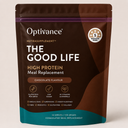
Optivance NutraSupplement is a Formulated Meal Replacement designed for adults who want more than a standard protein shake.
It uses a protein blend of pea protein, hydrolysed collagen peptides and whey protein concentrate because each source brings a different strength.
Both Chocolate and Vanilla are made with a 52 g serving size and provide over 30 g protein per serve. Chocolate provides 30.1 g protein per serve, while Vanilla provides 31.3 g protein per serve.
Both flavours provide:
-
5 g hydrolysed collagen peptides per serve
-
less than 1 g sugar per serve
-
38 mg DHA per serve
-
1 billion CFU Bacillus coagulans per serve
-
fibre
-
vitamins and minerals
-
digestive enzyme blend
-
direct algal DHA omega-3
-
milk-containing ingredients
The Chocolate formula contains a 70% protein blend. The Vanilla formula contains a 75% protein blend.
NutraSupplement is not a total diet replacement. It is designed to be used as part of a normal diet when you want a convenient, more complete meal option.
It may suit people who want:
-
a breakfast replacement on busy mornings
-
a backup lunch at work
-
a high-protein shake that does more than protein alone
-
a more complete option than a single-source scoop
-
a formulated meal replacement with protein, fibre, vitamins and minerals
Always check the label for allergens. NutraSupplement contains milk.
Nutrition claims the formula supports
The product data sheets identify several nutrition content claims that may be relevant when the product is prepared as directed.
These include:
-
good source of protein
-
source of dietary fibre
-
low in sugar
-
low in saturated fat
-
source of omega-3 fatty acids from DHA
-
good source of selected vitamins and minerals
-
source of selected trace minerals and other nutrients
The protein-related permitted health effects listed in the product data sheets include that protein:
-
is necessary for tissue building and repair
-
contributes to the growth of muscle mass
-
contributes to the maintenance of muscle mass
-
contributes to the maintenance of normal bones
These are stronger and safer claims than broad claims like “builds muscle faster,” “boosts recovery” or “repairs joints.”
What to look for in a protein blend
Not all protein blends are the same.
When comparing products, check these points.
1. The protein sources
Look for the actual sources, not just the total protein number.
Are they using whey, pea, collagen, soy, rice, casein or another source?
2. Whether collagen is the main protein
If collagen is the main protein, remember that collagen is not complete on its own.
It is better used alongside other protein sources if the goal is broader protein nutrition.
3. The protein per serve
Check grams of protein per serve and per 100 g.
Also check the serving size. A high-protein claim means little if the serve size is unrealistic.
4. Allergens
Whey contains milk. Some formulas may contain soy, gluten, egg, fish or other allergens.
Always check the label.
5. Sugar and fibre
A protein product is not automatically a good meal replacement.
Check sugar and fibre too.
6. Vitamins and minerals
If the shake is replacing a meal, vitamins and minerals matter.
A single-source protein powder may not include them.
7. Intended use
Is it a protein supplement or a formulated meal replacement?
That difference matters.
The bottom line
A single-source protein scoop can be useful.
But it is not always the best option when the goal is a more complete meal replacement.
Pea protein, hydrolysed collagen peptides and whey protein concentrate each have a different role.
Pea protein contributes a plant protein source.
Hydrolysed collagen peptides contribute 5 g collagen peptides per serve, including a different amino acid profile.
Whey protein concentrate contributes a complete dairy protein source.
Together, they help create a more rounded protein base for a shake designed to do more than simply add protein.
That is the reason behind the Optivance approach.
Not protein for the sake of protein.
A more rounded protein blend for real daily nutrition.
FAQs
Is collagen a complete protein?
No. Collagen has a different amino acid profile and is not considered a complete protein on its own. It is best used alongside other protein sources if the goal is broader protein nutrition.
Why does Optivance use pea protein first in the blend?
Pea protein gives the formula a plant protein source and contributes meaningful amino acids to the overall protein blend. It also helps the formula rely on more than one protein source.
Why combine pea, collagen and whey?
Each protein source contributes something different. Pea provides a plant protein source, collagen contributes amino acids such as glycine, proline and hydroxyproline, and whey contributes a complete dairy protein source.
Is a protein blend better than a single-source protein?
A single-source protein can be useful, but a blend can provide a broader protein profile and may be better suited to a formulated meal replacement designed to do more than add protein alone.
Is NutraSupplement dairy-free?
No. NutraSupplement contains whey protein concentrate and algal DHA powder that contain milk. It is not dairy-free.
Is NutraSupplement vegan?
No. NutraSupplement contains hydrolysed collagen peptides and whey protein concentrate, so it is not vegan.
How much collagen is in NutraSupplement?
Each 52 g serve contains 5 g hydrolysed collagen peptides.
Is NutraSupplement a protein powder or a meal replacement?
Optivance NutraSupplement is a Formulated Meal Replacement. It includes protein, fibre, vitamins, minerals and other ingredients in addition to its protein blend.
Can I use NutraSupplement after training?
NutraSupplement may be used after training as a high-protein meal replacement or convenient nutrition option, depending on your routine. It should be used as part of a normal diet and not as a total diet replacement.
References
This article is general nutrition information only and is not a substitute for personalised medical or dietary advice. Speak with your GP, accredited practising dietitian or qualified healthcare professional if you have a medical condition, take medication, have kidney disease, have a history of disordered eating, have allergies, or need personalised nutrition advice.
Sources reviewed:
-
Optivance FMR Chocolate Product Data Sheet
-
Optivance FMR Vanilla Product Data Sheet
-
Food Standards Australia New Zealand: Nutrition content claims and health claims
-
Food Standards Code: Standard 2.9.3 Formulated Meal Replacements and Formulated Supplementary Foods
-
International Society of Sports Nutrition: Protein and exercise position stand
-
Research on pea protein supplementation during resistance training


