


















Your toddler ate toast for breakfast, a few spoonfuls of yoghurt for lunch and plain pasta for dinner.
You can list everything they ate in seconds—and it does not feel like enough.
It is understandable to worry when accepted foods are repetitive or portions appear tiny. But one small meal, or even one unusually limited day, cannot tell you whether your toddler has a nutritional deficiency.
A more useful approach is to examine the broader pattern.
The five-part toddler nutrition check
Look at:
- Food-group coverage
- The accepted-food range
- Meals, snacks and drinks
- Growth, energy and wellbeing
- Chewing, swallowing and feeding comfort
This is not a diagnostic score. It is a practical way to decide whether you feel reassured, can make one food-first change or should seek individual advice.
Compare food, fortified products, supplements and professional support → Nutrition for Fussy Toddlers: A Practical Guide to Food, Supplements and Support
Why one meal does not tell the whole story
Australian dietary guidance uses average food-group serves to describe an overall eating pattern. It does not require a toddler to consume every food group or complete a fixed amount at every meal. Current guidance recommends variety across vegetables and legumes, fruit, grains, protein foods and dairy or suitable alternatives.
Toddlers also differ in appetite, activity, growth and how much they eat at one sitting. Look at several days rather than using one unfinished plate as proof that something is wrong.
Part 1: Review food groups across the week
Ask whether your toddler is regularly offered foods from these groups:
| Food group | Examples |
|---|---|
| Vegetables and legumes | Soft vegetables, peas, lentils, beans, hummus |
| Fruit | Soft fresh fruit, cooked fruit, fruit served with yoghurt |
| Grain foods | Bread, oats, rice, pasta, cereals |
| Protein foods | Egg, meat, fish, tofu, legumes, nut or seed pastes |
| Dairy or alternatives | Milk, yoghurt, cheese or suitable fortified alternatives |
You do not need to fit all five groups onto every plate.
Instead, ask:
- Which groups appear regularly?
- Is one group almost completely absent?
- Does the child have a suitable alternative when a group is excluded?
- Are several groups represented across meals and snacks?
An absent food group is usually more informative than the refusal of one individual food.
For example, refusing chicken is different from refusing meat, fish, eggs, tofu, beans, lentils and all other protein foods.
See how Australian food-group guidance can add up across the day → How Much Should a Toddler Eat in a Day?
Part 2: List the exact foods your toddler accepts
Write down the exact form rather than only the ingredient.
Instead of writing “banana”, record:
- Banana blended into a smoothie
- Soft banana pieces
- Mashed banana
- Banana baked into a pancake
Instead of “yoghurt”, write:
- Smooth vanilla yoghurt
- Yoghurt without fruit pieces
- One particular brand
Now ask:
- Is the range stable?
- Is it gradually growing?
- Are accepted foods continuing to disappear?
- Are several textures represented?
- Does your toddler accept only one exact brand, colour or presentation?
- Are entire food groups excluded?
A repetitive but stable eating pattern is different from a diet that is becoming progressively narrower.
Recognise when restriction may need professional support → When Is Fussy Eating More Than a Phase?
Part 3: Review the rhythm of meals, snacks and drinks
Small meals do not necessarily indicate inadequate intake when a toddler has several eating opportunities across the day.
Consider whether your toddler has:
- Broadly predictable meals and snacks
- Time to develop an appetite between eating occasions
- Water available
- Snacks that contribute useful foods
- Large drinks immediately before meals
- Continuous access to food throughout the day
- Milk or another drink replacing most solid food
Australian guidance for toddlers recommends regular small meals and snacks rather than expecting large adult-sized meals. Current national serves are intended to describe the broader pattern, not a requirement for each eating occasion.
Milk can contribute protein, calcium and other nutrients, but heavy dependence on drinks can reduce opportunities to eat varied solid foods. Do not abruptly restrict necessary fluids; seek individual advice when drinks provide most of the child’s nutrition.
Part 4: Consider growth, energy and general wellbeing
A home food checklist cannot determine whether your toddler is growing appropriately.
Growth should be assessed over time using measurements interpreted by a GP, child and family health nurse or paediatrician.
Seek advice if your child:
- Is losing weight
- Is not following their expected growth pattern
- Appears unusually tired or pale
- Has noticeably less energy for play
- Has persistent vomiting, diarrhoea, constipation or pain
- Has developmental concerns alongside restricted eating
These signs do not prove a particular nutritional deficiency. They indicate that an individual assessment may be useful.
Part 5: Consider whether eating is physically comfortable
A nutritious meal cannot help if the child cannot manage it safely.
Seek assessment if your toddler:
- Frequently coughs or chokes while eating or drinking
- Has difficulty chewing
- Holds food in their mouth for long periods
- Cannot manage developmentally appropriate textures
- Appears to experience pain when eating
- Vomits regularly during meals
- Relies on liquids because solids appear difficult
These concerns may involve swallowing, oral-motor, sensory or medical factors and need more than general nutrition advice.
Your three-day pattern check
For three ordinary days, record:
| Eating occasion | Food offered | Food eaten | Drinks | Any difficulty |
|---|---|---|---|---|
| Breakfast | ||||
| Morning snack | ||||
| Lunch | ||||
| Afternoon snack | ||||
| Dinner |
At the end, look for patterns rather than calculating every milligram:
- Which groups appeared?
- Which were absent?
- Did milk or drinks repeatedly replace food?
- Was the child comfortable chewing and swallowing?
- Was the intake more varied than it first seemed?
A dietitian can use a record like this if more detailed review is needed.
Choose one next step
Depending on what you notice:
- One group is rarely offered: add one manageable opportunity.
- Meals are mostly grains: use the four-step meal upgrade to add one other food.
- Snacks are constant: move towards planned eating occasions.
- The food range is shrinking: arrange professional support.
- Chewing or swallowing is difficult: speak with your GP or child health nurse.
Make one familiar meal more nutritious without changing everything → The 4-Step Toddler Meal Upgrade
Where Optivance Toddler Smoothie may fit
Some families choose an age-specific supplementary product for days when appetite or accepted foods are less predictable.
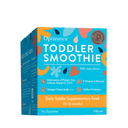
Optivance Toddler Smoothie is a Formulated Supplementary Food for Young Children aged 1–3. The product data sheet lists 10.6 g protein, 1.9 g dietary fibre, 40 mg DHA, probiotics and vitamins and minerals in a 25 g serve prepared with 180 mL water. It is intended to supplement a normal diet rather than replace meals, food variety or professional assessment.
It contains milk and soy.
View ingredients and nutritional information → Optivance Toddler Smoothie product page
Final thoughts
Do not judge your toddler’s nutrition from one plate.
Look across several days. Review food groups, accepted foods, drinks, energy, growth and feeding skills.
Then choose one manageable action—or seek individual advice when the pattern is restricted, physically difficult or affecting wellbeing.
Frequently asked questions
Does fussy eating mean my toddler has a deficiency?
No. Fussy eating alone cannot diagnose a deficiency.
Should I calculate every nutrient?
Most parents do not need to calculate every nutrient. Food-group patterns and professional assessment are generally more useful.
What if my toddler eats very little at dinner?
Consider what they ate earlier and whether the pattern is occasional or persistent.
Is a repetitive diet always inadequate?
Not necessarily. The nutritional effect depends on which foods are accepted, how much is eaten and whether major groups are absent.
When should I speak with a dietitian?
Consider a dietitian when several food groups are excluded, nutritional adequacy is unclear, allergies complicate the diet or growth is concerning.
Disclaimer
This article provides general educational information and is not a substitute for personalised medical, nutritional or feeding advice.
References
- Australian Government, Eat for Health. Recommended number of serves for children, adolescents and toddlers. Accessed 25 July 2026.
- Australian Government, Eat for Health. Australian Dietary Guidelines 1–5. Accessed 25 July 2026.
- Australian Government, Eat for Health. Nutrient Reference Values. Accessed 25 July 2026.


