





Breastfeeding Nutrition Guide: What to Eat, What to Limit and What Really Matters
What should I eat while breastfeeding?
What should I avoid?
Is there something I can eat to make more milk?
And if my baby is not gaining as quickly as expected, should I change my diet?
These are understandable questions, particularly when you are already tired, hungry and trying to work out what your new routine looks like.
The reassuring answer is that you do not need a perfect or special diet to breastfeed.
For most mums, the foundation is simply a varied range of familiar foods, enough food to respond to your hunger, and some extra attention to a few nutrients that can matter during breastfeeding. Australian breastfeeding guidance also makes clear that what you eat matters greatly for your own health and energy, without requiring you to follow a flawless diet to make suitable breastmilk.
There is also little evidence that one particular food reliably increases milk supply. If you are concerned about supply or your baby's weight gain, it is more useful to have feeding and growth assessed than to search for a particular “milk-boosting” food.
What should a breastfeeding mum eat?
 You can eat a wide variety of everyday foods while breastfeeding.
Rather than searching for a special list of “breastfeeding foods”, think about building variety across your day from:
- Vegetables and legumes
- Fruit
- Bread, oats, rice, pasta and other grain foods
- Eggs, fish, meat, chicken, tofu, beans, lentils and nuts
- Milk, yoghurt and cheese or suitable alternatives
- Foods containing healthy fats, such as nuts, seeds, avocado and olive oil
Australian guidance does not recommend a special breastfeeding diet. Your energy needs are higher during breastfeeding, so you may simply find yourself eating a little more of the foods you normally enjoy.
What could that look like in real life?
It does not need to be complicated.
Breakfast: Oats with yoghurt, fruit and nuts
Snack: Toast with peanut butter and banana
Lunch: Egg, chicken or hummus wrap with vegetables
Snack: Cheese and crackers with fruit
Dinner: Rice or pasta with vegetables plus fish, chicken, tofu, beans or lentils
Later if hungry: Cereal, yoghurt, fruit or another piece of toast
This is an example, not a meal plan you need to follow.
Some days will be much less organised. You may eat cereal at midday, have toast for dinner or discover the sandwich you made two hours earlier is still sitting on the kitchen bench.
That does not mean you are doing breastfeeding nutrition badly. If you are also recovering from birth and finding regular meals difficult, our postpartum nutrition guide covers practical ways to support your own nutrition during the early weeks.→ Postpartum Nutrition Guide: Recovery and Breastfeeding Support
You do not need to eat perfectly
One of the most useful messages from the Australian Breastfeeding Association is that breastfeeding mums do not need a perfect diet.
Your body needs energy and nutrients, so eating well is important for you. But you do not need to panic because you missed lunch, ate takeaway or had a day when fresh vegetables were thin on the ground.
Instead of aiming for perfection, ask:
Have I eaten recently?
Feeds can make several hours disappear surprisingly quickly.
Was it enough for me?
A piece of fruit may be handy, but if you are very hungry, add something more substantial such as yoghurt, toast, eggs, cheese, hummus or nuts.
Is there something easy I can add?
Frozen vegetables, tinned beans, microwave rice, yoghurt, fruit, eggs and wholegrain toast are all useful shortcuts.
Can I make the next meal easier?
Keep food somewhere you can actually reach it.
Which nutrients deserve extra attention while breastfeeding?
You do not need to calculate every vitamin and mineral you eat.
However, Australian guidance identifies several nutrients worth paying particular attention to.
Iodine
Iodine requirements are higher during breastfeeding. Current NHMRC guidance recommends that women who are pregnant, breastfeeding or considering pregnancy take a daily supplement containing 150 micrograms of iodine. Women with a pre-existing thyroid condition should speak with their doctor before taking an iodine supplement.
Food sources of iodine include some seafood, dairy foods, eggs and bread made with iodised salt, but Australian guidance recommends supplementation because food alone may not reliably provide enough during pregnancy and breastfeeding.
Iron
Iron is found in foods such as:
- Red meat
- Chicken and fish
- Eggs
- Lentils
- Beans and chickpeas
- Tofu
- Iron-fortified cereals
Iron deficiency and iron-deficiency anaemia are not the same thing, and feeling tired alone does not tell you whether your iron is low.
If you are unusually tired, dizzy, weak or breathless, or you had significant blood loss during birth, speak with your GP rather than simply adding a high-dose iron supplement yourself.
If you want to look more closely at nutrients that can sometimes deserve extra attention after birth, read our guide to → Common Nutritional Deficiencies in Breastfeeding Mums & How to Address Them
Calcium
Milk, yoghurt and cheese are common calcium sources.
If you do not eat dairy, calcium may come from suitable fortified alternatives, calcium-set tofu and some other foods. If your diet excludes a major food group, an Accredited Practising Dietitian can help you check whether your intake is meeting your needs.
Vitamin B12
Vitamin B12 deserves particular attention if you eat little or no animal food.
If you eat little or no animal food, our guide to vitamin B12 while breastfeeding explains food sources, risk factors and when supplementation may need to be discussed with a health professional.→ Why Vitamin B12 is Crucial for Breastfeeding Mums and Babies.
Omega-3 fats and DHA
Fish is one source of long-chain omega-3 fats. Other options include algal DHA products.
Fish does not need to be removed from your diet while breastfeeding, although Australian mercury guidance recommends limiting certain higher-mercury fish such as shark/flake, swordfish, marlin, orange roughy and catfish.
For a deeper look at food sources, DHA and supplement questions, see our guide to → The Role of Omega-3s for Breastfeeding Mums: Supporting You and Your Baby.
What foods should I avoid while breastfeeding?
For most mums, the list is much shorter than you might expect.
You usually do not need to avoid:
- Spicy food
- Garlic
- Beans
- Cabbage
- Eggs
- Peanuts
- Dairy foods
Pregnancy, Birth and Baby notes that foods such as spices, garlic, beans and cabbage are rarely the cause of an unsettled baby. Routine avoidance of common allergenic foods such as peanuts, eggs and milk is also not recommended as a way of preventing food allergy.
What if I think a food is upsetting my baby?
Try not to remove major food groups on your own based on one unsettled day.
Babies can be unsettled for many reasons.
If you repeatedly notice symptoms that make you concerned about a food allergy or intolerance, speak with your GP, child health nurse or dietitian. Removing foods such as dairy unnecessarily can make it harder to meet your own nutritional needs.
What about caffeine?
Most breastfeeding mums can still enjoy tea or coffee.
Pregnancy, Birth and Baby recommends keeping caffeine intake to no more than 200 mg per day while breastfeeding. Newborns can be particularly sensitive because they process caffeine more slowly. Energy drinks are not recommended for breastfeeding women.
Remember that caffeine can come from:
- Coffee
- Tea
- Cola drinks
- Energy drinks
- Chocolate
- Some medicines and supplements
You do not necessarily need to give up your morning coffee, just need to consider your total caffeine intake.
What about alcohol?
The safest option is not to drink alcohol while breastfeeding.
Alcohol passes into breastmilk at a similar concentration to the mother's blood alcohol level. If you choose to drink occasionally, timing matters, and Australian guidance recommends planning feeds appropriately.
For personalised advice, use Australian breastfeeding alcohol guidance or speak with a health professional.
Are there foods that produce more breast milk?
This is one of the most common questions breastfeeding mums search for.
You may have heard about:
- Oats
- Lactation cookies
- Brewer's yeast
- Fenugreek
- Fennel
- Special teas
- Particular soups or drinks
But Australian health guidance says there is little evidence that specific foods reliably increase breastmilk supply. Many traditional foods and herbs promoted for this purpose have not been adequately studied for either effectiveness or safety.
So what actually influences milk supply?
Breastmilk production works largely on supply and demand.
Frequent and effective milk removal sends signals to your body to continue making milk. Feeding position, attachment, how effectively your baby removes milk, feeding frequency and expressing patterns can therefore be more important than eating a particular food.
Looking after yourself still matters.
Try to:
- Eat regularly
- Avoid regularly missing meals
- Drink according to your thirst
- Rest when you can
- Seek help if feeding is painful or difficult
But food should not carry the burden of “fixing” a supply concern.
If you're worried about milk supply
Speak with:
- A lactation consultant
- Your midwife
- Your child and family health nurse
- Your GP
- The Australian Breastfeeding Association
A proper feeding assessment is more useful than buying a food because someone claims it will “boost” milk.
What should I eat to help my breastfed baby gain weight?
If your baby is not gaining weight as expected, changing the mother's diet is not a reliable way to address the problem.
Babies grow at different rates, and a single number on a scale does not tell the whole story. Health professionals look at your baby's weight pattern together with length, head circumference, feeding and general health.
The 50th percentile on a growth chart is an average, not a target your baby needs to reach.
If your baby's weight gain is slower than expected, possible reasons may include:
- Difficulty attaching or feeding effectively
- Not feeding often enough
- Difficulty transferring enough milk
- Illness or another medical issue
That is why the right first step is an assessment and not trying to make your breastmilk “more fattening” by eating a particular food.
If you are worried about your baby's growth, speak with your doctor, child health nurse, midwife or lactation consultant.
Why am I so hungry while breastfeeding?
Breastfeeding increases your body's energy requirements, and many mums notice that they are hungrier than usual.
The practical problem is that the time when you are hungriest may also be the time when preparing food is most difficult.
Try keeping easy combinations available:
- Yoghurt + fruit
- Toast + peanut butter
- Cheese + crackers
- Eggs + toast
- Hummus + pita bread
- Nuts + fruit
- Soup + bread
A combination is often more satisfying than grabbing one small item on its own.
If your appetite, weight or energy levels change dramatically or unexpectedly, speak with your GP.
If increased hunger or changes in your weight are on your mind, you may also find our guide to weight changes while breastfeeding helpful.→ Why is it Hard to Lose Weight While Breastfeeding.
What if I keep forgetting to eat?
This is where breastfeeding nutrition often becomes less about knowing what to eat and more about making food easy enough to actually eat.
Try keeping three levels of backup food.
Ready to grab
- Fruit
- Yoghurt
- Cheese
- Boiled eggs
- Sandwiches
Pantry backup
- Crackers
- Tinned tuna
- Tinned beans
- Microwave rice
- Nut butter
- Tinned soup
Freezer backup
- Bread
- Soup
- Leftovers
- Pasta sauce
- Individual meals
There is nothing wrong with convenience food being part of your routine.
Where can a breastfeeding nutrition smoothie fit?
Regular food remains the foundation of your diet, but breastfeeding days do not always follow the plan.
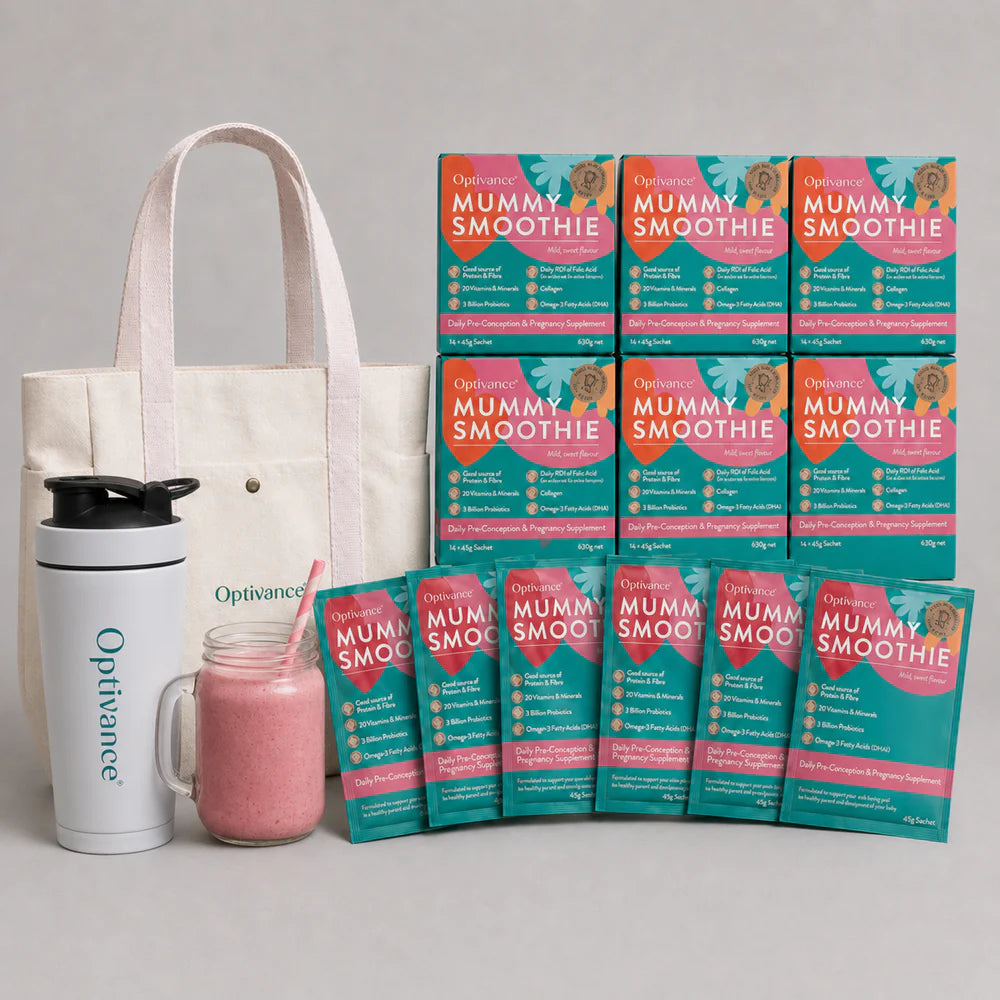
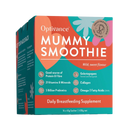
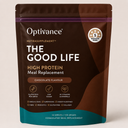
Optivance Breastfeeding Smoothie is a Formulated Supplementary Food designed for breastfeeding mums. It brings together protein, dietary fibre, DHA, probiotics, collagen and a range of vitamins and minerals in one neutral-flavoured smoothie.
One 45 g serve provides 17.5 g protein, 4 g dietary fibre, 200 mg DHA and 5 billion CFU probiotics. It is prepared with 250 mL water, or you can blend it with fruit when you want to change the flavour or make it part of a more substantial snack. It contains milk and soy.
For mums who find multiple tablets unappealing, a food-format option may be a more enjoyable way to add nutrition to the day. However, Optivance does not automatically replace an iodine supplement, prescribed iron, a postnatal multivitamin or another product recommended for an individual health need.
It is intended to complement normal meals and snacks not replace them and it does not claim to increase milk supply.
If you are looking for a convenient food-format option for particularly busy days, you can see what Optivance Breastfeeding Smoothie provides per serve.

A simple way to think about breastfeeding nutrition
You do not need to remember dozens of nutrition rules.
Think:
Eat regularly.
Try not to let every feed push your own meal further away.
Choose variety.
Ordinary foods from the main food groups are enough to form the foundation.
Pay attention to key nutrients.
Iodine deserves particular attention under Australian guidance, while iron, calcium, B12 and omega-3 intake may also matter depending on your diet and individual circumstances.
Don't unnecessarily restrict food.
Most mums do not need a long “foods to avoid” list.
Don't rely on foods to fix supply.
A feeding assessment is far more useful if you are worried about milk production.
Ask for help when you need it.
Nutrition, breastfeeding and infant-growth concerns do not all have the same solution.
Final takeaway
Breastfeeding nutrition does not need to become another thing to get perfectly right.
Eat a wide range of ordinary foods, respond to your hunger and make your meals as easy as they need to be.
There are relatively few foods every breastfeeding mum needs to avoid, and there is no single food proven to reliably increase milk supply or make a breastfed baby gain more weight.
Your own health and nutritional intake matter too.
When regular meals are difficult, convenient options can help—but they should complement normal food rather than promise to solve feeding or medical problems.
Frequently asked questions
What should a breastfeeding mother eat every day?
Aim for a variety of vegetables, fruit, grain foods, protein foods and dairy foods or suitable alternatives. You do not need a special breastfeeding diet.
What foods should I avoid while breastfeeding?
Most mums do not need to avoid a long list of foods. Spicy foods, beans, cabbage, peanuts, eggs and dairy do not routinely need to be excluded. Caffeine should be limited, avoiding alcohol is the safest choice, and Australian mercury guidance applies to some higher-mercury fish.
Can I eat spicy food while breastfeeding?
Generally, yes. Spicy food does not routinely need to be avoided while breastfeeding. If you repeatedly notice symptoms in your baby that concern you, seek professional advice rather than removing multiple foods yourself.
What foods help produce more breast milk?
There is little evidence that any particular food reliably increases milk supply. Milk production is more closely linked to frequent and effective milk removal.
What should I eat if I am worried about my milk supply?
Continue looking after your own nutrition by eating regularly and drinking according to thirst, but do not rely on a special food to fix supply. Have feeding, attachment and milk transfer assessed by a qualified breastfeeding professional.
What should a breastfeeding mum eat to help her baby gain weight?
There is no particular maternal food proven to reliably make a breastfed baby gain weight. If your baby is not gaining as expected, have their feeding and growth assessed by a health professional.
Do I need to eat more while breastfeeding?
You may. Breastfeeding increases energy requirements, and many mums notice increased hunger. Your individual needs vary, so respond to your appetite rather than following a rigid calorie target.
Do I need vitamins or supplements while breastfeeding?
Not every supplement is needed by every mum. However, NHMRC currently recommends a daily iodine supplement containing 150 micrograms for women who are breastfeeding. Women with pre-existing thyroid conditions should speak with their doctor first. Other supplementation depends on your diet, health and individual needs.
Disclaimer
This article provides general nutrition information and does not replace individual medical, dietetic or breastfeeding advice. Speak with your GP, pharmacist, Accredited Practising Dietitian, midwife, child health nurse or lactation consultant about your individual circumstances. Concerns about your baby's feeding or growth should be assessed by an appropriate health professional.
References
- Australian Breastfeeding Association. Breastfeeding and Your Diet. Updated July 2026. Accessed 24 August 2026.
- Australian Breastfeeding Association. Weight Gains. Updated November 2025. Accessed 24 August 2026.
- Pregnancy, Birth and Baby. Diet and Healthy Lifestyle While Breastfeeding. Last reviewed March 2024. Accessed 24 August 2026.
- Pregnancy, Birth and Baby. How to Increase Breastmilk Supply. Accessed 24 August 2026.
- Pregnancy, Birth and Baby. How Your Baby Gains Weight. Accessed 24 August 2026.
- National Health and Medical Research Council. Iodine Supplementation for Pregnant and Breastfeeding Women. Current NHMRC statement. Accessed 24 August 2026.
- Food Standards Australia New Zealand. Mercury in Fish. Page updated February 2025. Accessed 24 August 2026.
- Inline Nutralabs. Optivance Mummy Smoothie BF Formulated Supplementary Food Product Data Sheet, PD-DS-GDP07F-001. Last reviewed 25 November 2024.


