







What to Look for in a Meal Replacement Shake
Meal replacement shakes can be useful when life gets busy.
They can help when breakfast is rushed, lunch gets skipped, or you need something simple between work, family, training and everyday routines.
But not every shake is designed to do the same job.
Some shakes are protein powders. Some are diet shakes. Some are low-calorie drinks. Some are formulated meal replacements designed to replace one or more meals as part of a normal diet.
That difference matters.
If you are using a shake instead of a meal, it should do more than taste good or provide a little protein. A better meal replacement should give you meaningful nutrition in a practical, easy-to-use format.
So, what should you actually look for?
First, check whether it is designed to replace a meal
This is the most important starting point.
A protein shake is usually designed to add protein to your day.
A diet shake is often marketed around calorie control or weight management.
A formulated meal replacement is different. It is designed to replace one or more meals as part of a normal diet.
That does not mean it should replace your whole diet. It means it can be used when you need a more structured option in place of a meal.
If a product is not clearly designed to replace a meal, it may not provide enough energy, vitamins, minerals or broader nutrition to stand in for breakfast or lunch.
Before choosing a shake, ask:
Is this a meal replacement, or is it just a protein drink?
That one question can make comparison much easier.

Look for meaningful protein
Protein is one of the first numbers to check.
A meal replacement should provide a meaningful amount of protein because protein helps give the shake structure and makes it more meal-like than a light drink.
Protein also contributes to tissue building and repair, supports muscle mass and helps meals feel more satisfying.
But protein alone is not enough.
A shake can be high in protein and still not be a good meal replacement if it lacks fibre, vitamins, minerals or clear usage directions.
A useful way to think about it is:
Protein should be the foundation, not the whole formula.
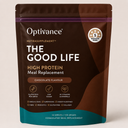
Optivance NutraSupplement® provides over 30 g protein per serve, depending on flavour, which gives it a strong protein base for a formulated meal replacement.
Check the sugar content
Sugar can vary widely between shakes.
Some shakes sound healthy but rely heavily on sweetness, dessert-style flavours or hidden sugars. Others keep sugar low while still delivering a pleasant taste.
If you are choosing a meal replacement for everyday use, check the nutrition panel carefully.
Look at sugar per serve, not just the front-of-pack claims.
A low-sugar profile can help make the product feel more practical and nutrition-focused, rather than like a sweet drink pretending to be a meal.
Optivance NutraSupplement® contains less than 1 g sugar per serve in both Chocolate and Vanilla.
A good rule is:
A meal replacement should taste good without being built around sugar.

Do not judge by calories alone
Many people compare shakes by looking for the lowest calorie option.
But the lowest-calorie shake is not always the best meal replacement.
If a shake is replacing a meal, it should not be an empty drink. It should provide enough energy and nutrition to make sense as a meal option.
This is one reason a formulated meal replacement is different from a very light diet shake.
The goal is not simply fewer calories.
The goal is:
controlled energy plus meaningful nutrition.
A smarter meal replacement should help you avoid skipping a meal or grabbing something less nutritious, not leave you feeling like you only had a flavoured drink.
Look for fibre
Fibre is another important part of a more complete shake.
A standard protein powder may provide protein, but little else. A better meal replacement should consider the broader nutrition profile.
Fibre helps round out the formula and can make a shake feel more meal-like than protein alone.
When comparing products, check:
-
whether fibre is included
-
how much fibre is provided per serve
-
what fibre sources are used
-
whether the product explains the full nutrition profile clearly
Optivance NutraSupplement® includes fibre as part of its formulated meal replacement profile.
Check for vitamins and minerals
If you are replacing a meal, the shake should contribute more than macronutrients.
Look for vitamins and minerals on the nutrition information panel.
Important nutrients to check may include:
-
calcium
-
magnesium
-
iron
-
zinc
-
iodine
-
vitamin D
-
vitamin C
-
B vitamins
-
folate
A better meal replacement should make these details easy to find.
Optivance NutraSupplement® includes 26 vitamins and minerals, with many key vitamins and minerals provided at meaningful levels per serve.
This helps separate it from a standard protein powder, which may only focus on protein.
Look beyond protein: useful supporting nutrients
A meal replacement shake can also include supporting nutrients that help make the formula more complete.
These may include:
-
DHA omega-3
-
probiotics
-
digestive enzymes
-
collagen
-
MCTs
-
fibre sources
-
plant-based ingredients
-
mineral sources
-
antioxidant-rich ingredients
Not every product will include all of these, and not every ingredient is essential.
But the point is to look at the full formula, not just the biggest number on the front of the pack.
Optivance NutraSupplement® includes direct algal DHA omega-3, probiotics, digestive enzymes, collagen peptides, MCT powder, fibre, vitamins and minerals.
That makes it more complete than a standard protein shake.
Make sure the directions are clear
A good meal replacement should clearly explain how to use it.
Look for:
-
serving size
-
how much liquid to add
-
whether to shake or blend
-
whether it is used to replace one meal
-
storage directions
-
whether it should be used as part of a normal diet
This matters because meal replacements should be used properly.
They are not meant to replace every meal, every day. They are designed to fit into a normal diet when you need a more convenient meal option.
Optivance NutraSupplement® is prepared by adding one 52 g serve to 250 mL of cold water, then shaking or blending until dissolved.
Check the ingredient list
A trustworthy product should make it easy to understand what is inside.
The ingredient list does not need to be short, especially for a formulated meal replacement that includes protein, vitamins, minerals and supporting nutrients.
But it should be clear.
When reviewing the ingredient list, look for:
-
the protein sources
-
the fibre source
-
sweeteners used
-
minerals and vitamins
-
allergen information
-
whether milk, soy, gluten or other allergens are present
-
whether the product contains additional functional ingredients
Optivance NutraSupplement® contains milk and is not vegan, so that should be clear to customers who need to check allergens or dietary suitability.
Avoid exaggerated weight-loss claims
Be cautious with products that promise dramatic or effortless results.
A responsible meal replacement should not rely on pressure, guilt or extreme claims.
Avoid products that promise:
-
rapid fat loss
-
appetite suppression
-
guaranteed weight loss
-
no need to eat real food
-
complete daily nutrition from shakes alone
-
dramatic before-and-after style results
A better product should focus on practical nutrition, consistency and clear use.
For most people, the goal is not another restrictive diet shake.
The goal is a better option when real life gets busy.
How Optivance NutraSupplement® fits
 Optivance NutraSupplement® has been developed as a high-protein formulated meal replacement for adults who want a more complete option than a standard protein shake.
It is designed to help replace a missed, rushed or less nutritious meal with a simple shake that provides:
-
30+ g protein per serve
-
less than 1 g sugar
-
fibre
-
26 vitamins and minerals
-
DHA omega-3
-
probiotics
-
digestive enzymes
-
collagen peptides
-
MCT powder
-
superfood ingredients
It is not a total diet replacement.
It is designed to be used as part of a normal diet when you want a convenient, more complete meal option.
Simple checklist: what to look for in a meal replacement shake

Before choosing a shake, ask:
| What to check | Why it matters |
|---|---|
| Is it a formulated meal replacement? | Shows whether it is designed to replace a meal |
| Protein per serve | Helps make the shake more meal-like |
| Sugar per serve | Helps you understand how sweetened the product is |
| Energy per serve | A meal replacement should not be an empty drink |
| Fibre | Helps round out the formula |
| Vitamins and minerals | Important if the shake is replacing a meal |
| Supporting nutrients | DHA, probiotics, enzymes, collagen and other extras may add value |
| Ingredient list | Helps you understand what is inside |
| Allergen information | Important for milk, soy, gluten and other sensitivities |
| Directions for use | Shows how the product fits into a normal diet |
| Claims and tone | Avoid exaggerated weight-loss promises |
Final thoughts
The best meal replacement shake is not always the one with the loudest claim or the lowest calorie count.
A better shake should be clear about what it is designed to do.
It should provide meaningful protein, keep sugar low, include fibre, deliver vitamins and minerals, and explain how to use it properly.
Most importantly, it should help make real-life nutrition easier.
Optivance NutraSupplement® was created for that purpose: more complete than a protein shake, more practical than skipping a meal, and designed to support everyday nutrition in one simple formulated meal replacement.
FAQ
What should I look for in a meal replacement shake?
Look for meaningful protein, low sugar, fibre, vitamins, minerals, clear directions, transparent ingredients and whether the product is actually designed to replace a meal.
Is a protein shake the same as a meal replacement?
Not always. A protein shake usually adds protein, while a formulated meal replacement is designed to replace one or more meals as part of a normal diet.
Why does sugar matter in a meal replacement shake?
Sugar content helps you understand whether the product is built around sweetness or broader nutrition. Optivance NutraSupplement® contains less than 1 g sugar per serve.
Should a meal replacement contain vitamins and minerals?
Yes, a good meal replacement should provide more than protein alone. Vitamins and minerals help make the product more meal-like when used to replace a meal.
Can I use a meal replacement every day?
A formulated meal replacement can be used as directed as part of a normal diet, but it should not be used as a total diet replacement.


