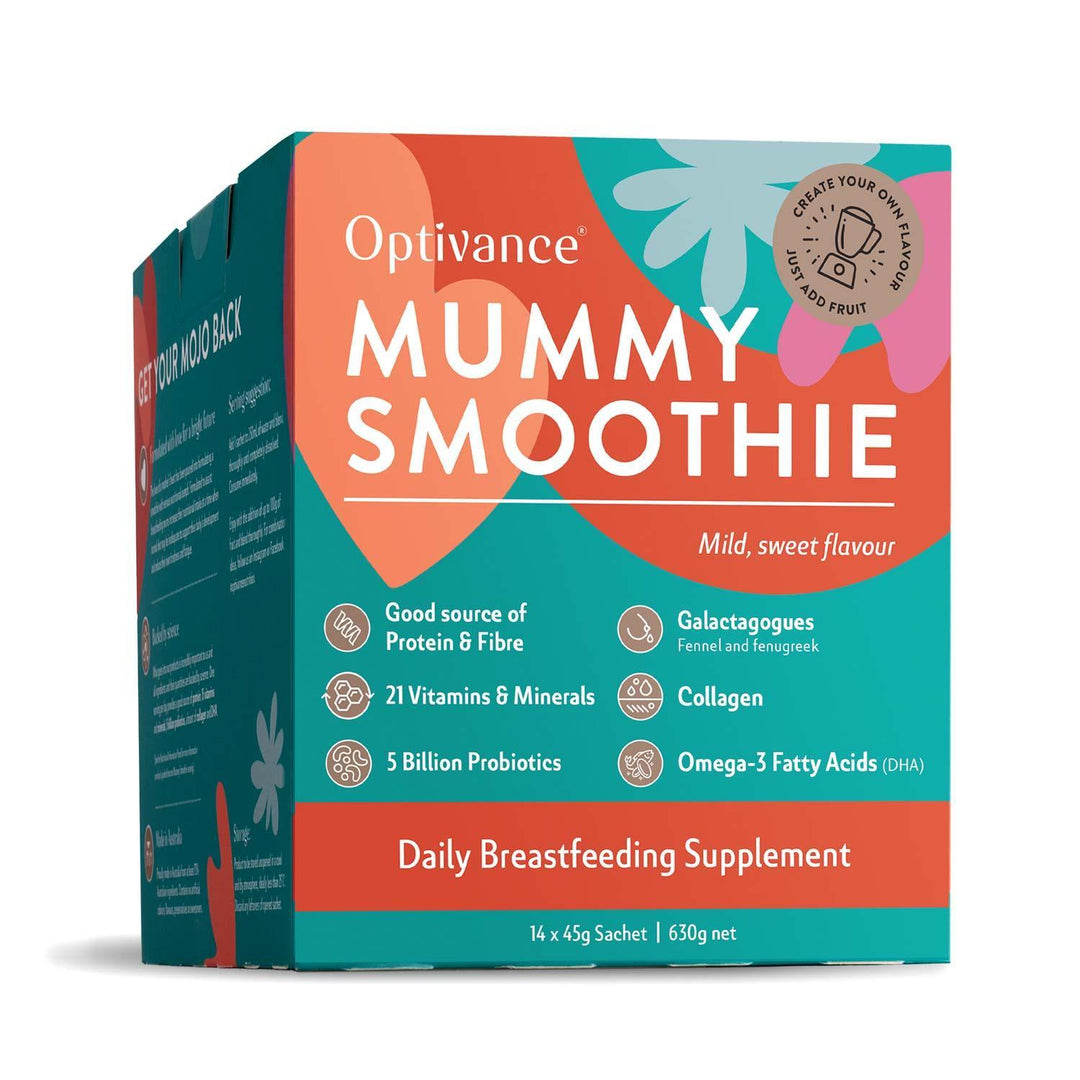





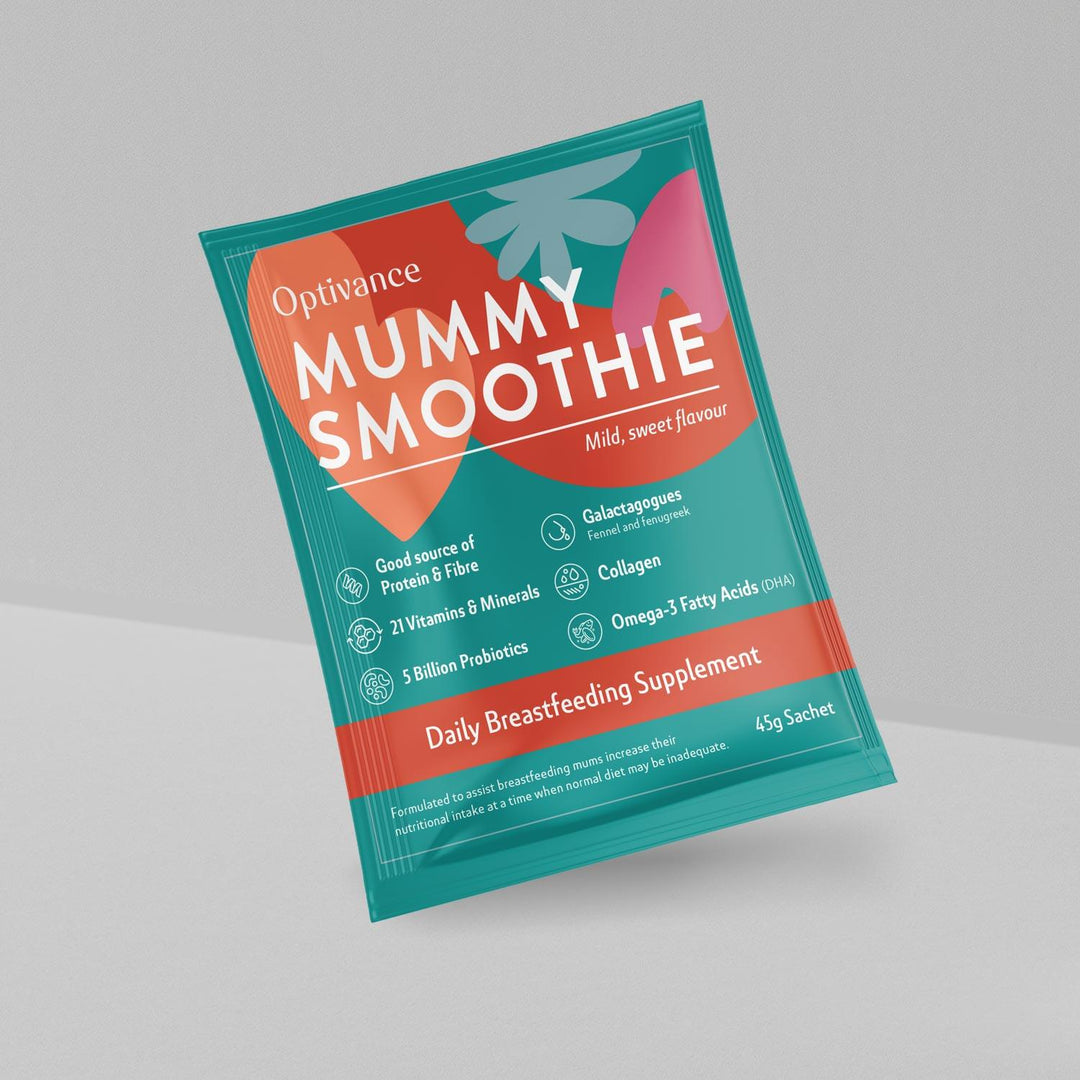

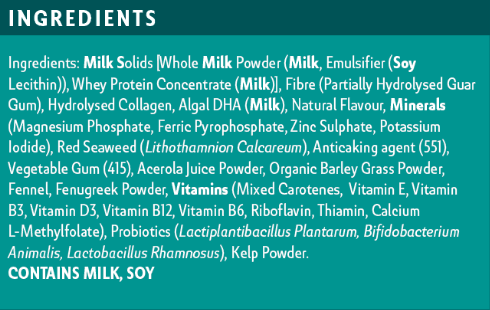


Whole milk powder and whey protein concentrate provide a smooth, creamy base and help make each serve substantial, ideal when you want something quick that still feels like “proper nutrition".

Includes added minerals (magnesium, iron, zinc, iodine and selenium) and added vitamins (B-group vitamins, vitamin D and vitamin E, plus folate. It’s designed to complement your meals with a simple, consistent serve.

Partially hydrolysed guar gum (PHGG) is a soluble fibre with a neutral taste and a smooth texture. It’s included to help round out the blend without making it thick, gritty, or hard to drink.

Two traditionally used breastfeeding herbs, thoughtfully included alongside protein, fibre and key vitamins & minerals.
Breastfeeding is a full-time season and it can make your days feel like a rotation of feeds, snacks, naps (the baby’s… and sometimes yours), and trying to remember what you actually ate. The Optivance Breastfeeding Smoothie is designed to fit into that real life. It’s a simple, easy way to add a more nutrition to your day, without another complicated routine.
Breastfeeding usually increases energy needs. A commonly used guide is an extra ~330–400 kcal per day for well-nourished breastfeeding mums (needs vary with your body size, activity level and how much you’re feeding). If you feel ravenous or flat, it can be a sign you need more regular, nourishing meals and snacks.
A healthy diet covers most needs, but breastfeeding guidance often highlights iodine, iron, calcium, omega-3 fats, vitamin B12, vitamin D and zinc as nutrients to pay attention to (especially if your diet is limited or you avoid animal products). Prioritise variety across the main food groups and speak with your health professional if you suspect deficiencies.
Most mums don’t need a special “milk supply diet”, regular meals and enough overall energy and fluid matter most. Aim for a balanced mix of protein foods, wholegrains, fruit/veg and healthy fats, and try not to skip meals in the early weeks. If you’re worried about supply, it’s worth checking attachment, feeding frequency and Support with a lactation professional too.
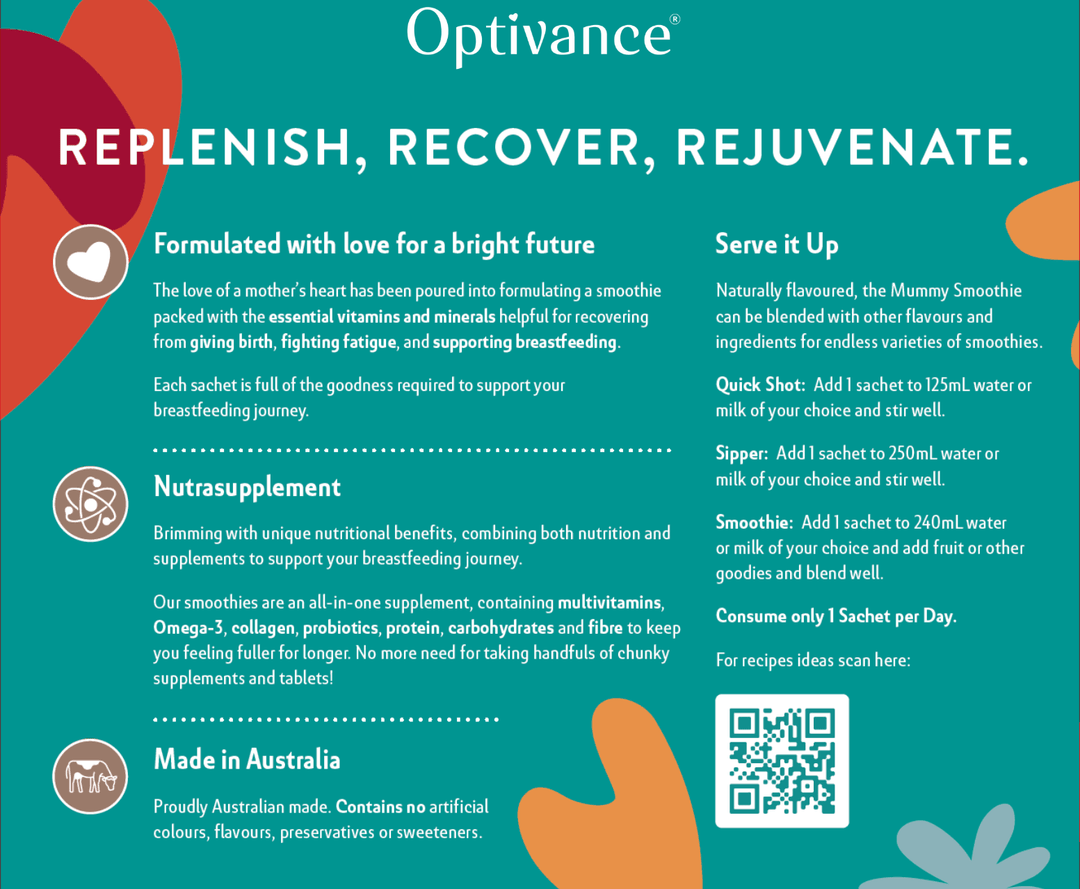
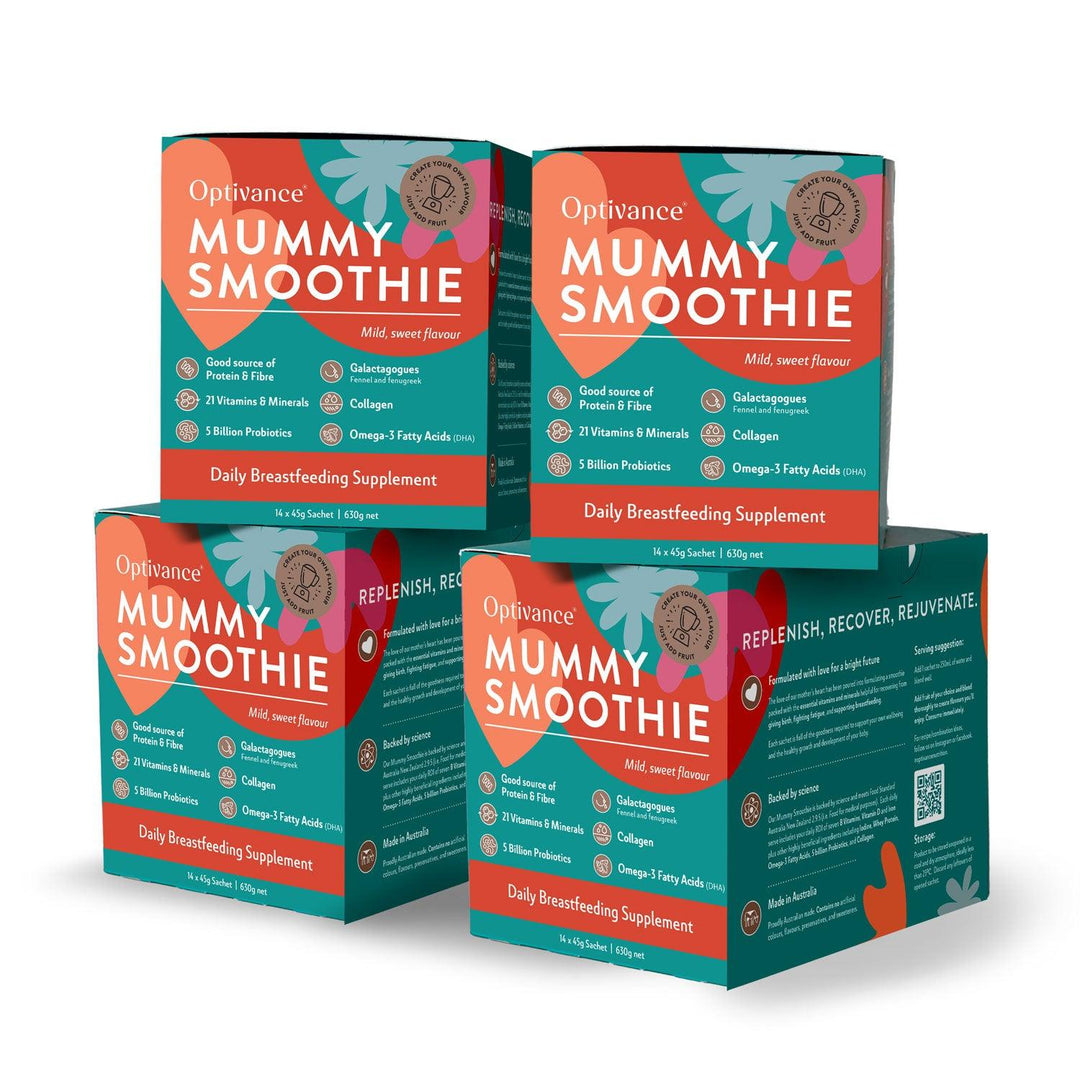
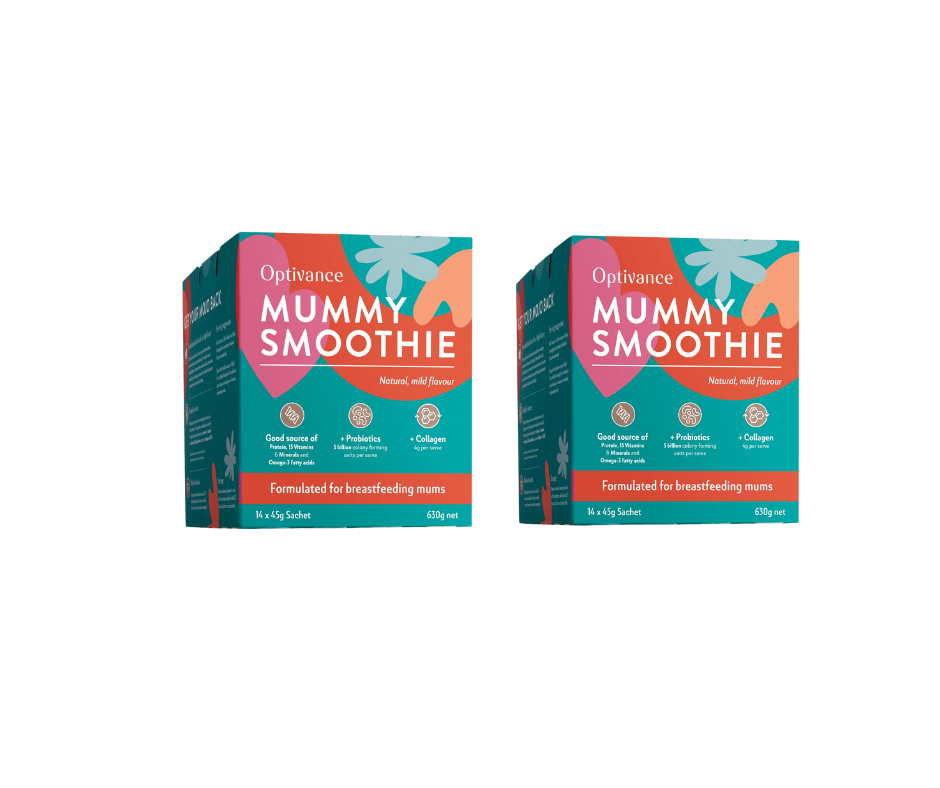
On the days food feels hard to organise (hello cluster feeds), the Optivance Breastfeeding Mummy Smoothie can be a simple way to top up your day with a convenient, nutrient-supporting option alongside your normal meals
ort with a lactation professional too.
In Australia, health authorities recommend 150 micrograms (µg) of iodine daily for women who are pregnant, breastfeeding or planning pregnancy (unless advised otherwise). If you have a thyroid condition, check with your GP or specialist before starting supplements.
Most mums don’t need to “avoid” lots of foods. Common recommendations include limiting caffeine and being cautious with alcohol, and avoiding/limiting certain high-mercury fish (like shark/swordfish/marlin). If you notice a clear pattern where a particular food seems to upset your baby, get personalised advice before cutting major food groups.
Per serve it contains 5 billion CFU probiotics. The strains listed are B. animalis, L. plantarum, and L. rhamnosus.
There isn’t one perfect number for every mum. A practical approach is: drink to thirst and keep a drink nearby. Many guides suggest having a glass of water each time you feed. Pale-yellow urine and regular wees are a simple sign you’re probably hydrated enough.
Think “grab-and-go” building blocks: Greek yoghurt + fruit, cheese and wholegrain crackers, eggs on toast, nuts + fruit, tuna/salmon on toast, pre-cut veg + hummus.
And if you want a one-step option you can keep on hand, a smoothie can be a great “busy day back-up” especially when it includes a blend designed for breastfeeding mums. The Optivance Breastfeeding Mummy Smoothie is an easy way to add a nutrient-supporting shake into the day when time (and hands) are limited.
Feeling extra hungry is common because breastfeeding uses energy. What helps most is steady fuel: protein at meals, fibre-rich carbs (wholegrains, fruit, veg, legumes), and healthy fats, plus regular snacks when you can. Ongoing exhaustion can also be linked to sleep disruption, low iron, thyroid issues or low mood. Check in with your GP if it feels more than “new mum tired.”
Yes. Slow and steady is the goal. Breastfeeding advice commonly recommends avoiding crash diets and aiming for gradual weight loss (around 0.5 kg per week is often considered safe) while keeping your diet nourishing and adequate. If your supply drops or you feel unwell, increase intake and seek support.
it contains milk (dairy) and includes soy lecithin and is gluten free.
It contains no artificial flavours, additives or sweeteners.
Small traces of what you eat can pass into breast milk, but most babies are fine with a normal varied diet. If your baby seems consistently unsettled after a specific food (for example, dairy), it’s best to get guidance before removing foods — unnecessary restriction can make it harder for you to meet your own nutrient needs.
Yes. Per serve it provides:
It also includes magnesium 130 mg (40% RDI), folate 100 µg (50% RDI), B12 1 µg (50% RDI), plus several B-vitamins.
One serve is 189 Calories with water, which suits most mums as a nourishing snack or mini-meal. If you use milk or add fruit/oats/nut butter, it becomes a more substantial meal-style smoothie.
Small traces of what you eat can pass into breast milk, but most babies are fine with a normal varied diet. If your baby seems consistently unsettled after a specific food (for example, dairy), it’s best to get guidance before removing foods — unnecessary restriction can make it harder for you to meet your own nutrient needs.
